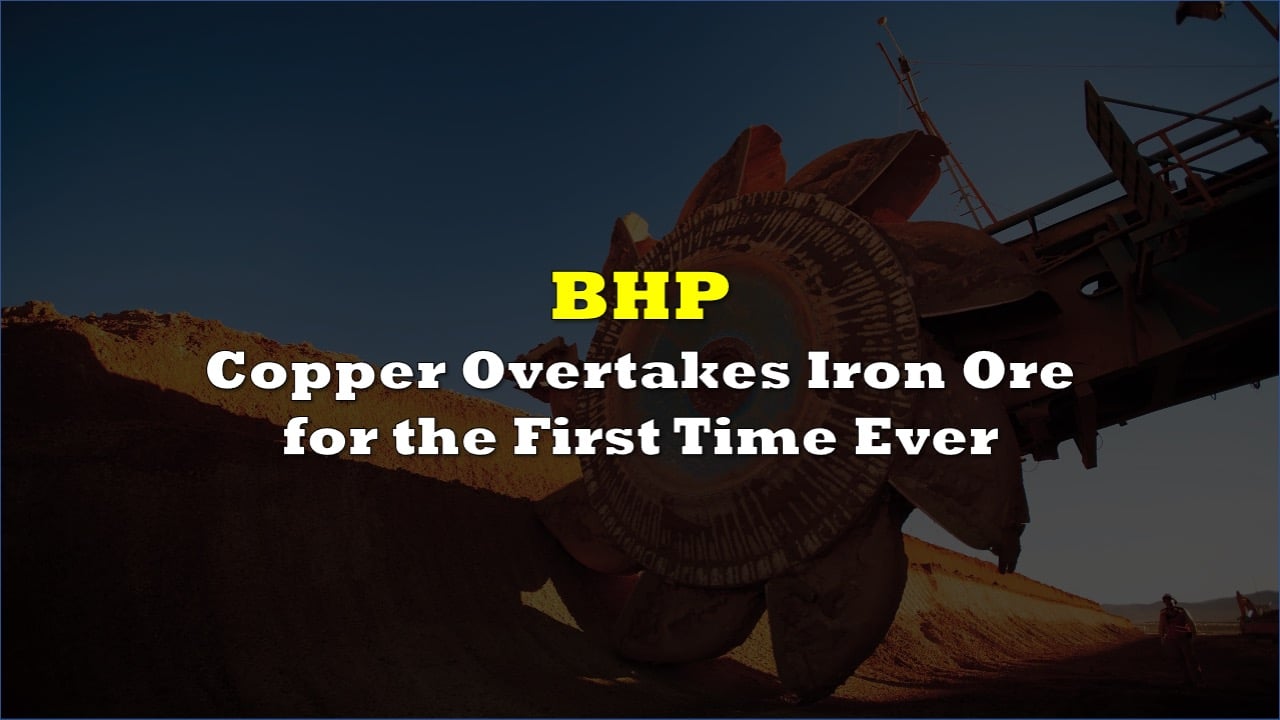

For the first time in its history, BHP Group (ASX: BHP) made more money from copper than iron ore in the year ended June 30, a shift the world’s largest mining company says reflects both a strategic pivot and a broader change in what’s driving Chinese commodity demand.
Revenue climbed 15% to $58.8 billion, underlying EBITDA rose 27% to roughly $33 billion, and underlying attributable profit came in 30% higher at $13.2 billion. Chief Executive Brandon Craig called copper “the engine that is driving BHP’s growth.”
Copper contributed more than $18 billion of underlying EBITDA, or 54% of the group total, at a 70% margin. Iron ore generated more than $14 billion at a 61% margin. Iron ore wasn’t weak, though. BHP’s Western Australia iron ore division posted record annual production of 265 million tonnes, while copper output held at roughly 2 million tonnes for a second straight year. Copper simply grew faster.
 Sponsored · Selkirk Copper Mines
BHP has cast the shift as a pivot toward electrification metals, and the company says its growth pipeline across Chile, Australia, and Argentina could lift copper production by around 40% by fiscal 2035, funded mostly by copper’s cash flow rather than new borrowing.
Iron ore tracks China’s steel industry, which depends closely on a property sector that shows little sign of recovering, eroding one of steel’s key demand pillars even as Beijing leans more on infrastructure and manufacturing investment.
Electrification, EV adoption, grid modernization, and a buildout of AI data centers all lean heavily on the metal, and Chinese copper demand hasn’t cooled the way steel-linked iron ore demand has.