

Canadian employment rose by 75,000 in July, a 0.4% gain that pushed the unemployment rate down a tenth of a point to 6.4%, Statistics Canada said Friday.
The increase was split between full-time and part-time work. It also extended a stretch of steady hiring. Employment has climbed 181,000, or 0.9%, since April, with full-time positions accounting for the bulk of that at 193,000. The employment rate ticked up to 60.9%.
Private-sector payrolls did most of the work, adding 58,000 jobs. Self-employment rose by 44,000, a 1.6% jump and the largest proportional gain of the month. Public-sector employment moved the other way, falling by 27,000.
 Sponsored · Selkirk Copper Mines
Wholesale and retail trade led the industry gains with 21,000 jobs. Finance, insurance, real estate, rental and leasing added 18,000, professional, scientific and technical services 17,000, and construction 16,000.
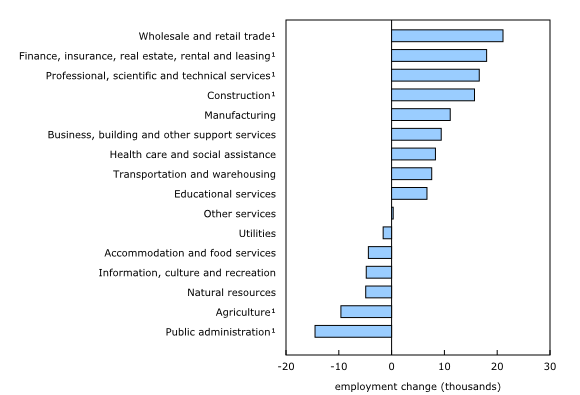
Two sectors gave ground. Public administration shed 15,000 positions, a 1.2% decline that echoes the drop in government employment overall. Agriculture lost 9,600 jobs, a steep 4.3% cut to a comparatively small workforce.
Ontario accounted for most of the national increase, adding 52,000 jobs, though its unemployment rate remained the highest among the larger provinces at 6.8%. British Columbia gained 18,000 and Manitoba 5,900, the latter holding the lowest jobless rate in the country at 5.0%. Nova Scotia added 4,600. Quebec was little changed, both on the month and against the same period a year earlier.
Average hourly wages rose 2.8% from a year earlier to $37.17, a pace that continues to run close to inflation rather than well ahead of it.
Youth unemployment remained the labour market’s weak spot, holding at 12.6%.