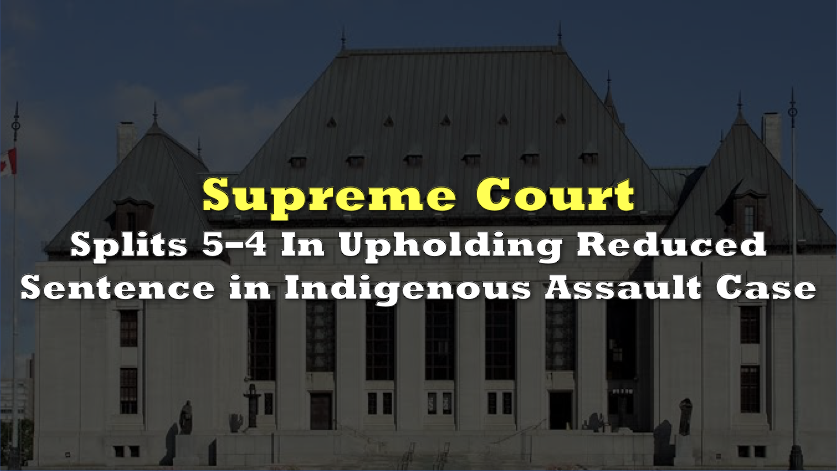

Canada’s Supreme Court has ruled that Parliament’s tougher sentencing directions for violence against Indigenous women do not automatically demand longer prison terms, upholding a three-year sentence for a Mi’kmaw man convicted of aggravated assault against his partner.
The 5–4 decision, issued in R. v. Cope, addresses how judges should reconcile two Criminal Code obligations. One emphasizes denunciation and deterrence when violence targets Indigenous women. The other requires particular attention to Indigenous offenders’ circumstances and alternatives to imprisonment.
Justice Michelle O’Bonsawin, writing for the majority, concluded that the obligations must be applied together. Justices Andromache Karakatsanis, Sheilah Martin, Nicholas Kasirer, and Mary Moreau joined her in dismissing the Crown’s appeal.
 Sponsored · Selkirk Copper Mines
The Court outlined a sequence for sentencing cases involving Indigenous offenders and victims. Judges must first assess the seriousness of the offence and the offender’s responsibility while accounting for both individuals’ Indigenous circumstances. They then identify the purposes of the sentence before deciding what punishment is fair overall.
The majority held that denunciation and deterrence need not always produce a longer custodial sentence. Depending on the case, other sanctions can serve those objectives.
Harry Arthur Cope pleaded guilty after attacking his Mi’kmaw intimate partner on a Nova Scotia sidewalk in June 2021. He repeatedly punched her and threw her to the ground, causing serious facial and upper-body injuries.
A sentencing judge considered a report examining Cope’s background, mental health, substance use, and the effects of systemic disadvantage. An Indigenous sentencing circle recommended treatment and community-based measures rather than further incarceration. The judge nevertheless imposed five years for aggravated assault, weighing the violence and public protection considerations.
In 2024, a majority of the Nova Scotia Court of Appeal reduced the aggravated-assault sentence to three years. It found the original ruling had not sufficiently accounted for how Cope’s mental illness and addictions related to his Indigenous experiences and degree of responsibility.
Friday’s Supreme Court judgment leaves that appellate reduction intact. The majority also found insufficient weight had been given to the sentencing circle and its recommendations.
Justices Malcolm Rowe and Mahmud Jamal, joined by Chief Justice Richard Wagner and Justice Suzanne Côté, dissented and would have allowed the Crown’s appeal.