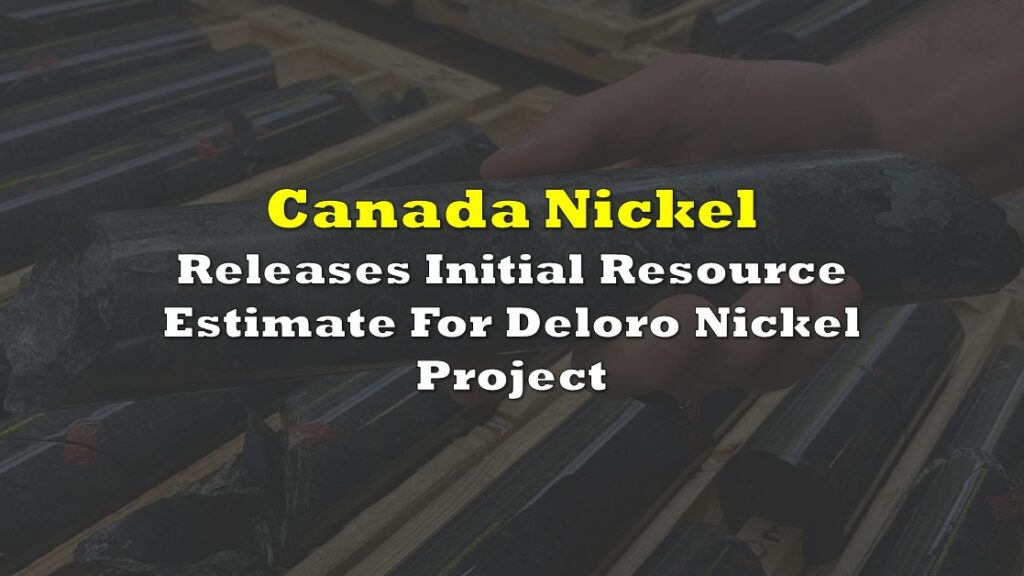

Canada Nickel (TSXV: CNC) has cleared the federal environmental assessment for its Crawford Nickel Project, removing a major regulatory obstacle while exposing the next challenge facing the proposed Ontario mine: financing a development whose two principal construction stages were estimated to cost approximately US$3.55 billion.
That transition comes as the pre-revenue developer works to arrange long-term funding while carrying short-term bridge debt. Canada Nickel reported $14.2 million in cash, $56.8 million in current liabilities, and a working-capital deficit of approximately $37.2 million as of April 30.
Its financial statements said continued operations depended on its ability to raise additional funds.
 Sponsored · Cambria Gold Mines
Environment Minister Julie Dabrusin issued the decision statement on Friday after determining that Crawford’s potential adverse effects within federal jurisdiction were justified when weighed against its anticipated benefits. The project would consist of an open-pit nickel and cobalt mine, an on-site processing facility, waste-rock storage areas, and related infrastructure about 42 kilometres north of Timmins, Ontario.
The decision does not authorize immediate construction. Canada Nickel must comply with legally binding conditions and obtain additional federal and provincial authorizations before development can proceed.
Those conditions include protections addressing fish habitat, migratory birds, Indigenous health and socioeconomic conditions, cultural heritage, traditional land use, and progressive site rehabilitation. The project has now entered the federal registry’s post-decision phase.
Canada Nickel called Crawford the first mining project to receive a decision statement under the Impact Assessment Act as amended following a 2023 Supreme Court ruling and subsequent legislative changes.
 Sponsored · Silver47 Exploration Inc.
The project’s 2023 feasibility study estimated an initial construction cost of US$1.95 billion, followed by US$1.60 billion for a second expansion phase. Additional sustaining and deferred expenditures raised estimated life-of-mine investment to more than US$5.15 billion.
The study calculated an after-tax net present value of US$2.5 billion using an 8% discount rate and an internal rate of return of 17.1%. Those figures increased modestly when projected carbon-capture tax credits were included.
A 41-year operation was outlined in the study, producing an average of approximately 38,000 tonnes of nickel annually, with peak output reaching 48,000 tonnes. Proven and probable reserves contained an estimated 3.8 million tonnes of nickel.
Canada Nickel appointed SB1 Markets in June to arrange a debt facility of up to US$600 million backed by expected Canadian investment tax credits. The company said the proposed facility could fund more than half of the equity contribution required for Crawford, but cautioned that there was no assurance the financing would be completed.
The firm has also secured a $20 million equity investment from Taykwa Tagamou Nation and contracting arrangements involving First Nations represented by the Wabun Tribal Council. The company describes the Taykwa Tagamou investment as the largest known First Nation investment in a Canadian critical-minerals project, a distinction that has not been independently verified.
The company also extended a US$32 million bridge loan from Auramet International on July 28, moving the repayment date from August 9 to November 9. Canada Nickel paid a US$856,288 extension fee and agreed to issue 5.5 million one-year warrants exercisable at $1.52, subject to exchange approval.
For the six months ended April 30, Canada Nickel recorded a net loss of $13.9 million and used $8.3 million in operating activities and $14.5 million in investing activities. Bridge-loan liabilities stood at $44.5 million.
CEO Mark Selby said the company now plans to advance Crawford “towards a construction decision in 2027.”
Crawford was among the projects selected for Ottawa’s Major Projects Office and Ontario’s One Project, One Process framework.
The federal government said Crawford could attract approximately $5 billion in investment and create about 4,000 careers, presenting the mine as part of Canada’s strategy to strengthen domestic critical-mineral and industrial supply chains.