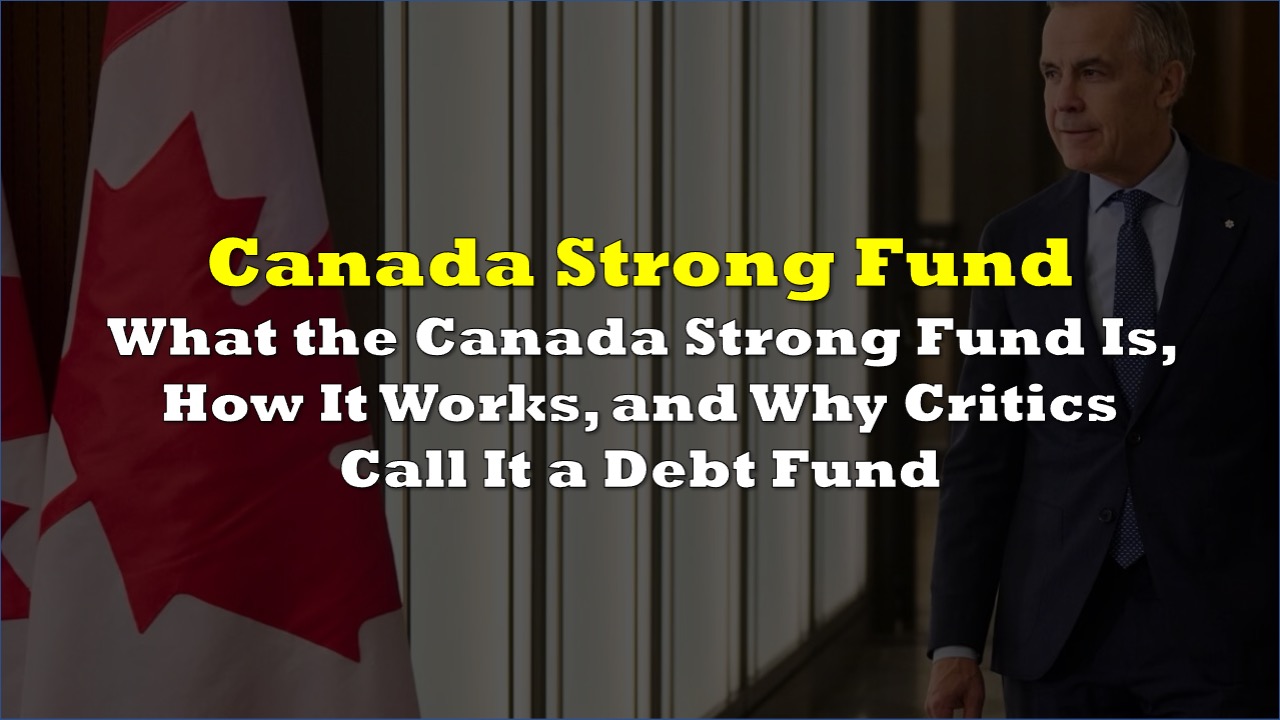

Canada is getting its first national sovereign wealth fund — built differently from almost every comparable fund in the world, and that distinction is the source of both its ambition and its central controversy.
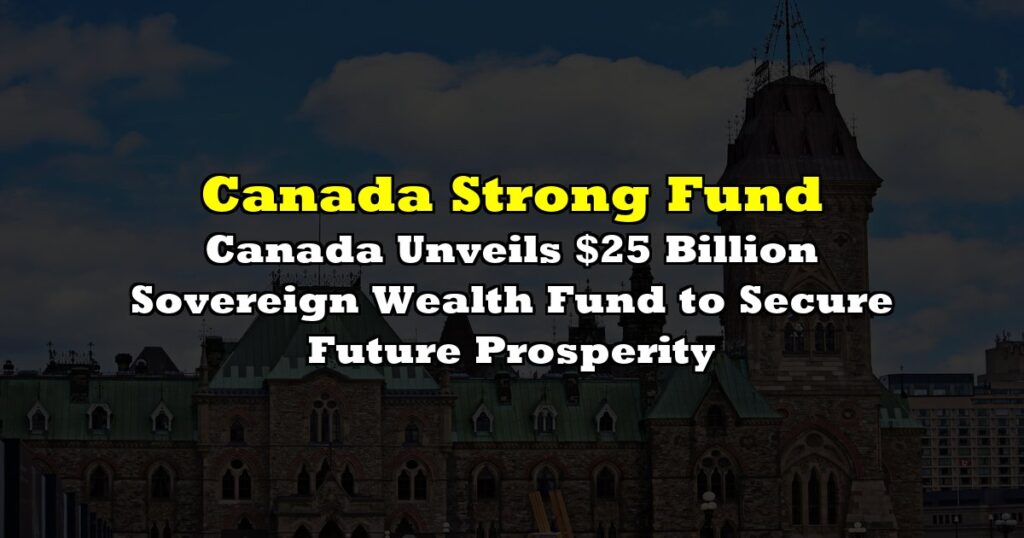
Prime Minister Mark Carney announced the Canada Strong Fund on April 27, a day before Finance Minister François-Philippe Champagne tabled the spring economic update. The fund will be seeded with $25 billion in federal government capital over three years, invest alongside private and institutional investors in major Canadian projects, and be open to individual Canadians to invest in directly through a new retail investment product, similar to a government bond.
Read: Canada Unveils $25 Billion Sovereign Wealth Fund to Secure Future Prosperity
 Sponsored · Altamira Gold Corp.
“Canada’s next chapter of growth starts with investing at home,” Carney said. “Canadians themselves will have the opportunity to invest in the Fund, giving them a direct stake in our country’s growth and the ability to share in its success.”
What It Will Invest In
The fund covers infrastructure, energy, critical minerals, agriculture, and advanced manufacturing — the strategic sectors at the centre of the government’s Build Canada agenda. It will operate as an arm’s-length Crown corporation with a CEO and an independent board, reporting through the Minister of Finance.
A transition office is being established to finalize governance structures. Champagne said it will be operational “in the coming months” without specifying when.
The $25 Billion Question
Most sovereign wealth funds are built from surplus revenue. Norway’s Government Pension Fund Global — the world’s largest at over $2 trillion — is funded by oil export revenues. Singapore’s GIC was built from foreign reserves. Kuwait’s fund was seeded with oil money to diversify away from energy dependence. Canada has none of those conditions and is running a deficit of $66.9 billion in 2025-26.
 Sponsored · Cambria Gold Mines
Asked repeatedly where the $25 billion would come from, neither Carney nor Champagne answered directly. Champagne said Canada’s “relatively strong fiscal standing internationally” would allow it to borrow at favourable rates.
“The Norwegian model is not funded on debt,” said Montreal Economic Institute economist Emmanuelle Faubert. “Right now, we have increasing deficits, increasing debt, both federally and provincially. Taking money that should instead go towards clearing deficits could be a risky venture that might end up just costing money and giving nothing to Canadians.”
Conservative Leader Pierre Poilievre called it a “sovereign debt fund”. “You need to have wealth for those funds. Norway, Singapore, and Saudi Arabia run big budget surpluses, which they accumulate and then put into their sovereign wealth funds.” He called the $25 billion “another $25 billion on the national credit card to pad a Liberal slush fund.”
Columbia Business School’s Brett House and NYU’s Bernardo Bortolotti of the Transition Investment Lab said the structure isn’t necessarily disqualifying — borrowed-money sovereign funds can work, but require investment returns that consistently exceed the cost of the debt.
What Makes This Different
Retail participation: unlike most sovereign wealth funds, individual Canadians can invest directly — initial investment protected, returns reinvested into the fund. The government is still consulting on the product design.
Domestic focus: most global sovereign wealth funds diversify internationally. The Canada Strong Fund invests in Canada — closer to Singapore’s Temasek model, which actively shapes domestic industrial development, than to Norway’s passively diversified global portfolio.
The Unanswered Questions
The fund’s governance, investment mandate, retail product design, and return distribution remain undetermined. What is clear, as McMillan LLP noted, is that government acting as both counterparty and equity investor in the same projects is a structural shift — one that will require new risk allocation frameworks in project finance and careful design around Indigenous equity participation.
Information for this story was found via the sources and companies mentioned. The author has no securities or affiliations related to the organizations discussed. Not a recommendation to buy or sell. Always do additional research and consult a professional before purchasing a security. The author holds no licenses.