
Corporate AI is starting to create the problem executives said they wanted: employees are using the tools enough that companies now have to decide which tasks deserve access, which costs can scale, and which use cases fail once they leave the pilot stage.
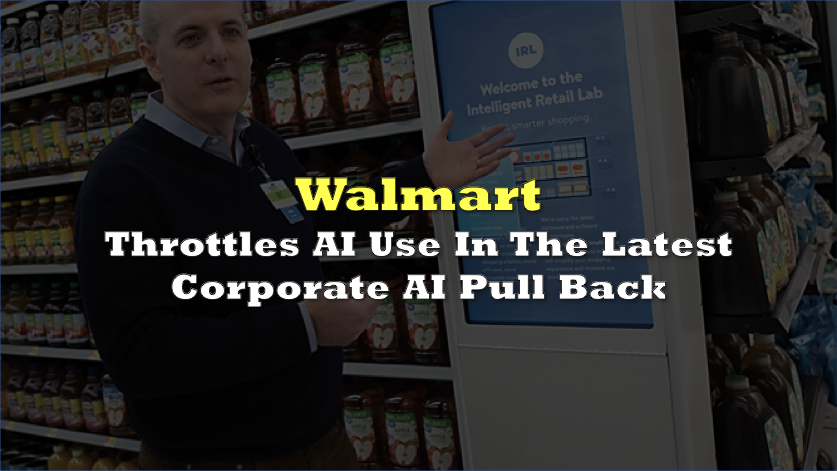
Walmart has reportedly begun limiting employee use of an AI tool after demand ran high, according to Bloomberg.
The reported throttle matters because Walmart’s AI strategy is already operating at national-retail scale. The company generated $713 billion in fiscal 2026 revenue, employs about 2.1 million associates, serves roughly 280 million customers and members each week, and runs more than 10,900 stores and e-commerce sites across 19 countries.
 Sponsored · Selkirk Copper Mines
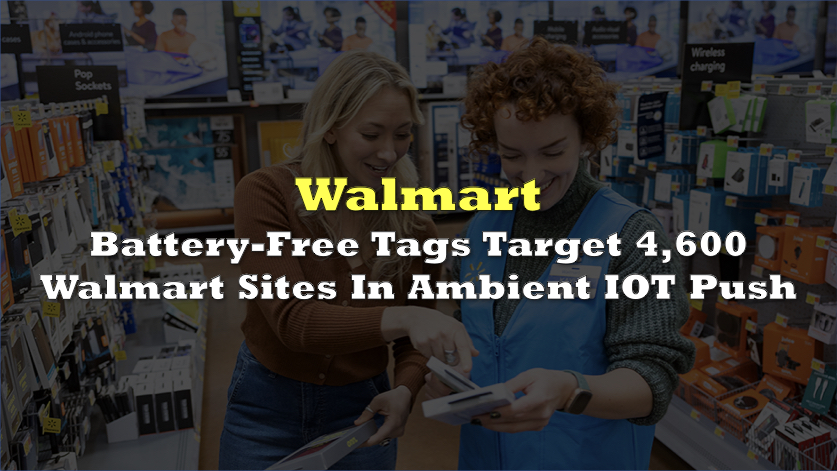
In June 2025, the retailer said it was rolling out AI-powered tools for 1.5 million US associates, including real-time translation and task-management features. Walmart said one shift-planning task could fall from 90 minutes to 30 minutes.
In addition, in October 2025, Walmart announced a partnership with OpenAI that would let customers and Sam’s Club members buy products directly through ChatGPT using Instant Checkout. Walmart said the partnership built on other AI uses, including product catalog work, customer care, and AI literacy among associates.
The same pressure is showing up from the opposite direction at Starbucks, where the problem was not too much use but too little reliability. The coffee retail giant scrapped an AI inventory-counting tool across North America less than a year after deployment after the system produced recurring inaccuracies in stores. The tool, developed by NomadGo, used tablet-based scanning with camera and LiDAR inputs to count stockroom items.
The reversal landed while Starbucks was trying to convert its turnaround into margin recovery. In Q2 FY2026, North America operating income fell to $679.9 million from $748.3 million a year earlier, while operating margin narrowed to 9.9% from 11.6%. Starbucks said the margin pressure was driven mainly by labor investments tied to “Back to Starbucks,” product mix, tariffs, and elevated coffee pricing, partly offset by sales leverage.
While Walmart and Starbucks are not the same case, they expose the two-sided risk of enterprise AI: success can make the bill grow, while failure can make the workload grow.
The broader corporate shift is clear: AI is entering its budget-and-controls phase. Companies are no longer just asking where the technology can be deployed. They are asking where usage should be capped, where errors are too expensive, and where the promised savings survive contact with real operations.
Information for this story was found via the sources and companies mentioned. The author has no securities or affiliations related to the organizations discussed. Not a recommendation to buy or sell. Always do additional research and consult a professional before purchasing a security. The author holds no licenses.