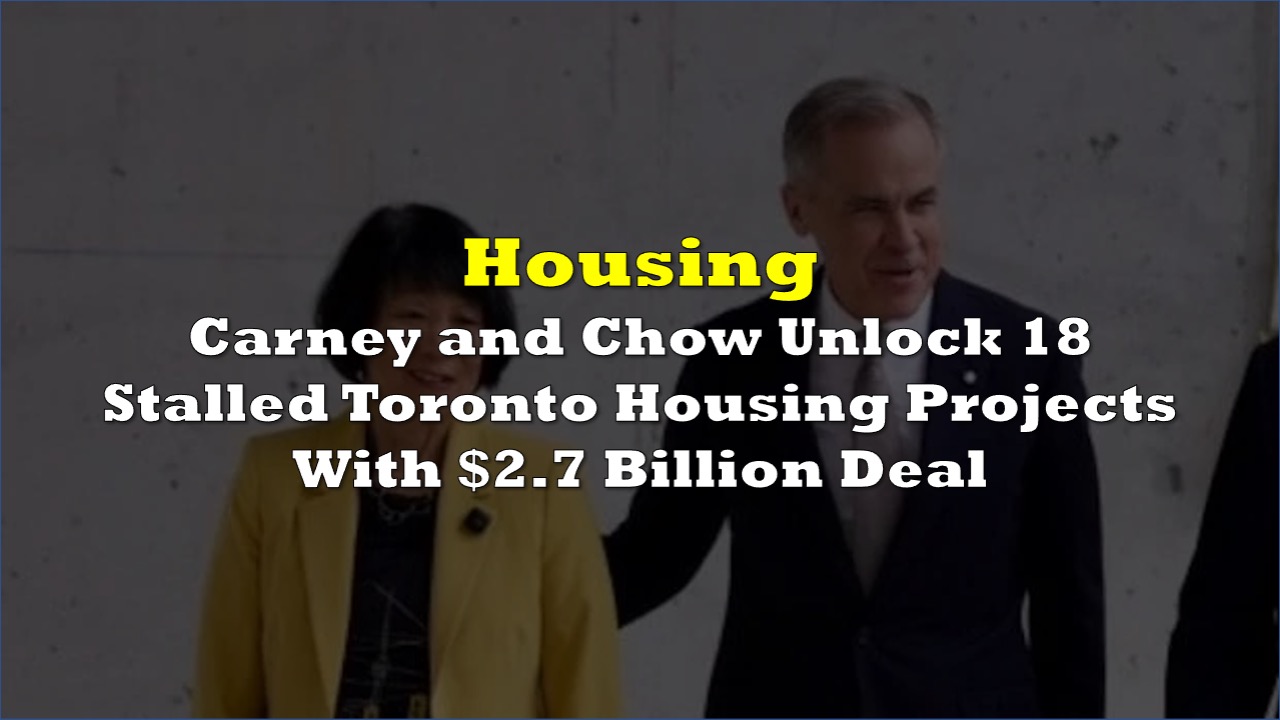

Prime Minister Mark Carney and Toronto Mayor Olivia Chow announced a $2.7 billion partnership Wednesday to build 18 housing projects across Toronto over the next three years, delivering more than 5,600 rental homes. Ottawa is funding the deal through two channels, Build Canada Homes and the Canada Mortgage and Housing Corporation’s Apartment Construction Loan Program.
Build Canada Homes is investing more than $310 million in nine city-owned land projects that officials project will produce nearly 1,900 homes, including more than 700 that qualify as affordable.
The loan program is providing over $1.8 billion in low-cost financing for nine more purpose-built rental projects, expected to deliver over 3,700 homes with more than 1,000 of them affordable, and has reserved up to $600 million more for future Toronto projects.
 Sponsored · Cambria Gold Mines
Toronto is contributing $530 million of its own, including 99-year exemptions from municipal and school property taxes. Officials expect construction to start on 4,500 of the homes, 80% of the total, before the end of the year, with the full portfolio reaching substantial completion by March 2031.
The projects, Carney said, were “stalled for want of financing, until today.” Chow struck a more urgent tone, saying Torontonians “running out of rent money at the end of the month cannot wait.”
The city’s housing starts were down 31% in January, part of a stretch that had Premier Doug Ford’s goal of 1.5 million new homes by 2031 slipping further away. The trend has since turned, at least for Toronto specifically — CMHC data show the city’s actual housing starts up 34% year-over-year in April and 25% in June, both driven by multi-unit rental construction, the same category this deal targets.
Nationally, though, CMHC still expects 2026 starts to finish lower than last year. Carney blamed the earlier shortfall on rising development charges, taxes, construction costs, and a shortage of buildable land rather than weak demand.
Build Canada Homes is also the vehicle behind Carney’s June deal with BC Premier David Eby, but the mechanism there was different. That deal used Build Canada Homes and BC Housing financing to purchase and convert vacant Vancouver-area condos into affordable rent-to-own housing, and it drew an ethics complaint from Conservative leader Pierre Poilievre over developer optics, which the House ethics committee later moved to investigate.
Read: Poilievre Calls for Ethics Probe of Carney’s Condo Plan