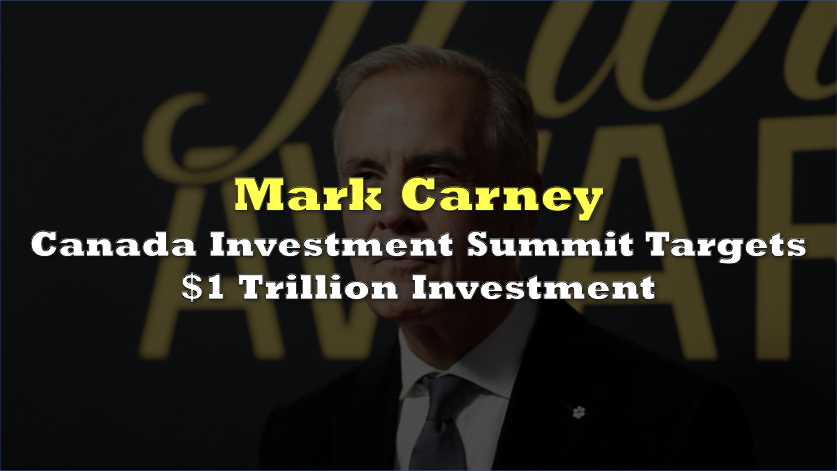

Prime Minister Mark Carney is putting more than 160 Canadian investment opportunities in front of some of the world’s largest pools of capital this week, but Ottawa is already signaling that the first Canada Investment Summit will be judged months from now rather than by deals announced in Toronto.
Investors attending the September 14–15 gathering manage more than $120 trillion in assets, according to Carney. His government is trying to catalyze $1 trillion in total Canadian investment over five years, supported by roughly $280 billion in government capital investments and incentives.
Reuters reported that roughly 100 global investors are being matched with Canadian executives and officials, including BlackRock CEO Larry Fink, Blackstone President Jon Gray, Temasek CEO Dilhan Pillay, and APG Groep CEO Annette Mosman. A government source told Reuters that larger transactions resulting from the meetings could take 12 to 18 months to materialize.
 Sponsored · Selkirk Copper Mines
That leaves Carney with a conversion problem. Canadian foreign direct investment flows have averaged about $20 billion per quarter so far in 2026, Reuters reported, down from roughly $23 billion during 2024 and 2025. Much of recent inbound capital has also come through acquisitions and reinvested foreign-company earnings rather than new greenfield projects such as factories and warehouses.
The summit’s project pipeline spans mining, energy, transportation, and technology. A prospectus reviewed by Reuters includes investment opportunities involving Xanadu’s quantum computing expansion, an Alberta data centre campus, the Crawford Nickel Project, and $900 million in financing sought for a proposed high-speed transportation system between Calgary and Edmonton.
Canadian financial institutions have begun putting numbers behind the domestic investment push. Bank of Montreal announced plans to mobilize up to $70 billion over 10 years for sectors including energy, mining, AI computing, defence, and transportation, while Sun Life Financial committed $5 billion over five years toward Canadian infrastructure. Royal Bank of Canada separately unveiled a $1.4 billion technology investment initiative.
The foreign-capital pitch comes as Canada’s traditional advantage as a gateway to the US market is being tested by an escalating trade dispute. Washington imposed 50% tariffs on $27.6 billion of Canadian goods in August, prompting Canadian countermeasures, while Trump has continued pressing companies to move production into the United States.
Carney is instead selling predictability, resources, and access to markets outside the US.
“They are coming because of Canada,” Carney said, according to AP News. “If they wanted to go to the United States they would go to the United States.”