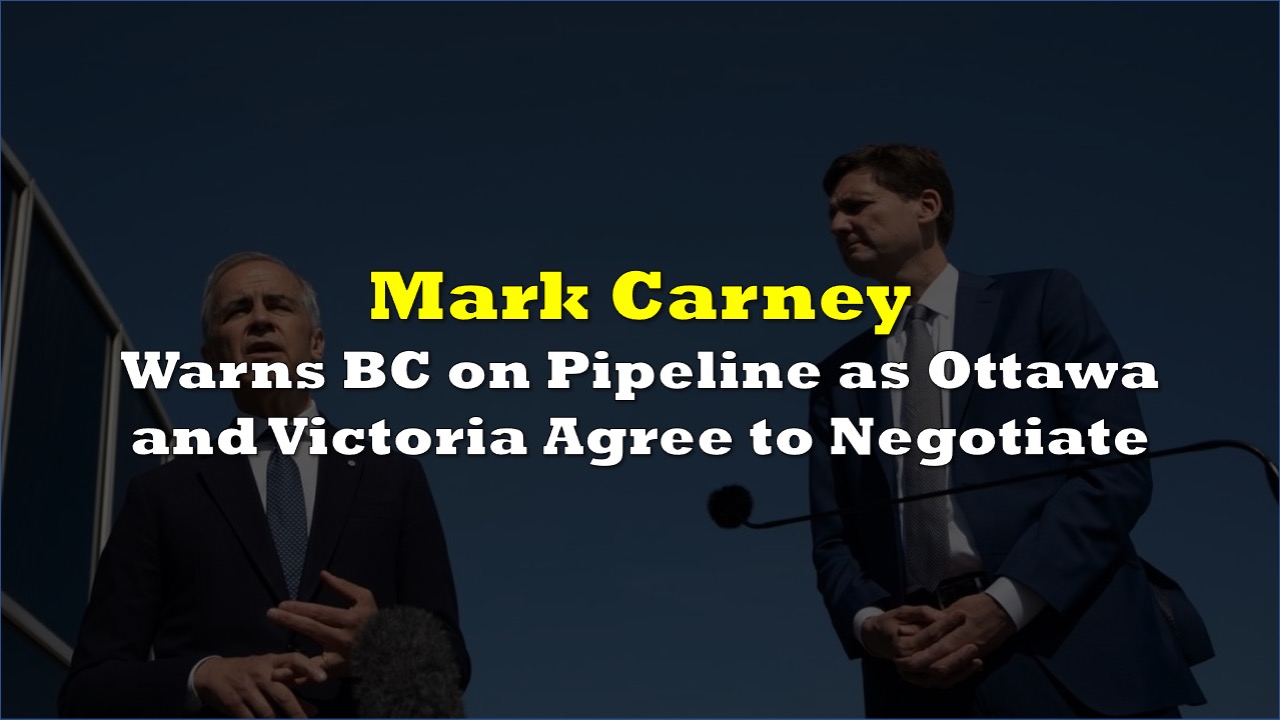

Prime Minister Mark Carney traveled to Vancouver on Wednesday to deliver a pointed message to British Columbia’s government: get on board with energy development, or Ottawa moves on.
Speaking to business leaders at the Greater Vancouver Board of Trade ahead of a closed-door meeting with Premier David Eby, Carney declared the world is in an “energy crisis” and said Canada has an obligation to fill the global supply gap.
He pitched an agenda built around accelerating project approvals, reforming clean energy policy, and pushing a new Pacific Coast oil pipeline — framing it as both an economic and geopolitical necessity amid the US trade war, which continues to pressure Canadian exporters.
On BC’s resistance to the pipeline, Carney was direct. “If things get stalled here, we’re going to be spending more time elsewhere in the country,” he told the board of trade. “We need to move forward. We need to invest at scale in the country.”
 Sponsored · Altamira Gold Corp.
Carney also laid out three conditions under which the pipeline — advanced last week through an implementation agreement between Ottawa and Alberta — would proceed: the completion of Alberta’s Pathways carbon capture project, substantial economic and financial benefits for British Columbians, and full compliance with Canada’s duty to consult First Nations under Section 35 of the Constitution Act, which he called “non-negotiable.” The project has no agreed route or private proponent.
Eby pushed back before the meeting even began. He said economic development must go “hand in hand with environmental protection for the next generation, including the north coast tanker ban” — BC’s ban on oil tankers along its northern coastline, which presents a direct obstacle to any new Pacific-bound pipeline. He also said Canada cannot function if “separatist premiers” monopolize Ottawa’s focus, a pointed reference to Alberta Premier Danielle Smith.
Both governments agreed to enter formal negotiations on BC’s economic priorities and Ottawa’s role in national development projects — a softer landing than Carney’s morning remarks had suggested.
Carney may have aimed the “elsewhere in the country” warning as much at Alberta as at BC, signaling continued federal commitment to a project that still has no route, no proponent, and now a structured provincial negotiation standing between it and construction.
Information for this story was found via the sources and companies mentioned. The author has no securities or affiliations related to the organizations discussed. Not a recommendation to buy or sell. Always do additional research and consult a professional before purchasing a security. The author holds no licenses.