

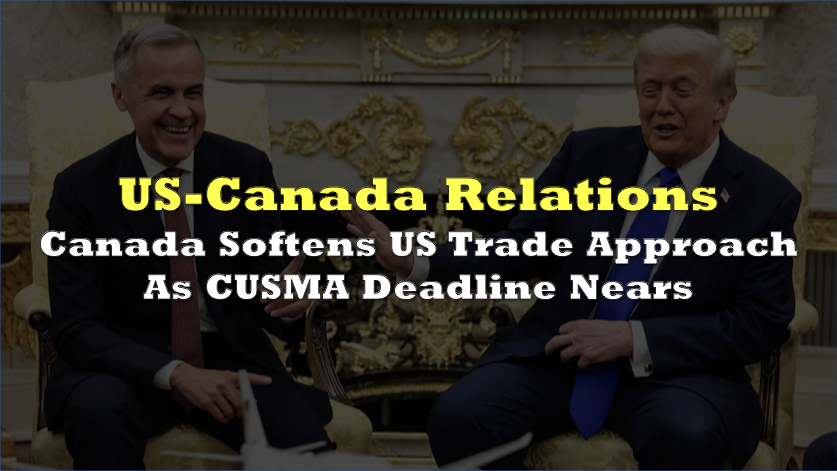

After months of public resistance to US tariffs, Ottawa is now leaning into a more cooperative North American message as the July 1 CUSMA review nears, Financial Times reports.
CUSMA is central to that calculation. AP reports Canada has asked the US and Mexico to renew the pact for another 16 years, a move designed to lock in stability for exporters, manufacturers and supply chains.
That risk matters because CUSMA compliance is one of Canada’s strongest shields against US tariff pressure. Canadian trade guidance says goods that qualify under CUSMA can be exempt from the 10% Section 122 tariff.
 Sponsored · Altamira Gold Corp.
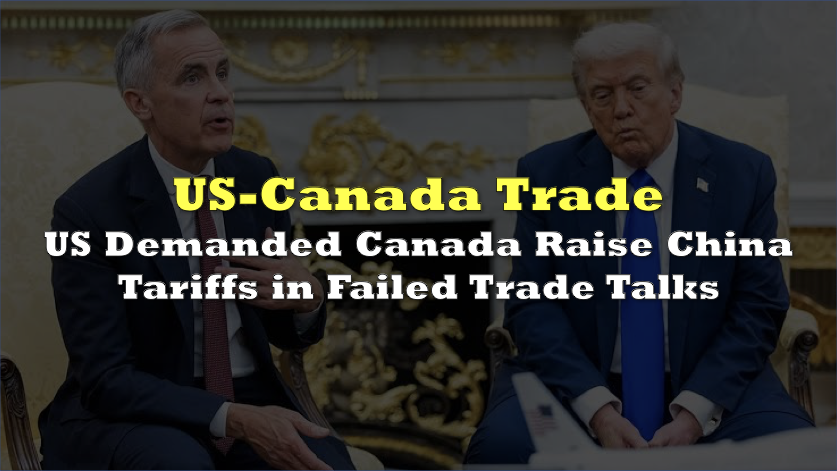
Ottawa’s public language has therefore started to split in two directions. At home, Prime Minister Mark Carney has framed Canada as unwilling to let Washington dictate the review. In Washington-facing diplomacy, Canadian officials and provincial leaders are emphasizing regional integration, China-risk reduction and continental industrial security.
The Financial Times added that Canada has been trying to regain standing in US trade discussions through what it described as a “Fortress North America” pitch. That framing puts Canada’s value to the US in terms Trump is more likely to reward: secure supply chains, domestic manufacturing, energy reliability and reduced dependence on China.
The timing is awkward for Ottawa. Reuters reported in April that Mexico had already held two rounds of trade talks with the US, while Canada had not yet secured a formal date for equivalent negotiations. Mexico has also backed extending the pact for 16 years, giving it a clearer channel into Washington as Canada works through a more strained bilateral relationship.
Canada has also tried to remove policy irritants. In June 2025, Ottawa halted collection of its digital services tax and moved to rescind the law after US pressure, tax that would have affected large digital companies, many of them American.
The problem for Canada is that accommodation has limits. Trump has continued to use hostile rhetoric toward Canada, including references to the country as a potential “51st state.” That keeps the political cost of conciliation high for Carney, even as the economic cost of exclusion from trade talks rises.
Canada’s new approach is therefore a narrow balancing act: sound firm enough for domestic politics, useful enough for US negotiators and aligned enough with Trump’s priorities to stay in the room.
The North American pact is up for review on July 1. If the three countries do not agree to extend CUSMA, the deal does not immediately disappear. Instead, it moves into annual reviews, turning what was meant to be a long-term framework into a yearly source of market risk.
Information for this story was found via the sources and companies mentioned. The author has no securities or affiliations related to the organizations discussed. Not a recommendation to buy or sell. Always do additional research and consult a professional before purchasing a security. The author holds no licenses.



One Response
Financial post = Postmedia = American owened, controlled.? Same as the National Post?
Why are you reposting american propaganda?