
US farm bankruptcies surged 46% in 2025, with the Midwest bearing the sharpest losses, as a fertilizer crisis driven by the Iran war pushes an already strained agricultural sector deeper into financial distress.
The American Farm Bureau Federation reported 315 Chapter 12 bankruptcy filings in 2025, up from 216 in 2024 and the third consecutive annual increase. The Midwest led all regions with 121 filings — a 70% jump from the prior year — while the Southeast recorded 105, a 69% increase. The two regions together accounted for more than two-thirds of cases nationwide.
Iowa recorded 18 filings, up 220% from 2024. Missouri posted 16, up 167%. Wisconsin saw 16, a 700% increase. Minnesota recorded 13, up 300%.
A Farmer Mac report reviewed by Agri-Pulse describes the situation as a “difficult cycle, not yet a crisis,” noting filings remain roughly half 2019 levels and a fraction of the thousands recorded during the 1980s farm crisis. Farmland values have not collapsed, and debt-to-asset ratios, while rising, stay well below the danger thresholds of that era.
 Sponsored · Selkirk Copper Mines
USDA projects total farm sector debt will climb 5.2% to a record $624.7 billion this year, with interest expenses alone reaching a record $33 billion, and working capital falling from $154.9 billion in 2025 to $140.6 billion in 2026.
An AFBF survey of more than 5,700 farmers conducted April 3–11 found 70% cannot afford to buy all the fertilizer they need for the current growing season — 78% in the South, where only 19% pre-booked supplies before prices spiked, and 48% in the Midwest, where 67% had pre-booked. More than 80% of rice, cotton, and peanut producers say they cannot cover their fertilizer requirements. Break-even prices for corn now range from $4.70 to $4.90 per bushel and soybeans from $10.80 to $11.25 — at or above current market prices for both.
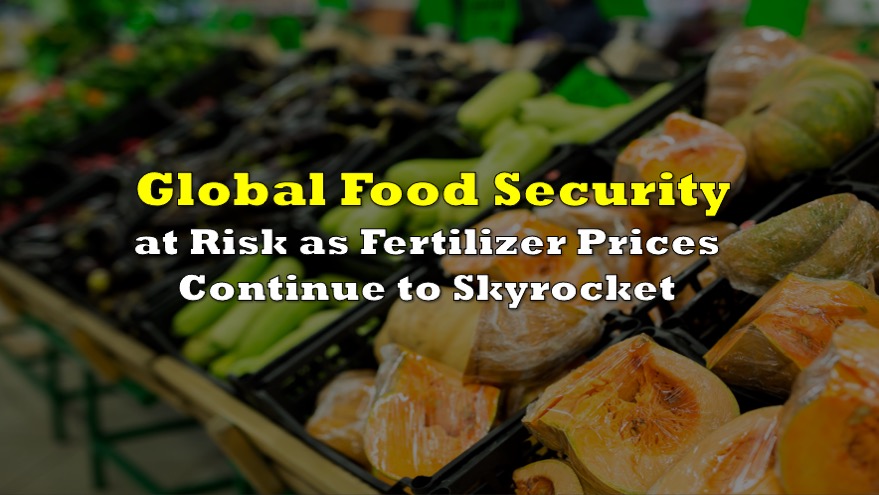
The closure of the Strait of Hormuz cut off a major fertilizer supply corridor, sending urea prices up 47% since the end of February — the largest month-to-month increase on record — and farm diesel up 46% over the same period. Damage to Iran’s South Pars petrochemical complex and Qatar’s Ras Laffan LNG infrastructure means elevated prices are likely to persist regardless of how the conflict resolves.
Also read: Fertilizer Prices Up 87% This Year as Iran War Chokes Global Supply
North Dakota State University researchers project that even under the most optimistic scenario — a partial Strait reopening — urea could peak at $784 per short ton, a 67% increase, in July 2026. Under an extended conflict with the Strait closed through fall, urea could reach $996 per short ton, more than doubling pre-crisis levels.
AFBF President Zippy Duvall called the situation “generational headwinds” at a media briefing on April 14. “The skyrocketing cost of fuel and fertilizer is creating more economic hardships for farmers who have already endured years of losses,” he said. “Without the necessary fertilizers, we’ll face lower yields and some farmers will reduce acres altogether, which will impact food and feed supplies.”
Many farmers report they will cut fertilizer application rates, shift acreage from corn toward less nitrogen-dependent soybeans, or skip applications entirely and absorb the yield loss. AFBF has urged the White House to suspend countervailing duties on imported fertilizer and called on fertilizer companies to avoid price gouging.
The administration has temporarily suspended the Jones Act to allow cheaper fertilizer movement between domestic ports.
Information for this story was found via the sources and companies mentioned. The author has no securities or affiliations related to the organizations discussed. Not a recommendation to buy or sell. Always do additional research and consult a professional before purchasing a security. The author holds no licenses.