China has announced new restrictions on grain imports, particularly focusing on barley and sorghum, in a move that seems less about domestic market dynamics and more about signaling discontent over Canada’s recent trade actions.
This development comes at a time when Beijing is grappling with an economic slowdown and is determined to protect its agricultural sector, but the timing and targets of the import curbs suggest a retaliatory measure against Canada’s imposition of steep tariffs on Chinese-made electric vehicles.
China, the world’s largest importer of barley and sorghum, has recently urged its importers to reduce purchases of these grains. The request was made during a series of meetings with top importers, with officials suggesting halting purchases to manage oversupply and support local prices.
China’s barley and sorghum imports are primarily used for livestock feed and beer production, with substantial volumes typically sourced from Australia and the United States.
According to people familiar with the matter, the new import curbs are expected to affect shipments scheduled from November 2024 onwards. This move aligns with China’s efforts to stabilize its agricultural market amidst a forecasted bumper grain harvest this year and a sluggish domestic demand that has driven prices to their lowest levels in over three years.
For instance, sorghum imports reached 5.21 million tons in the first seven months of 2024, nearly double the volume from the same period in the previous year, with U.S. supplies accounting for more than 80% of the total. Barley imports also surged by 67% following the lifting of a ban on Australian cargoes.
However, the timing of these restrictions raises questions about whether this is purely a domestic policy adjustment or a calculated response to Canada’s aggressive trade measures.
Canada’s tariff on Chinese EVs
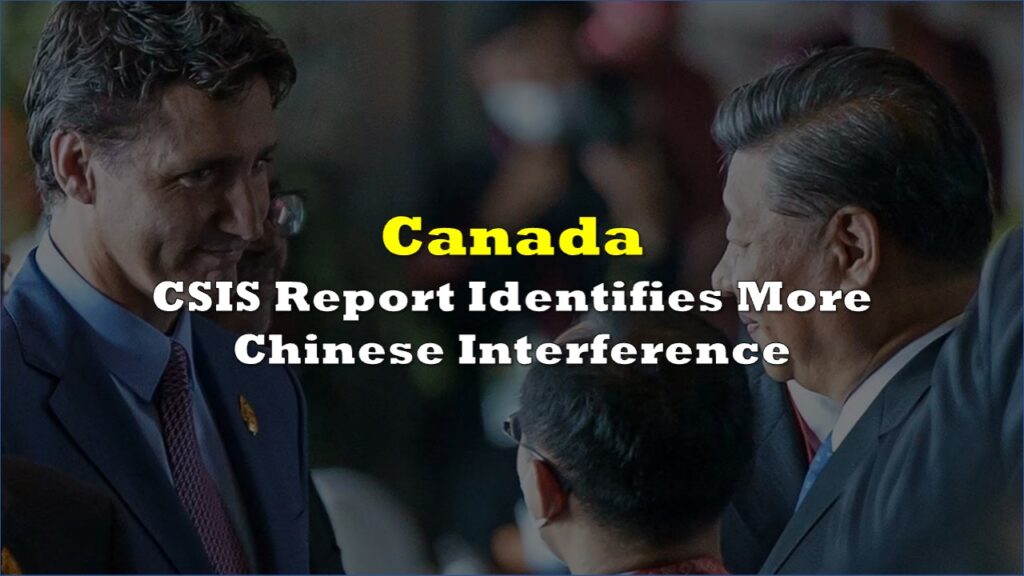
The backdrop to China’s grain import curbs is Canada’s recent decision to impose a 100% tariff on China-made electric vehicles, effective from October 1, 2024. This decision, announced by Prime Minister Justin Trudeau, is part of a broader strategy to protect Canada’s automotive sector and critical industries from what it describes as unfair competition and subsidies by China. Canada has also placed a 25% tariff on Chinese steel and aluminum products, further straining bilateral trade relations.
In response, China has voiced strong objections, labeling the Canadian tariffs as protectionist and a violation of World Trade Organization rules.
“Subsidies do not generate industrial competitiveness while protectionism protects nothing but backwardness. Future development will be sacrificed,” said Lin Jian, a spokesperson for the Chinese Foreign Ministry
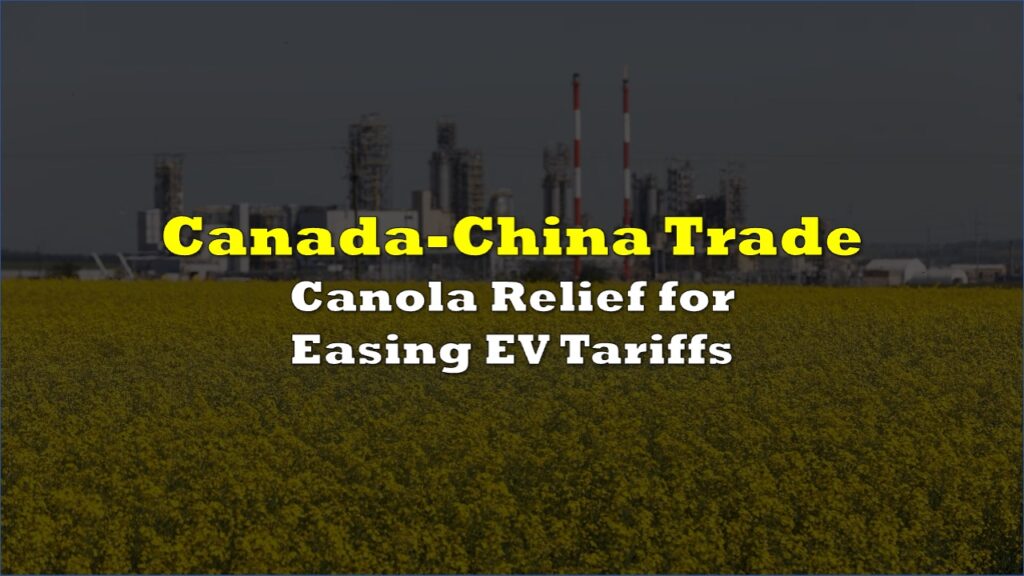
China’s move to curb grain imports could have significant implications for Western Canada, which is heavily reliant on grain exports to China. Stephen Punwasi, a market commentator, highlighted the regional impact of these restrictions on social media: “Oh look,[China] suddenly decided to curb imports of certain grains. [Canada] is China’s second-largest source of barley. Totally random, I know.”
He further elaborated that this move seems designed to target Canada’s western provinces, where the grain industry is a crucial part of the economy, while sparing regions that are politically aligned with Trudeau’s Liberal Party.
Oh look, 🇨🇳 suddenly decided to curb imports of certain grains.
— Stephen Punwasi 🏚️📉🐈☃️ (@StephenPunwasi) August 29, 2024
🇨🇦 is China’s second largest source of barley. Totally random, I know. https://t.co/CSgZJyRs3E pic.twitter.com/WoKfaCGb22
Punwasi also pointed out that while China may be targeting the grain industry now, the broader implications of this trade dispute could have lasting effects on Canada’s economic landscape. “[China] is the biggest destination of grain from Western Canada. They pulled back as Freeland threatened, boosting ON’s economy while hitting the Prairies,” he noted.
Globally, this trade tension could also impact other major grain exporters like Australia and the United States. If China continues to restrict grain imports, these countries may need to find alternative markets, potentially disrupting global agricultural trade flows.
The China-Canada trade relationship has been increasingly strained, with the EV tariff merely the latest in a series of confrontations. Earlier this year, the Biden administration in the United States also raised tariffs on Chinese EVs and steel products, signaling a coordinated effort among Western allies to challenge China’s trade practices.
Moreover, there is concern that Canada’s actions might set a precedent, encouraging other countries to follow suit. As Liu Chunsheng, an associate professor at the Central University of Finance and Economics in Beijing, pointed out, “Canada’s tariffs will become a showcase and affect other countries’ decisions.”
Information for this briefing was found via Bloomberg, BBC, Asia Times, and the sources mentioned. The author has no securities or affiliations related to this organization. Not a recommendation to buy or sell. Always do additional research and consult a professional before purchasing a security. The author holds no licenses.