
Colombia’s presidential race has been forced back to its hardest security question: not which candidate can sound toughest on armed groups, but whether campaigns can safely organize votes in territory where violence still decides who gets to participate.
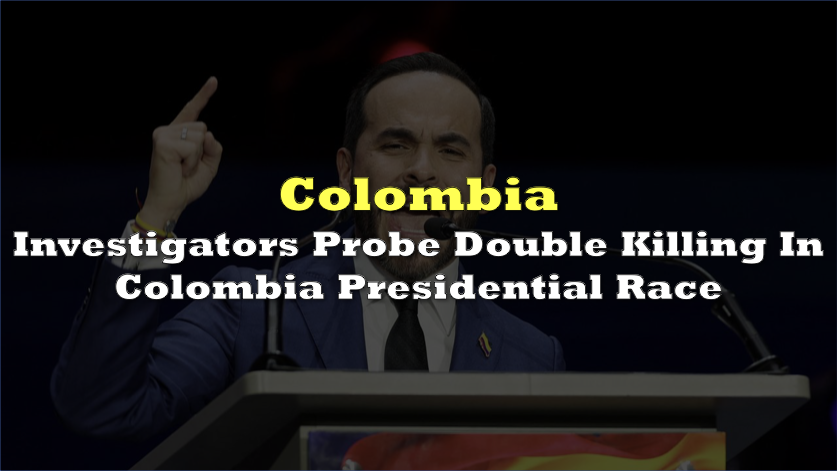
AP reported that Rogers Devia, a former mayor of Cubarral in Meta department and local campaign coordinator for presidential candidate Abelardo de La Espriella, was shot and killed late Friday in a rural area of the municipality. A campaign aide, identified in reports as Eder Fabián, was also killed.
Meta Governor Rafaela Cortés confirmed the attack, while authorities have not identified who carried it out.
 Sponsored · Cambria Gold Mines
Colombia is scheduled to hold its presidential election on May 31.
Devia was not just a campaign volunteer. He governed Cubarral from 2020 to 2023, giving De La Espriella’s campaign a local operator with municipal-level name recognition in a rural zone south of Bogotá.
The state’s first public posture is caution. Interior Minister Armando Benedetti said police and intelligence authorities were investigating the deaths of Devia and Fabián, but added that there was still no hypothesis on the motive. Benedetti also linked Cubarral to a second security file, saying police had prevented a separate plot involving personnel from the campaign of another presidential candidate, Paloma Valencia.
AP reported earlier this month that Colombia had seen at least 26 rebel attacks before the presidential vote, including a deadly highway blast near Cali that killed 21. The attacks were attributed to FARC-EMC, a dissident faction that rejected the 2016 peace deal, though that does not establish responsibility for the Cubarral killings.
Citing the regional security context, AP report described the zone where Devia was killed as disputed among three armed actors, including two groups on the US terrorism list and a FARC offshoot. The Public Defender’s Office warned that the killings could affect “political rights and democratic participation” ahead of the vote.
For De La Espriella, the killing lands directly inside the core promise of his candidacy. The right-wing lawyer and businessman has built a campaign around hardline security, rejecting President Gustavo Petro-era negotiations with armed groups and proposing military crackdowns, coca-crop fumigation, lower taxes, a smaller state, and a revived hydrocarbon sector.
The political race was already tightening around security and fragmentation. Reuters reported in late April that Iván Cepeda of the left-wing Pacto Histórico led an Invamer poll with 44.3% support, ahead of De La Espriella at 21.5% and Valencia at 19.8%, with the two right-wing candidates splitting the opposition vote.
Information for this story was found via the sources and companies mentioned. The author has no securities or affiliations related to the organizations discussed. Not a recommendation to buy or sell. Always do additional research and consult a professional before purchasing a security. The author holds no licenses.