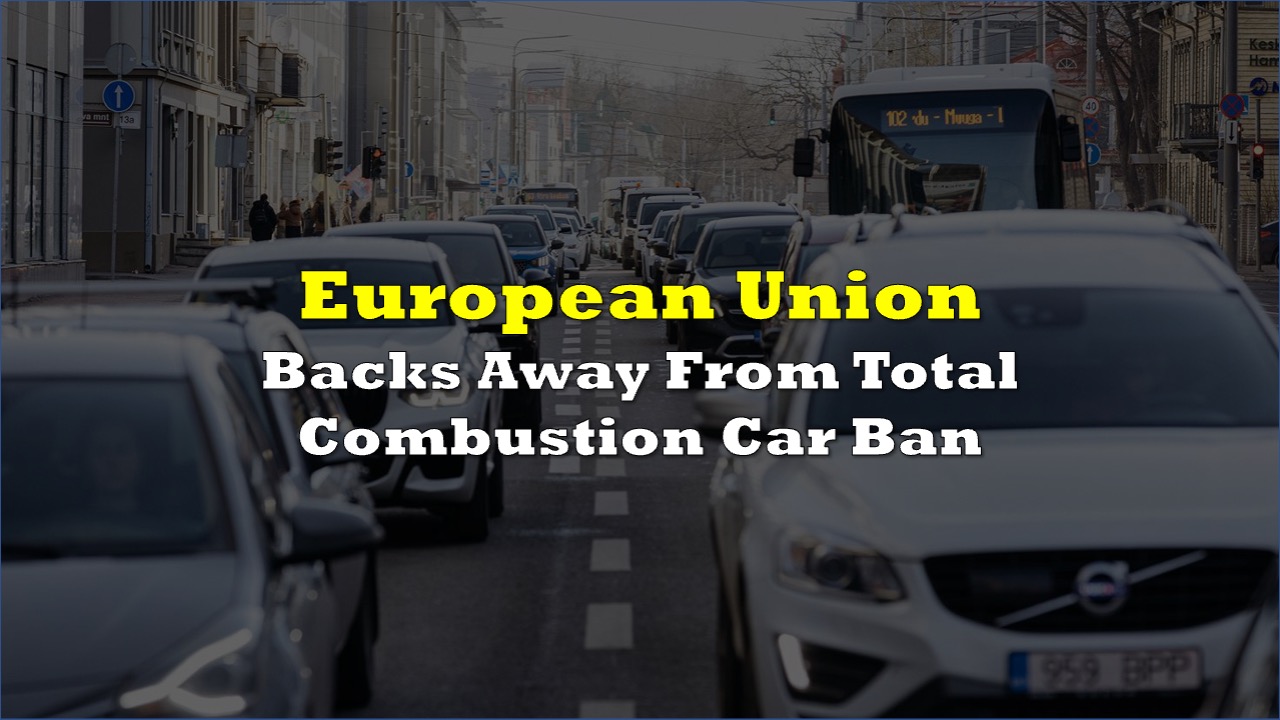

The European Union will replace its planned complete ban on new combustion engine vehicles by 2035 with a more flexible 90% emissions reduction target, European Parliament leaders announced Friday.
The European Commission plans to unveil the revised automotive package on Tuesday in Strasbourg, marking a significant retreat from the bloc’s 2023 climate policy that required all new cars and vans to produce zero CO2 emissions by 2035.
Manfred Weber, president of the European Parliament’s largest group, the European People’s Party, told the German newspaper Bild that automakers must achieve a 90% reduction in CO2 emissions for fleet targets starting in 2035, down from the previously mandated 100%.
“The technology ban on combustion engines is off the table,” Weber stated.
The revision allows continued sales of plug-in hybrid vehicles and potentially vehicles using carbon-neutral fuels beyond 2035. The European Parliament approved the original legislation in February 2023, effectively banning all new combustion engine sales starting January 1, 2035.
Flashback: EU Tries to Find Middle Ground with Vehicles that Run Only On E-Fuels
German Chancellor Friedrich Merz led the push for regulatory relief, writing to Commission President Ursula von der Leyen last month to request more flexibility. German and Italian officials argued that European automakers face mounting pressure from Chinese competitors while electric vehicle demand falls short of projections.
“Large parts of the automotive industry in Europe, including in Germany, and I am referring in particular to the supplier industry, are in an extremely difficult economic situation,” Merz told reporters at a press conference in Heidelberg.
Germany and Italy gathered support from at least four other EU member states to request the policy change, according to a letter sent to von der Leyen earlier this month. The coalition called for allowing plug-in hybrids, range extenders, and fuel-cell technology beyond 2035.
The automotive sector remains split on the revision. The European Automobile Manufacturers’ Association supports the changes, while nearly 200 electric vehicle industry players — including Swedish automakers Volvo and Polestar — urged the Commission to maintain the original 2035 target.
Campaign groups E-Mobility Europe and ChargeUp Europe organized the opposition letter, warning that reopening regulations to plug-in hybrids and alternative fuels “would create uncertainty and slow the shift to electric vehicles.”
Environmental groups criticized the policy change. Colin Walker of the Energy and Climate Intelligence Unit said the revision would “keep millions of European families stuck driving dirtier and more expensive petrol cars for longer.”
The Commission moved up its policy review from the originally scheduled 2026 date after automakers reported struggling with electric vehicle sales. Road transport accounts for approximately 20% of the EU’s total emissions, with passenger cars responsible for more than half of that figure.
The policy shift is the EU’s most significant rollback of Green Deal climate policies implemented over the past five years. Current owners of petrol and diesel vehicles can continue driving, selling, and buying their cars regardless of the new regulations, which apply only to new vehicle sales.
Related: European Parliament Votes to Dramatically Scale Back ESG Reporting Rules After US Pressure
Information for this story was found via the sources and companies mentioned. The author has no securities or affiliations related to the organizations discussed. Not a recommendation to buy or sell. Always do additional research and consult a professional before purchasing a security. The author holds no licenses.