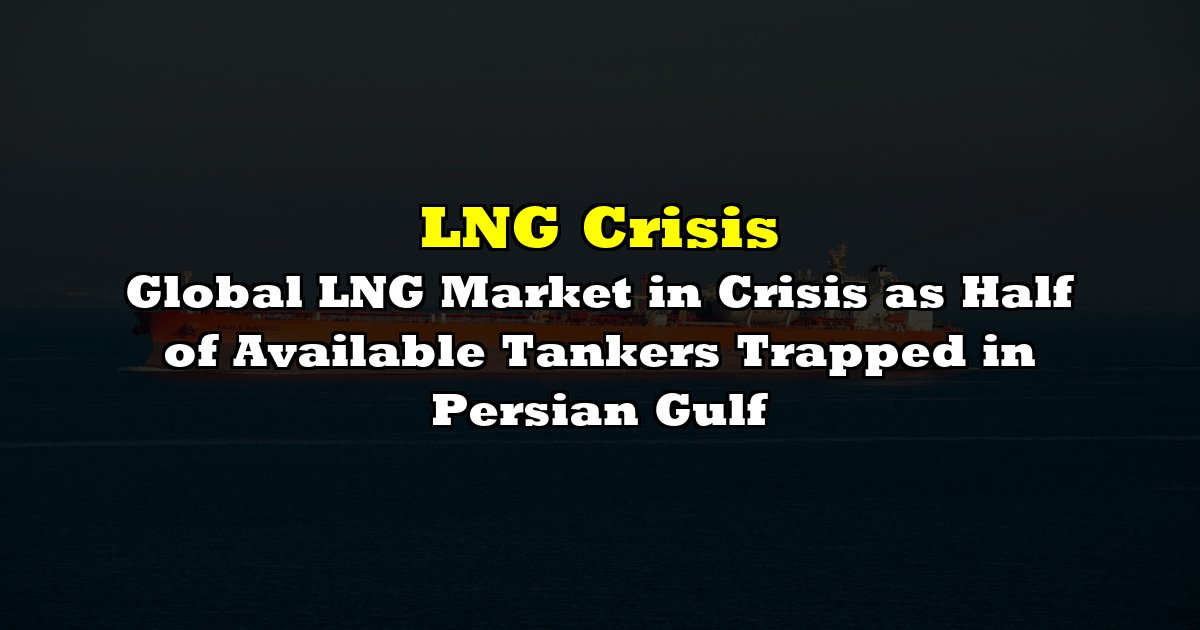

A staggering 20 LNG carriers—nearly half of the world’s available fleet—are currently trapped in the Persian Gulf, intensifying a supply crisis as hostilities in the region disrupt key energy routes through the Strait of Hormuz.
Daily freight rates for these vessels have skyrocketed to over $200,000, more than doubling from under $98,000 before the conflict escalated, driven by surging demand from Asia. With 20% of global LNG exports originating from Gulf countries, the blockade has throttled supply lines, particularly after an Iranian drone strike forced the shutdown of Qatar’s Ras Laffan export facility last week. Qatar alone accounts for a fifth of the world’s LNG, and with no alternative export routes or spare capacity to offset the loss, the market is reeling.
Energy traders anticipate LNG prices will climb further by early next week, building on a 40% surge already recorded in Asia and Europe this week. The ripple effects are evident as at least nine shipments initially bound for Europe have diverted to Asia, lured by higher bids, according to ship-tracking data. Asian importers, bracing for prolonged disruptions, are securing cargoes for delivery through May, with countries like Thailand, Bangladesh, Taiwan, and South Korea actively procuring additional supply.
 Sponsored · Altamira Gold Corp.
Compounding the chaos, major suppliers such as Shell Plc have declared force majeure on Qatari LNG shipments to Asian customers, signaling severe constraints on availability. India, which relies on Qatar for half its LNG imports, has struggled to source alternatives, though Gail India Ltd. managed to secure a cargo for March after several failed attempts.
The outlook remains grim, with industry experts warning of a supply shock lasting two to four months. Taiwan, heavily dependent on LNG for helium production critical to semiconductor manufacturing, has secured supply through April but is already planning for May contingencies. The market’s buffer of spare capacity is evaporating, setting the stage for intensified competition and sustained price pressure across both Europe and Asia.
Information for this story was found via the sources and companies mentioned. The author has no securities or affiliations related to the organizations discussed. Not a recommendation to buy or sell. Always do additional research and consult a professional before purchasing a security. The author holds no licenses.