
Europe is considering using a large share of its emergency diesel reserves not only to cool fuel prices, but potentially to secure continued access to US supply after Washington threatened to restrict exports.
EU governments discussed a French proposal Friday to release 50 million barrels of diesel, while International Energy Agency members would separately provide another 50 million barrels of crude oil, according to two people familiar with the talks cited by Reuters. One source said EU governments also discussed making any diesel release conditional on a US commitment not to impose a unilateral export ban.
The proposal would amount to roughly 17% of the EU’s emergency diesel and gasoil stocks and about 3% of annual consumption, based on Eurostat data cited by Reuters. It has not been approved.
 Sponsored · Selkirk Copper Mines
The discussions follow pressure from the Trump administration on France and Germany, which hold more than one-third of the bloc’s strategic diesel reserves. Washington had warned the two countries to release emergency fuel or face the possibility of restrictions on US diesel exports.
Exactly how much diesel Washington has requested remains unclear. One Reuters source described a request for 120 million barrels over six months, while another subsequently put the figure at 100 million barrels within 20 days.
Markets price in more supply
The prospect of coordinated reserve releases moved commodity markets immediately. European gasoil futures, a diesel benchmark, fell about 5% to $1,380.50 per metric ton on Friday. Brent crude dropped 2.5% to $99.74 per barrel, while WTI fell 3.8% to $89.34.
The proposed release comes as refined fuel supply has tightened across several major exporting regions. Russia has restricted diesel exports, Chinese refiners suspended overseas fuel shipments for October, and the war involving Iran has disrupted Middle Eastern energy flows. Europe has also become more reliant on US diesel after reducing Russian imports and losing domestic refining capacity.
Those disruptions have already prompted unprecedented reserve use. IEA members agreed in March to make 400 million barrels of emergency oil available, the largest coordinated release in the agency’s history. The IEA later said the planned contribution had risen to about 426 million barrels, including 119 million barrels of oil products.
The European Commission publicly pushed back against Washington’s threatened restriction Friday. Spokesperson Anna-Kaisa Itkonen said the EU “fully rejects” an export ban, warning that it would damage confidence in the US as a reliable supplier.
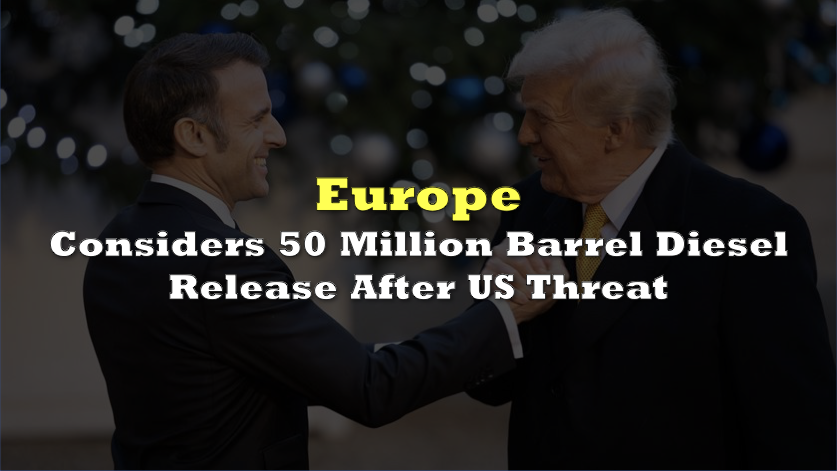
French President Emmanuel Macron is also seeking a G7 discussion on crude and refined-product supplies. The Élysée said Macron had stressed coordination without export restrictions after discussing fuel markets with President Donald Trump.