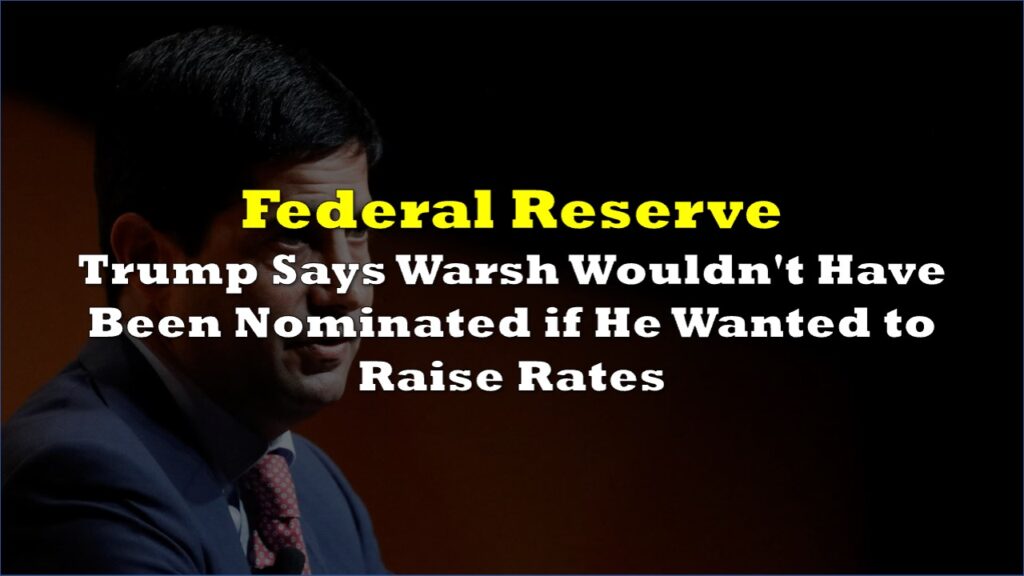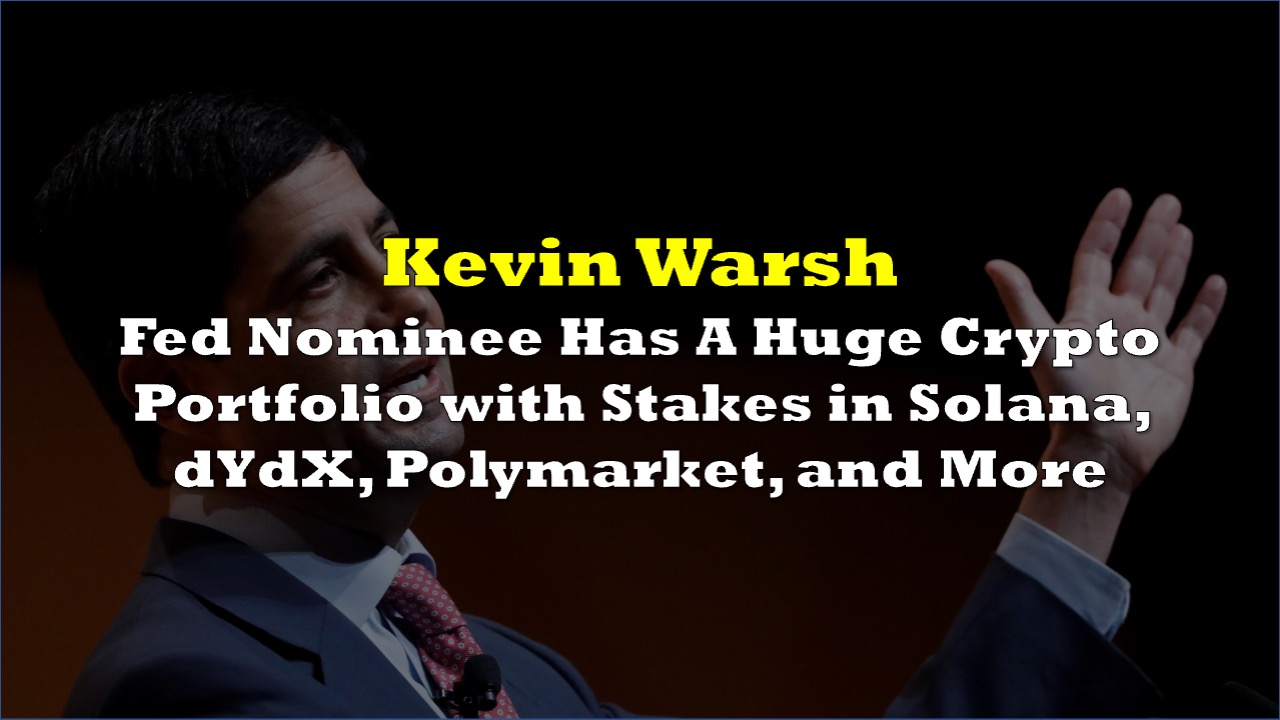

Kevin Warsh, President Trump’s nominee to chair the Federal Reserve, disclosed more than 30 cryptocurrency-related investments in a financial filing released Tuesday — a portfolio spanning DeFi protocols, Ethereum scaling networks, Bitcoin payment infrastructure, and prediction markets that could complicate his oversight of the very industry he holds stakes in.
The filing, submitted to the US Office of Government Ethics on April 14, shows that his combined assets with his wife, Jane Lauder, are at least $192 million — significantly exceeding the wealth of all recent Fed chairs. His confirmation hearing is scheduled for April 21.
Read: Trump’s Fed chair pick: Who is Kevin Warsh and why markets flinched
 Sponsored · Altamira Gold Corp.
The bulk of Warsh’s wealth sits in two Juggernaut Fund LP positions worth more than $50 million each, tied to his advisory work with billionaire Stanley Druckenmiller’s Duquesne Family Office, plus $10.2 million in consulting fees from Druckenmiller’s firm. Both must be divested if confirmed. The fund’s underlying assets are shielded by confidentiality agreements.
The crypto holdings are spread across multiple fund vehicles and are individually small — most under $1,000 per OGE reporting rules, or under $500,000 in total through DCM Investments 10 LLC.
As CoinDesk noted, “they’re small venture bets, not concentrated positions.” What makes them significant is their breadth and policy relevance. Warsh holds indirect stakes in Solana, Optimism, and the Lightning Network through one fund vehicle; Compound, Blast, dYdX, and Polychain through another; and Dapper Labs, DeSo, Eulith, OnJuno, Friends With Benefits, Flashnet, Lemon Cash, Polymarket, and Tenderly through others. A direct stake in Web3 company Metatheory is also listed.
The hurdle is not just government-wide ethics rules — it is the Fed’s own. The central bank’s internal rules, formalized in 2022, explicitly prohibit Fed officials from owning bank stocks and crypto-related investments, and are more stringent than standard OGE requirements. Warsh must fully divest his crypto positions before assuming the role.
 Sponsored · Cambria Gold Mines
Even after divestiture, federal ethics rules require a one-year cooling-off period for matters affecting recent financial interests — limiting his ability to act at precisely the moment Congress is debating stablecoin frameworks and bank crypto custody rules.
The Fed’s stance on whether banks can custody digital assets, tokenized deposits, and CBDC guidance all directly affect the protocols in his portfolio.
Related: Fed Chair Powell Warns US Debt Path ‘Not Sustainable’ as Iran War Strains Global Markets
Columbia Law professor Kathryn Judge told Reuters the filing is “a snapshot into how wealth and connections build greater wealth and connections,” adding that “perhaps most striking were the many arrangements that were not fully disclosed because of pre-existing confidentiality agreements. When those disclosures leave questions unanswered, the Senate can and should use the hearings to get the information it needs.”
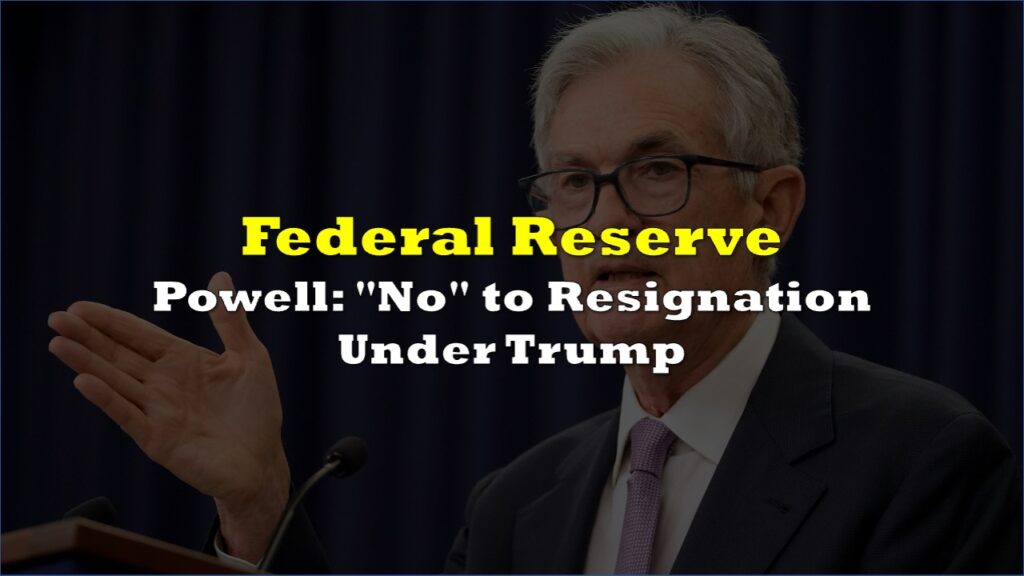
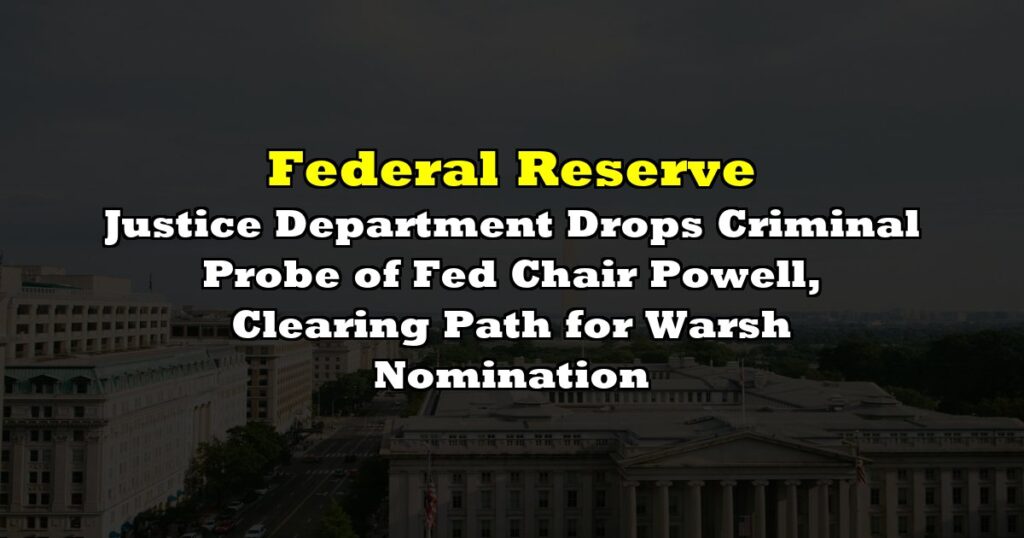
Senator Thom Tillis is blocking a final floor vote until the Justice Department drops its criminal investigation of current Fed Chair Jerome Powell, whose term expires May 15.
Related: Hassett Confident Jerome Powell Will Step Down as Fed Chair in May
Warsh has previously described Bitcoin as “an important asset” and “a very good policeman for policy,” arguing its price can signal when the Fed is behind the curve on inflation. His crypto exposure dates to early investments through Marc Andreessen and stakes in firms including Basis and Bitwise Asset Management.
Information for this story was found via the sources and companies mentioned. The author has no securities or affiliations related to the organizations discussed. Not a recommendation to buy or sell. Always do additional research and consult a professional before purchasing a security. The author holds no licenses.