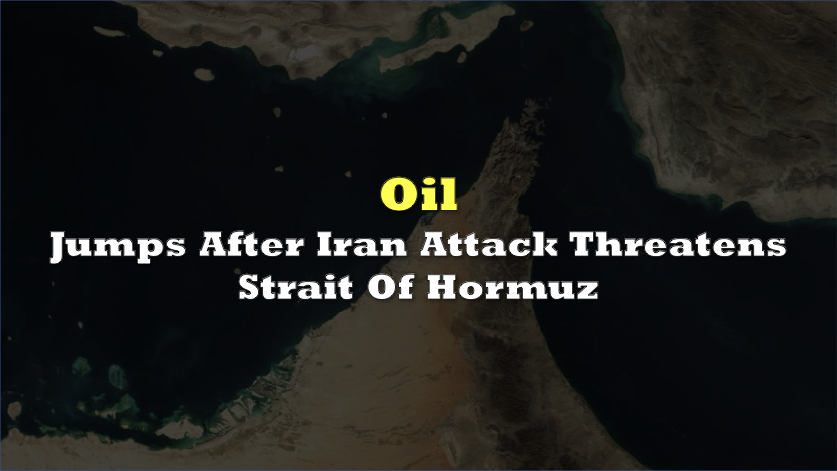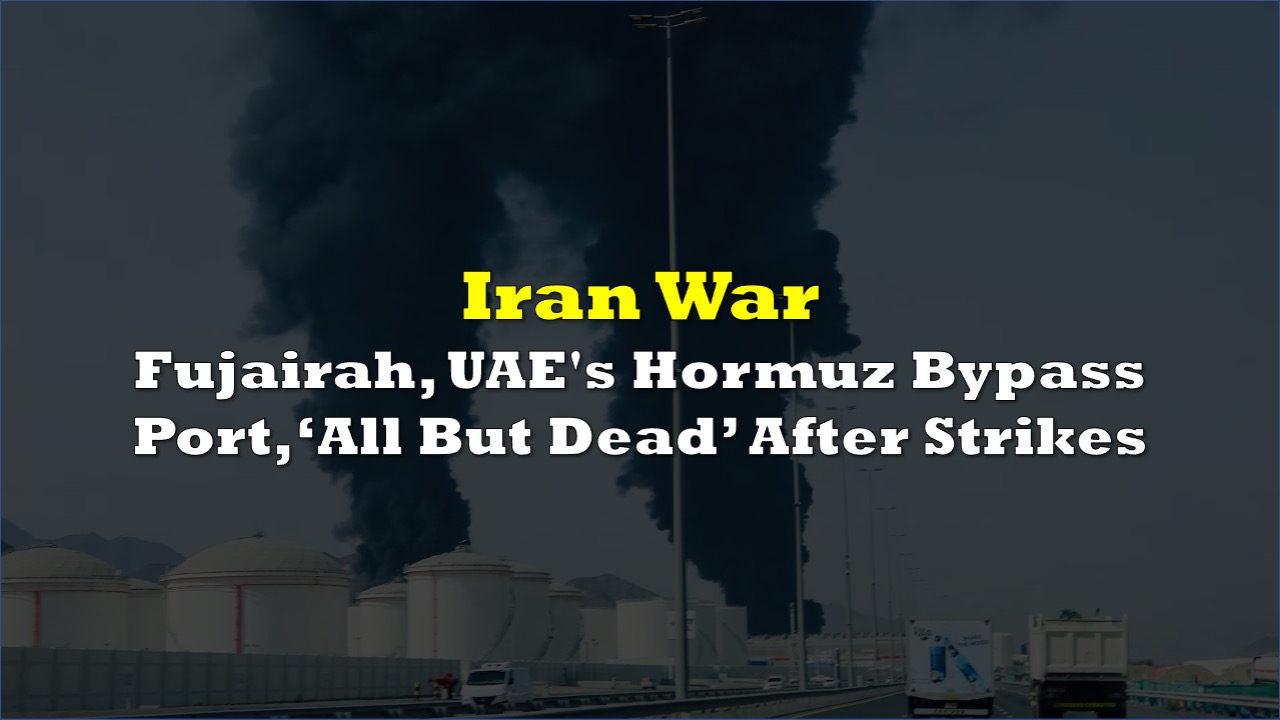

Fujairah, the UAE’s main tanker shuttle port and primary bypass for the Strait of Hormuz, is “all but dead” after Iranian missile strikes this week, energy markets research firm HFI Research said on X, estimating the disruption could remove roughly 6 million barrels a day from the market.
MarineTraffic data showed fewer than a dozen vessels crossing Hormuz in the 24 hours after the attack, compared with more than 130 daily transits before the war. Shipping data reviewed separately by bne IntelliNews also showed dozens of tankers anchored off Fujairah rather than transiting the strait.
The strikes hit two UAE supertankers, the Mombasa and Al Bahyah, in Hormuz’s southern lane Tuesday, killing one crew member and injuring eight others. Iran’s Revolutionary Guard claimed responsibility, and a third, smaller tanker was also attacked around the same time.
Some tanker owners are now avoiding not just the strait itself but also the Fujairah transshipment points where UAE crude is loaded onto larger ships bound for Asia, worried that those anchorages could become targets too.
 Sponsored · Altamira Gold Corp.
The attacks are part of a broader pattern of economic pressure Iran made explicit hours later, after the US reimposed its naval blockade on Iranian ports early Wednesday. The IRGC warned it would close “all other export corridors that benefit the U.S. and its allies,” declaring that regional energy exports would be “either shared by all, or denied to all.”
Iran’s semi-official Tasnim news agency specifically named the UAE’s Habshan-Fujairah pipeline and Saudi Arabia’s East-West pipeline as targets, the same pipeline the UAE is racing to expand.
DP World is in active talks to build a new container terminal there, the Financial Times first reported, after container volumes at its flagship Jebel Ali port collapsed roughly 95% since the war began in February. A DP World official called the project “defensive in case things go wrong.”
ADNOC is separately fast-tracking a second Fujairah crude pipeline, targeted for 2027. UAE Minister of Foreign Trade Thani Al Zeyoudi told Bloomberg in June that the country is working toward “zero Hormuz dependency”, regardless of whether the strait itself reopens.