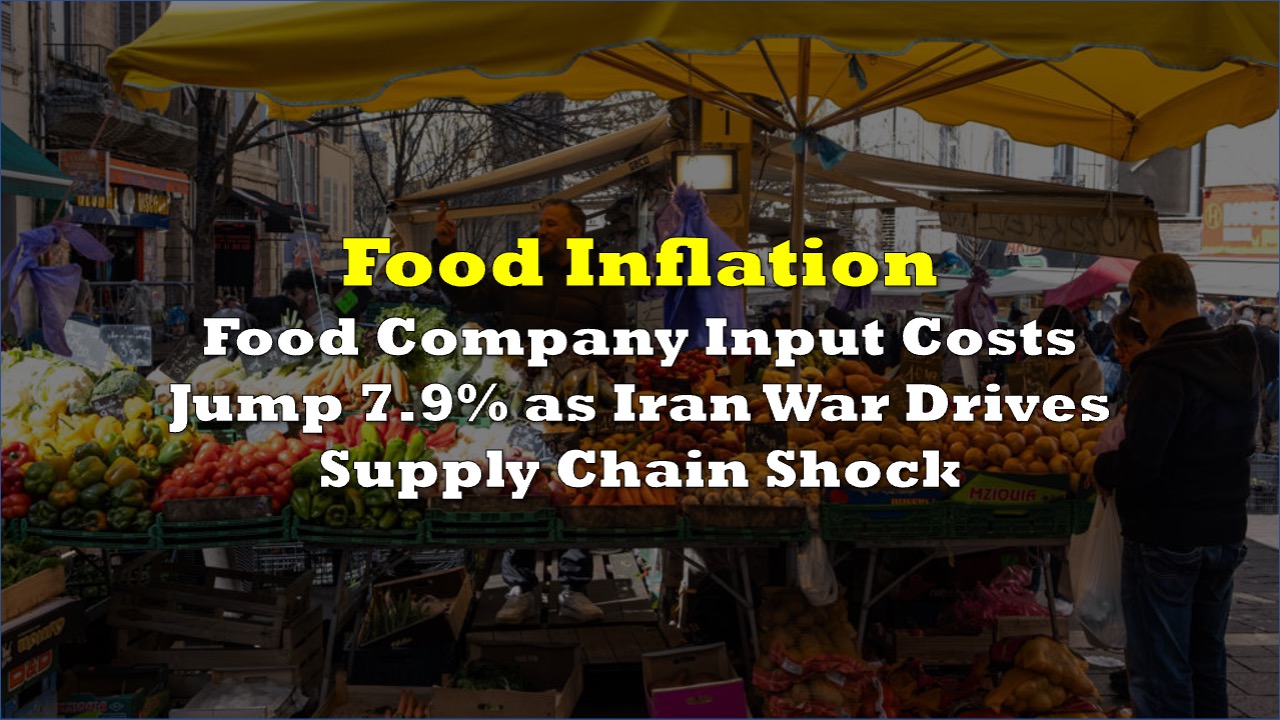

Input costs for food and beverage companies surged 7.9% year-on-year in March, nearly doubling February’s 4.2% reading, according to Bank of America‘s Commodity Inflation Trendspotter — and analysts warn the worst is still ahead as fertilizer price shocks have yet to fully filter through.
The 373-basis-point jump was driven primarily by fuel costs tied to the US-Iran war and the effective closure of the Strait of Hormuz since late February.
More than a third of globally traded fertilizer passes through the Strait of Hormuz, and its closure has sent a separate, still-building shock through agricultural markets. Nitrogen fertilizer prices have climbed more than 30% since the war began, while urea has surged 47% — the largest month-to-month increase on record, according to the American Farm Bureau Federation. Combined fuel and fertilizer costs for US farmers are up 20% to 40%.
 Sponsored · Cambria Gold Mines
Roughly 80% of US farmers locked in fertilizer contracts last fall, leaving only 20 to 25% exposed to spot prices this planting season — which is why the fertilizer shock hasn’t hit food company data yet. As pre-purchased stocks run out and new contracts are priced at current rates, cost pressure will move from farms to manufacturers to grocery shelves.
UNOPS executive director Jorge Moreira da Silva warned of a real risk of a global food crisis if the strait remains closed, saying “clearly we are seeing a crisis emerging” in agriculture. The planting window in much of Africa closes in May — leaving little time before crop yields are permanently affected.
Seventy percent of US farmers say fertilizer prices have climbed so high that they cannot afford all they need for the 2026 planting season, the American Farm Bureau Federation found. The federation’s president warned that reduced fertilizer application means lower yields and fewer planted acres — directly constraining food supply later in the year.
The USDA Economic Research Service projected food prices would rise 3.1% in 2026 as of February — before the Iran war. By March, with oil prices already rising, it revised that figure up to 3.6%. China has added further pressure by restricting fertilizer exports, including urea, to prioritize domestic agricultural needs.
BofA economists describe the Iran war as “yet another supply-driven stagflation shock” following the Russia-Ukraine war and last year’s tariffs — one that puts the Federal Reserve’s dual mandate under direct pressure, with risks skewed upward for both inflation and unemployment simultaneously.
Information for this story was found via the sources and companies mentioned. The author has no securities or affiliations related to the organizations discussed. Not a recommendation to buy or sell. Always do additional research and consult a professional before purchasing a security. The author holds no licenses.