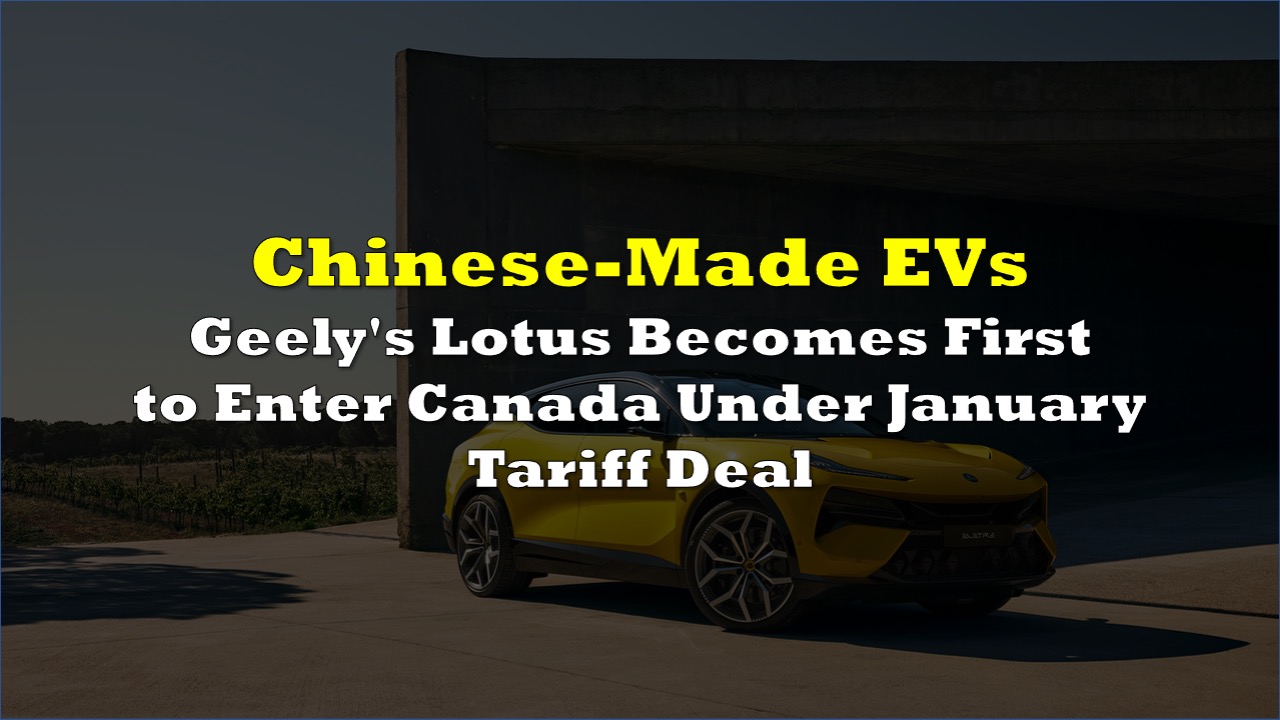

The first Chinese-manufactured electric vehicles will reach Canadian buyers next month, China’s ambassador to Ottawa said, marking the first concrete shipment under a tariff arrangement Prime Minister Mark Carney struck with Beijing in January, the deal this outlet first covered when it traded lower EV tariffs for relief on Canadian canola exports.
Ambassador Wang Di told Reuters that Geely Holding Group‘s Lotus brand will deliver its first vehicles to Montreal next month, with a ceremony planned to mark the occasion. They will be the first Chinese-owned and manufactured vehicles sold in Canada since Ottawa imposed a 100% tariff on Chinese EVs in 2024, a levy matched to the United States’ own duties under the Trudeau government.
The shipment falls under a quota Carney negotiated during a January visit to Beijing, when Canada agreed to admit up to 49,000 Chinese-made EVs in the program’s first year, growing to 70,000 over five years, at a tariff cut to roughly 6.1% from 100%.
 Sponsored · Selkirk Copper Mines
Read: Canada Reviews Chinese EV Tariffs as Farmers Face $1B Losses From Chinese Retaliation
In exchange, Beijing brought its own tariff on Canadian canola seed down sharply, from the mid-80s to the mid-teens percent, a trade Deep Dive reported on as it was first floated ahead of Carney’s trip and again once the broad terms were finalized in January.
China extended tariff relief to some other Canadian products in March 2026, including canola meal, peas, and lobster, though that relief expires at the end of this year, while duties on canola oil and pork remain unchanged at 100% and 25%, respectively.
Wang said other Chinese brands, including Chery and BYD, are still working through the regulatory steps required before they can ship vehicles to Canada, with BYD telling Reuters it expects to begin sales next year. He added that Chinese automakers have expressed interest in joint ventures inside Canada but plan to focus first on direct sales and gauging demand.
Read: Canada’s doors to Chinese EVs start to open with BYD, Chery
The arrangement has since drawn criticism on multiple fronts. Canadian autoworkers’ union Unifor has warned that growing Chinese access to the market threatens domestic auto jobs, while US officials have raised concerns that preferential access for Chinese EVs through Canada could complicate North American supply chain alignment under the CUSMA framework.
Related: Carney’s hot mic moment with Trump: Is he pitching Chinese EV?
Wang also said Canadian exports to China have already risen 27.5% in the five months since Carney’s visit, as Ottawa pursues a target of expanding exports to China by 50% by 2030, a goal Chinese Foreign Minister Wang Yi said last month could realistically reach 100%, with Wang suggesting it could even reach 200% under the right conditions.
The ambassador said Canada could supply nearly 22 million metric tons of crude oil to China annually, up from 15.5 million tons last year, and pointed to strong potential for Chinese purchases of Canadian liquefied natural gas. He declined to say whether China would extend or deepen tariff relief on canola oil and pork, framing continued progress as contingent on both countries treating each other fairly and as equals, and warning of “a negative impact” if that balance breaks down.