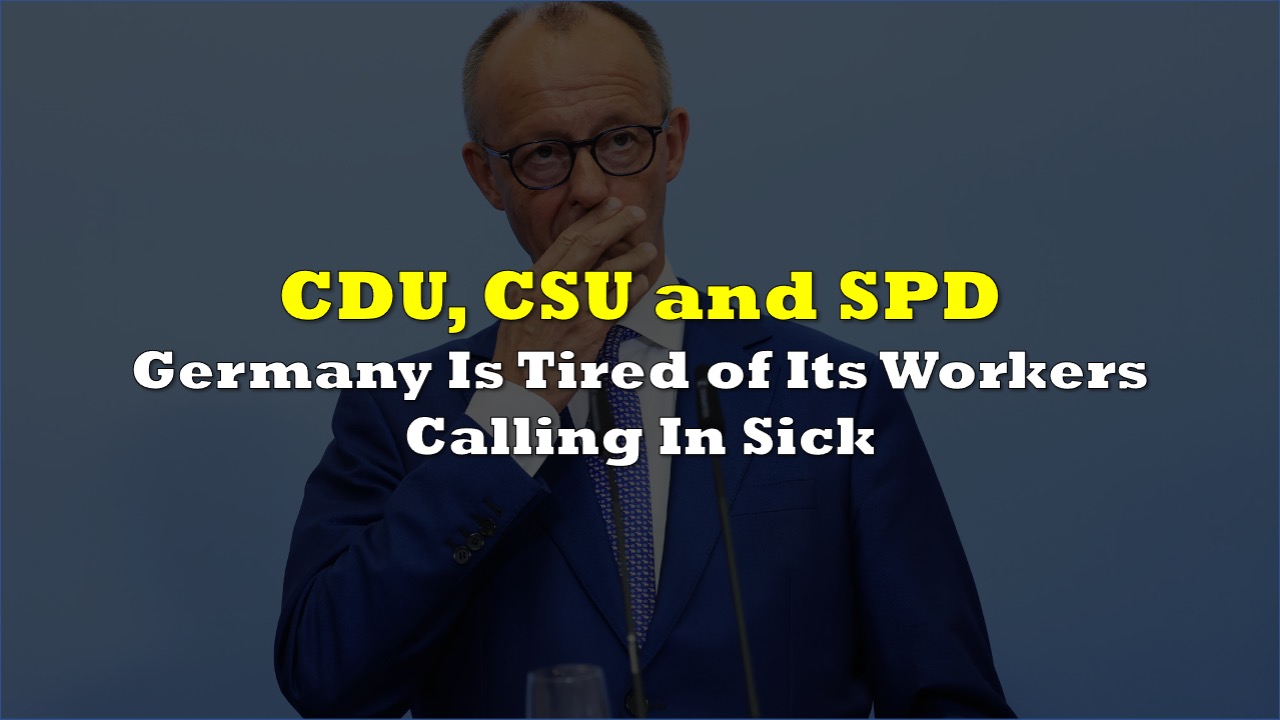

Germany’s chancellor has a message for workers who call in sick without seeing a doctor — those days are over.
“We can no longer accept the extraordinarily high levels of sick leave in our companies,” Chancellor Friedrich Merz said this week, announcing that phone-based sick notes are getting scrapped. Employees who could previously self-certify for up to three days off, or call a doctor for a weeklong sick note without ever showing up in person, will now need a medical certificate starting on day one of any illness.
It’s one line in a 34-measure overhaul the ruling coalition of the CDU, CSU, and SPD unveiled Thursday after seven hours of negotiations, dubbed the “Programme for Revival and Employment.”
 Sponsored · Selkirk Copper Mines
The reform package
Merz framed the broader push as an economic reset after more than a year of coalition infighting and stagnant growth. “We’re setting out into the future,” he said at a press conference in the Chancellery garden in Berlin.
The package leans on three main pillars.
Taxes. The coalition is putting through roughly 10 billion euros, or about $11.4 billion, in annual income tax relief aimed at lower- and middle-income earners, starting January 1, 2027. To help pay for it, the coalition is restructuring the top bracket — the existing 42% rate will only kick in above the current 70,000-euro threshold, while a new tiered system taxes income above 250,000 euros at 45% and above 280,000 euros at 47%. The coalition is calling it a “fair sharing of the burden through a moderate increase in the tax on the rich.”
Pensions. The government is adopting all 33 recommendations from a commission it appointed earlier this year, including a gradual increase to the retirement age — currently 65 to 67 depending on years worked — tied to life expectancy, plus a shift toward a Swedish-style pension fund model. The coalition expects to pass the legislation by the end of the year.
 Sponsored · Cambria Gold Mines
Labor flexibility. Fixed-term contracts without a stated cause can now run up to 48 months, double the previous limit, for workers hired through 2030. The package also loosens Sunday retail hours and cuts a range of corporate reporting requirements, part of a push to reduce federal ministry staffing by 8% through digitization.
The pushback
Reaction split almost exactly along employer-labor lines. Rainer Dulger, president of the Confederation of German Employers’ Associations, welcomed the sick-leave change as the first meaningful labor-law loosening in decades.
Unions went the other direction — Verdi chairman Frank Werneke argued forcing sick employees to see a doctor from day one “reflects a fundamental culture of mistrust,” and DGB confederation chair Yasmin Fahimi called the broader package an unnecessary cutback.
Doctors’ groups raised a different concern. Markus Blumenthal-Beier, head of the German Association of General Practitioners, called the day-one certificate requirement “absolutely catastrophic,” warning it would flood practices with people seeking paperwork for minor illnesses rather than needed care.
The consumer group vzbv disputed the underlying premise, noting phone-based sick notes made up roughly 1% of all certificates issued.
Markets, meanwhile, read it differently. Deutsche Bank senior economist Marion Muehlberger described the announcement as one of Germany’s largest structural reform packages in decades, a sign the coalition can still agree on major changes despite months of visible friction.
Why now
Germany’s economy is projected to grow just 0.5% this year, dragged down further by fallout from the Iran war, on top of existing pressure from Chinese competition and elevated energy costs. Merz’s coalition, which took office just over a year ago, has struggled with approval ratings and currently trails the far-right Alternative for Germany party in national polling, with a closely watched Saxony-Anhalt state election coming in September.
The reform push reads as much like a political survival plan as an economic one.