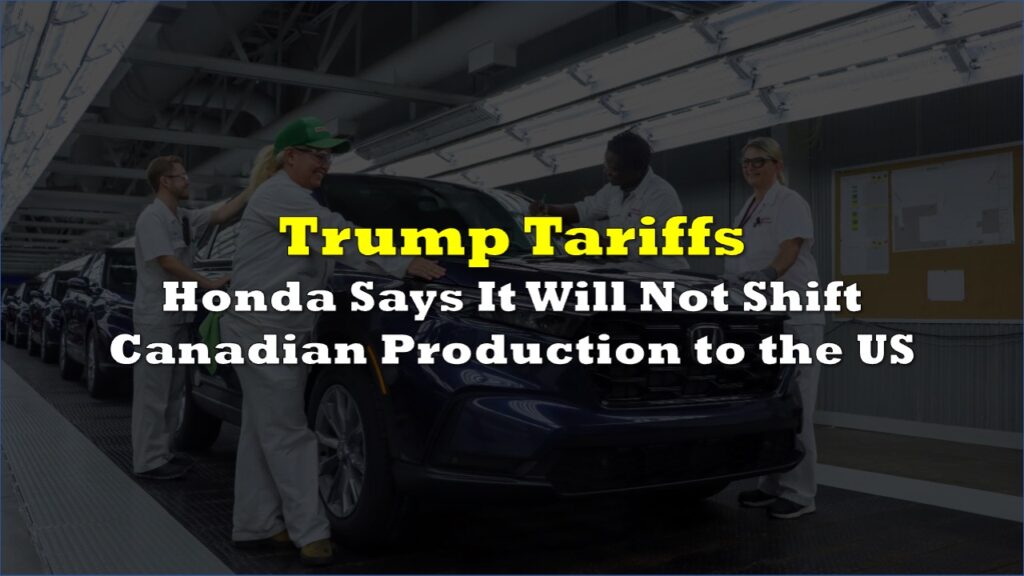

Honda Motor has indefinitely suspended plans to build a $11 billion electric vehicle (EV) factory and accompanying battery plant in Ontario, as weakening U.S. demand forces the Japanese automaker to pivot toward hybrids in its North American strategy.
The decision follows a two-year postponement announced in May 2025, with the project initially slated for a 2028 launch. Honda had planned to invest 15 billion Canadian dollars in the facilities, targeting an annual production capacity of 240,000 vehicles. Discussions with the Canadian government are underway, and the company has not ruled out scrapping the project entirely, depending on evolving EV policies in North America.
U.S. market conditions have deteriorated sharply, with EV sales plummeting 36% in the October-December quarter of 2025. Policy shifts have compounded the challenge—tax incentives under the 2022 Inflation Reduction Act were eliminated in September under President Donald Trump, inflating prices for flagship EVs by about 20%. Additionally, relaxed U.S. fuel economy standards in December have reduced pressure on automakers to prioritize EV production.
In contrast, hybrid vehicles are gaining traction, capturing a record 19% of new car sales in the U.S., up from 11% a year earlier. Honda is realigning its North American focus accordingly, planning to leverage its Ohio facilities—where it invested $1 billion through 2025—to produce gasoline, hybrid, and EV models on shared lines. A battery factory in Ohio, originally built with LG Energy Solution for EVs, will now also support hybrid and energy storage production.
 Sponsored · Cambria Gold Mines
Honda’s EV retreat extends to specific models. The Prologue EV, developed with General Motors and launched in 2024, will cease production as early as the second half of 2026, with sales ending once inventory is depleted. The Acura ZDX EV was discontinued last year, and development of three electric models for North America, including two from the flagship 0 series, was canceled in March 2025.
Financially, the pivot is costly. Honda anticipates losses of up to 2.5 trillion yen ($15.6 billion) in fiscal 2026 tied to its EV strategy overhaul. It will also scale back its global electrification and software investment target by 2030 from the current 7 trillion yen.
Globally, Honda’s challenges are not limited to North America. Its sales dropped 8% in 2025 to 3.52 million vehicles, with a steep 60% decline in China from its 2020 peak due to intense price competition with local rivals. North America, however, remains a stronghold, accounting for over 40% of total sales driven by robust demand for gasoline and hybrid models.
The broader industry is grappling with similar headwinds. Nissan Motor has canceled plans for two EV models in Mississippi, while General Motors, Ford, and Stellantis have paused EV projects or reported significant write-downs. Despite North America’s struggles, global EV and plug-in hybrid sales grew 18% in 2025 to 18.12 million units, fueled by rising gas prices amid Middle East turmoil.
Honda will detail its revised business plans, including the North American strategy revamp and approaches to stabilize operations in China and expand in India, at a briefing later this month.
Information for this story was found via the sources and companies mentioned. The author has no securities or affiliations related to the organizations discussed. Not a recommendation to buy or sell. Always do additional research and consult a professional before purchasing a security. The author holds no licenses.