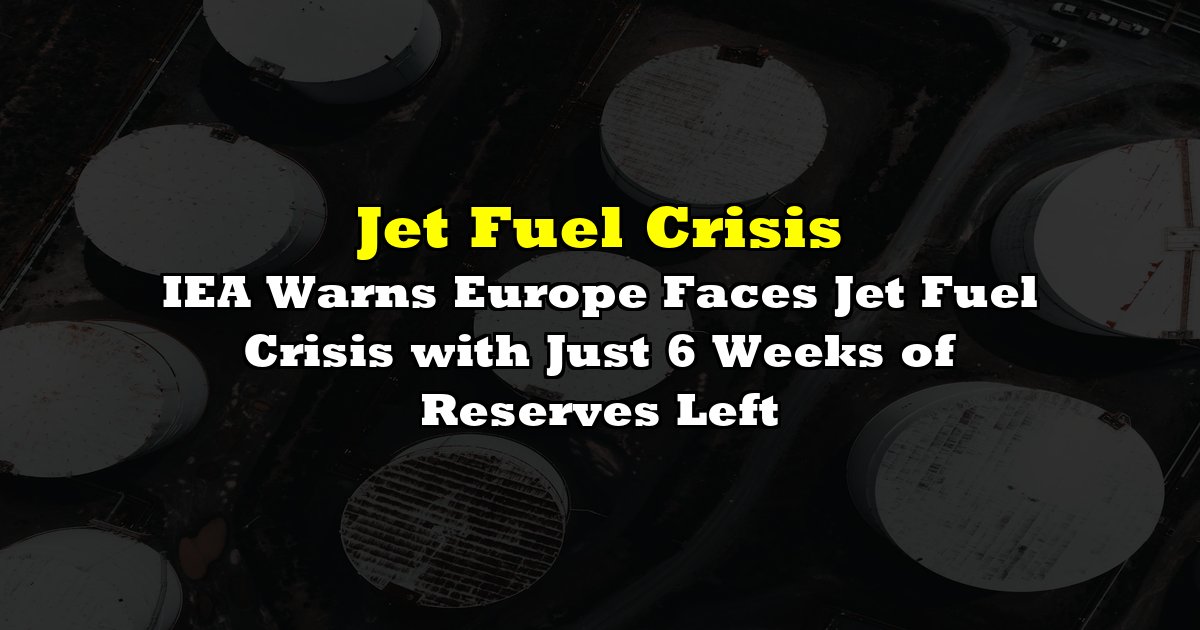

Europe is on the brink of a severe jet fuel shortage, with the International Energy Agency warning that current reserves may last just six weeks if alternative supplies are not secured. IEA Executive Director Fatih Birol highlighted the crisis, noting that a prolonged blockade of the Strait of Hormuz by Iran could trigger flight cancellations as early as June.
The Strait, a critical chokepoint for jet fuel exports from the Gulf, has been closed for over six weeks due to escalating tensions following US and Israeli military actions. The Middle East typically supplies about 75% of Europe’s jet fuel imports, and the disruption has driven the benchmark European jet fuel price to a record $1,838 per tonne in early April, more than double the pre-conflict level of $831. The IEA’s latest oil market report underscores that without replacing at least half of these lost imports, physical shortages could emerge at select airports, derailing summer travel plans.
European countries are racing to source replacement supplies, with a notable uptick in US jet fuel exports in recent weeks. However, even if all these shipments head to Europe, they would cover only slightly more than half of the shortfall. The IEA projects that securing three-quarters of the lost Gulf supplies could delay shortages until August, but the margin for error remains razor-thin as the peak travel season looms.
 Sponsored · Selkirk Copper Mines
Airlines are already feeling the pinch. EasyJet reported £25 million in additional fuel costs for March alone, despite hedging over 70% of its summer fuel needs at pre-conflict prices. The budget carrier also noted a 2% drop in forward bookings for later in 2026, signaling customer hesitation amid rising costs and uncertainty. Across the sector, fuel accounts for 20-40% of operating expenses, making the price surge a direct threat to profitability.
The broader economic stakes are staggering, with air travel contributing 851 billion euros annually to European GDP and supporting 14 million jobs, according to Airports Council International Europe. ACI warned last week that without reopening the Strait of Hormuz within three weeks, peak summer travel disruptions could deliver harsh economic blows to tourism-dependent member states.
Birol painted a grim picture of the cascading effects, predicting higher gasoline, gas, and electricity prices globally if the blockade persists. He described the situation as potentially “the largest energy crisis we have ever faced,” with emerging economies particularly vulnerable to energy rationing and stunted growth. Analysts at Rystad Energy and ING echoed this urgency, noting that the crisis hinges on restoring Middle East supply flows through the Strait.
For now, the European Commission maintains that crude oil supplies to EU refineries are stable, with no immediate need for stock releases. Yet, it conceded that supply issues could surface soon, with new energy measures set to be announced next week following weekly coordination meetings. The clock is ticking, and Europe’s aviation sector faces a critical test as inventories dwindle toward a June tipping point.
Information for this story was found via the sources and companies mentioned. The author has no securities or affiliations related to the organizations discussed. Not a recommendation to buy or sell. Always do additional research and consult a professional before purchasing a security. The author holds no licenses.