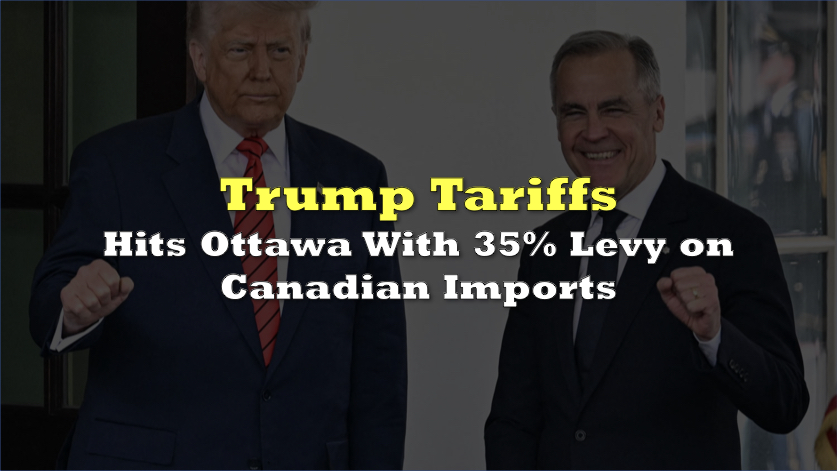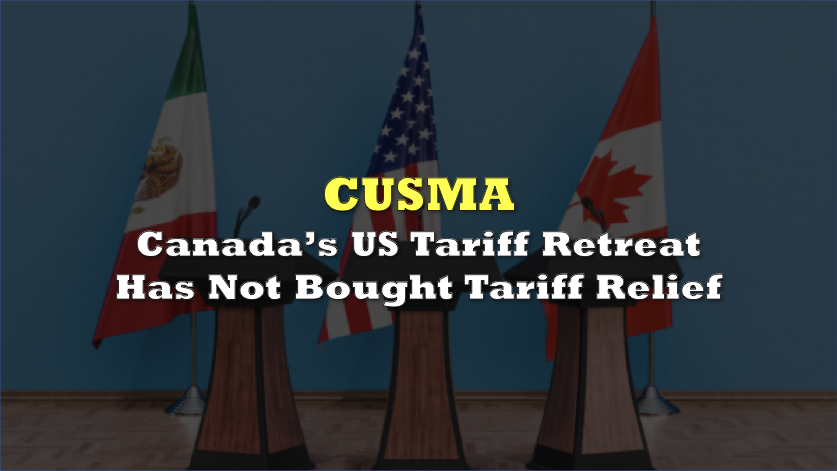

Canada has already given the US part of what it wanted by rolling back billions of dollars in retaliatory duties, but the Trump administration is now signaling that even a revised North American trade deal may not restore the old bargain of tariff-free access.
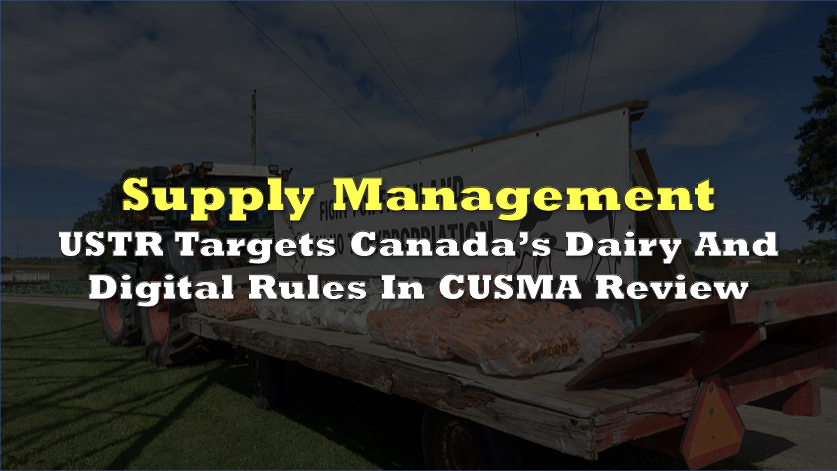
That is the pressure point heading into the 2026 CUSMA review. The pact still governs continental trade, but its political function is changing. Instead of acting as a shield against tariffs, CUSMA is becoming the venue where the US is trying to price access to its market against manufacturing, security, and trade-deficit demands.
Ottawa’s de-escalation has been substantial. Canada says it removed 25% counter-tariffs on $14.2 billion in US goods that had been in place since March 13, 2025, and another $30 billion in goods that had been subject to tariffs since March 4, 2025. Tariffs on US steel, aluminum, and automobiles remain.
 Sponsored · Selkirk Copper Mines
Washington, meanwhile, is signaling that tariff relief is not the automatic reward for staying inside CUSMA.
Reuters reported that US Trade Representative Jamieson Greer said the Trump administration plans to maintain tariffs on imports from Canada and Mexico despite the trade pact, citing national security concerns and trade imbalances. Greer also pointed to a widening US deficit with Mexico, which Reuters said rose nearly 15% to $196.9 billion, even as the overall US trade deficit fell by more than 30% last year.
The message is blunt for companies operating across the continent: rules compliance may no longer be enough. A product can sit inside the regional trade framework and still face tariff risk if Washington decides the supply chain does not serve US industrial policy.
CSIS says the 2026 CUSMA review gives the three countries a choice: extend the agreement, fail to extend it and move into annual reviews, or allow unresolved disputes to keep the pact under long-term uncertainty. If the parties cannot resolve differences through annual reviews, CSIS notes the agreement could terminate on July 1, 2036.
 Sponsored · Altamira Gold Corp.
Reuters reported separately that the first formal CUSMA update discussions with Mexico were set to focus on origin requirements and economic security provisions, with Greer seeking changes that would pull more manufacturing value into the US. Auto groups have already urged Trump to extend the pact ahead of the July 1 review deadline, underscoring how exposed the sector is to even procedural uncertainty.
For Canada, the risk is sharper because the dispute is not confined to one technical rule. National Newswatch, citing a Canadian Press report, said that Greer described Canada as being in a “different spot” from other trading partners and said it was “hard to see where that ends,” while pointing to remaining friction over retaliatory tariffs and autos.
Placed against Canada’s partial rollback, that comment carries a larger implication. Ottawa can lower the temperature without controlling the thermostat.
Autos trade fight
The auto sector is where the tariff dispute stops being abstract. North American vehicle production depends on parts crossing borders multiple times before final assembly. Tariffs imposed at any point in that chain can behave less like border taxes and more like production penalties.
Greer’s criticism of Canadian auto production, reported by Canadian Press, fits with the broader US push to increase domestic content. Reuters has reported that Washington wants revisions that would increase US manufacturing content inside the regional system.
That turns CUSMA’s review into a fight over where the next dollar of factory investment lands. Canada and Mexico want the agreement to preserve integrated production. The Trump administration wants the same agreement to discipline that integration if it does not produce enough US output.
The result is a trade pact that may remain legally alive while becoming commercially narrower. Steel, aluminum, copper, automobiles, and other strategic sectors can be carved into special regimes even as the broader agreement survives on paper.
The policy shift leaves Canada with three bad options. It can keep retaliatory tariffs in sensitive sectors and risk being cast by Washington as an obstacle. It can remove more countermeasures and lose leverage without guaranteed relief. Or it can enter the review accepting that the US now sees tariffs as part of the deal, not a breach of it.
Mexico faces a different version of the same problem. It may have an earlier negotiating lane with Washington, but that lane appears tied to tighter content expectations and a US goal of pulling more production back across the border.
For investors, the key question is no longer whether CUSMA survives. It is whether CUSMA still protects the economic logic that made North American supply chains investable.
Information for this story was found via the sources and companies mentioned. The author has no securities or affiliations related to the organizations discussed. Not a recommendation to buy or sell. Always do additional research and consult a professional before purchasing a security. The author holds no licenses.