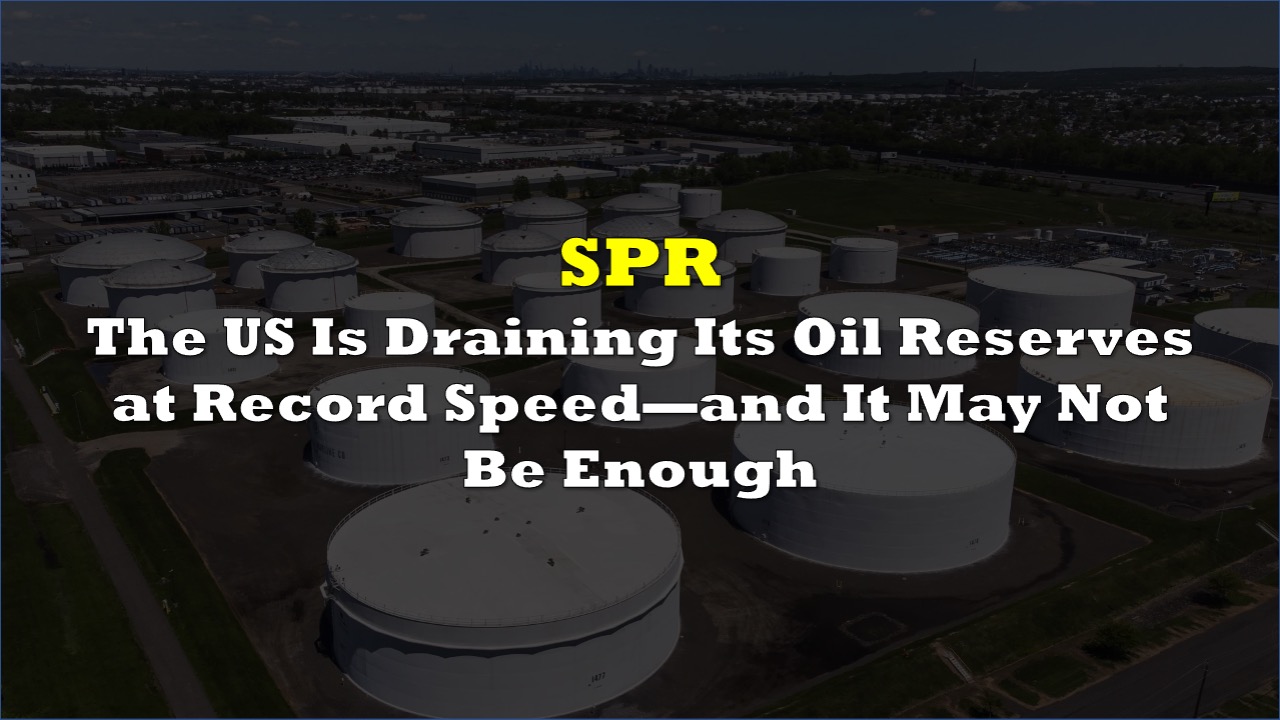

The US initiated a 172-million-barrel SPR release in March 2026 in response to the Iran conflict and the effective closure of the Strait of Hormuz — part of a coordinated 400-million-barrel release from International Energy Agency member nations. The weekly drawdown rate hit 9.1 million barrels last week, the second highest on record, according to Bloomberg Opinion energy columnist Javier Blas, just below the prior week’s all-time high of 9.9 million barrels.
The 2022 Ukraine-shock release averaged roughly 1 million barrels per day over its duration; the current release is running at approximately 1.3 million barrels per day. Analysts warn the combined 400-million-barrel IEA action may not be enough to fully offset the Middle East supply disruption, estimated at 14 to 15 million barrels of daily production.
One such cargo is already at sea — the Greek-flagged very large crude carrier Arosa is carrying 616,000 barrels of sour crude from the Bryan Mound SPR facility in Texas to the port of Bataan in the Philippines, along with roughly 700,000 barrels of US sour grade Thunder Horse. Shell chartered the vessel. Arrival is expected in early July — the first time US SPR crude has shipped to Asia since November 2022.
Before the Iran conflict, Asia sourced as much as 80% of its crude from the Middle East. The Philippines specifically imported from Saudi Arabia, Iraq, and the UAE, and had not received American oil at all since 2020, according to shipping data from Kpler.
 Sponsored · Cambria Gold Mines
Asia built its energy infrastructure around Middle Eastern crude. The Hormuz closure is now forcing a reroute with no obvious endpoint.
The SPR release is structured as an exchange rather than a sale — participating companies receive the barrels now and must return them with a premium by next year, replenishing the reserve at no cost to taxpayers. The DOE issued multiple solicitations between March and April 2026, with contract awards covering more than 55 million barrels across the Bryan Mound, Bayou Choctaw, and West Hackberry sites.
According to the DOE’s weekly CESER update, the SPR currently stands at approximately 365 million barrels — down roughly 9 million barrels from the prior week. At that pace, the reserve is about two weeks from falling to its lowest level since 1983, when it was first being filled, according to GasBuddy head of petroleum analysis Patrick De Haan. The 172-million-barrel commitment will draw it down to roughly 34% of total capacity when complete.
Information for this story was found via the sources and companies mentioned. The author has no securities or affiliations related to the organizations discussed. Not a recommendation to buy or sell. Always do additional research and consult a professional before purchasing a security. The author holds no licenses.