
Ken Griffin’s latest AI comments suggest the first serious labor shock in high finance may arrive before the industry proves that artificial intelligence can reliably beat markets.
The Citadel founder, in his recent remarks at the Stanford Leadership Forum, moved the debate away from the clean but narrow question of hedge-fund alpha. Griffin’s new concern is more operational: complex finance work that once consumed highly trained human teams is now being pushed through agentic systems at a much faster clip.
Griffin said Citadel has seen a recent leap in AI capability inside the firm. The work he described was not basic administrative automation, but finance tasks normally handled by people with advanced academic training. He described work that would usually take people with masters and PhDs in finance weeks or months “being done by AI agents over the course of hours or days.”
 Sponsored · Selkirk Copper Mines
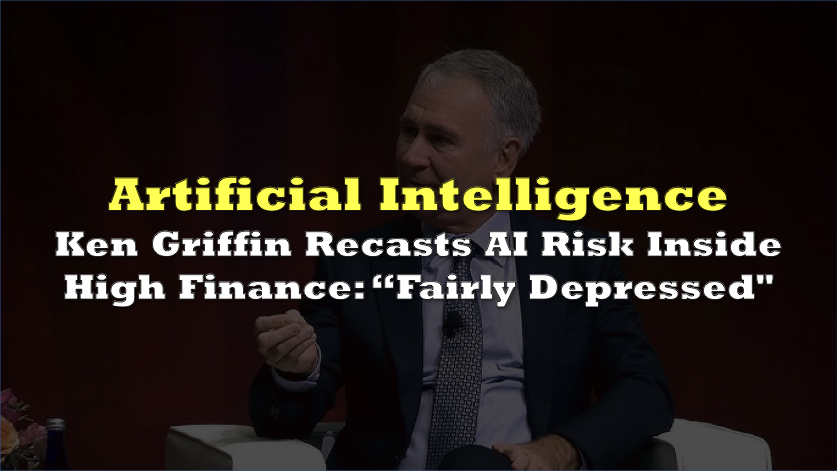
“These are like extraordinarily high skilled jobs being, I’m going to pick a word, automated by agentic AI. And I gotta tell you, I went home one Friday actually fairly depressed by this because you could just see how this was going to have such a dramatic impact on society,” he said.
That is a notable change in emphasis from Griffin’s earlier public stance. In a Bloomberg report in October 2025, Griffin argued that generative AI had clear productivity uses but had not yet shown that it could help hedge funds uncover alpha.
By January 2026, Griffin was still warning that the AI investment boom was running ahead of visible economy-wide gains. At Davos, he described much of the AI frenzy as hype, while pointing to massive data-center spending and questioning whether the promised productivity transformation had been proven at scale, as per Benzinga report.
The new remarks do not erase that skepticism. The shift is that the Citadel founder now appears to be seeing enough internal productivity impact to make the labor question harder to dismiss.
Citadel had already started formalizing AI inside its investment process. Reuters reported in December 2025 that the firm introduced an internal assistant for equities investors, using materials such as “regulatory filings, transcripts, brokerage research, and Citadel’s proprietary strategies.” The system was built to help investors pull together research, surface relevant risks, and organize reading material, while Citadel’s technology chief Umesh Subramanian stressed that human judgment still controlled investment decisions.
AI may still be unproven as a direct alpha engine, but it may already be changing the cost structure around alpha production. For a large multi-strategy firm, faster research throughput can be valuable even if the final trade call remains human.
The concern is not that entry-level clerical work is being automated first. It is that the technology is beginning to touch work performed by elite, expensive, credentialed employees in one of the highest-margin corners of the global economy.
Information for this story was found via the sources and companies mentioned. The author has no securities or affiliations related to the organizations discussed. Not a recommendation to buy or sell. Always do additional research and consult a professional before purchasing a security. The author holds no licenses.