

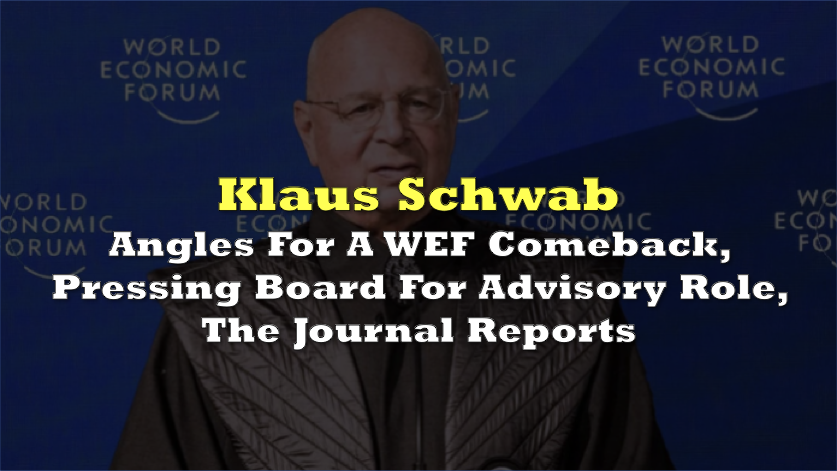

More than a year after Klaus Schwab left World Economic Forum, the institution he built over more than five decades, the 88-year-old Davos founder is reportedly pressing for a path back into the organization’s orbit.
The Wall Street Journal reported that Schwab recently sent letters to WEF board members seeking an advisory role, access to Forum resources, and a say in future leadership appointments. The report said the letters included legal threats and demands tied to his treatment after his 2025 resignation.
Schwab resigned as chair and board member in April 2025, saying he was stepping down “with immediate effect” as he entered his 88th year. WEF said its board accepted the resignation on April 20 and appointed Peter Brabeck-Letmathe as interim chair while forming a search committee for a future chair.
 Sponsored · Mercado Minerals Ltd.
That orderly transition was quickly overshadowed by allegations. Reuters reported that WEF launched an investigation in April 2025 after a whistleblower letter alleged misconduct by Schwab. The probe was announced one day after Schwab resigned, and WEF did not publicly give a reason for his departure at the time.
WEF later said the investigation found no evidence of material wrongdoing by Schwab and no misconduct by his wife, Hilde Schwab. The Forum acknowledged “minor irregularities” linked to blurred lines between personal contributions and Forum operations, while saying it had taken steps to strengthen governance.
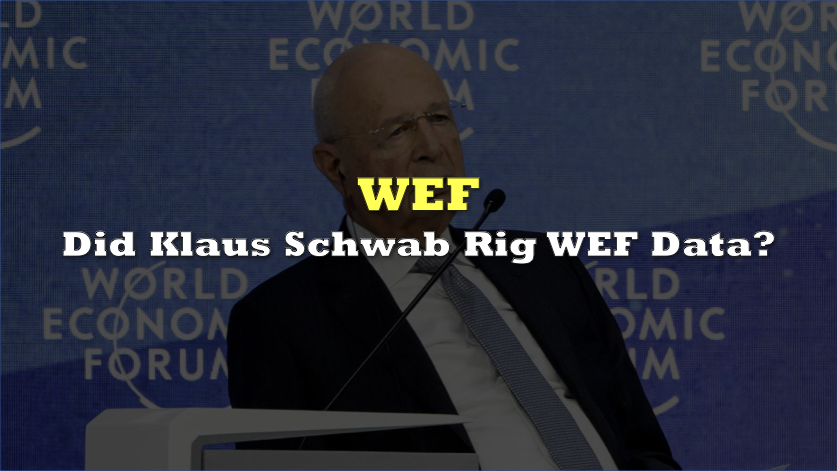
READ: Did Klaus Schwab Rig WEF Data?
That public clearance is now part of the dispute. WSJ reported that Schwab is using the finding to argue that his reputation was unfairly damaged. The same report said internal documents show the Forum kept some findings of its probe hidden.
For WEF, the strategic risk is bigger than reputational mess. A return by Schwab in any formal or semi-formal capacity would complicate the Forum’s own reset language. In August 2025, WEF said the organization needed to evolve toward a “more institutional model” and that the board would focus on strengthening governance and reinforcing its role as an impartial platform for global cooperation.
The governance stakes became more visible when WEF named BlackRock CEO Larry Fink and Roche Holding vice chair André Hoffmann as interim co-chairs after Brabeck-Letmathe stepped down.
The Fink-Hoffmann structure gave WEF a transitional bridge between global finance, Swiss institutional roots and board reform. Schwab’s reported push now risks turning that bridge into a contested succession process.
Reuters reported in February 2026 that WEF President and CEO Børge Brende resigned after scrutiny of his ties to Jeffrey Epstein. WEF’s co-chairs said an outside-counsel review found no additional concerns beyond what had been disclosed, but Brende said the matter risked distracting from the Forum’s work.
That departure left Managing Director Alois Zwinggi as interim president and CEO while the board oversaw another leadership transition.




Chrystia Freeland Meets with Global Elites in Davos This Week
This week Chrystia Freeland will be heading to Davos to meet with various global leaders...