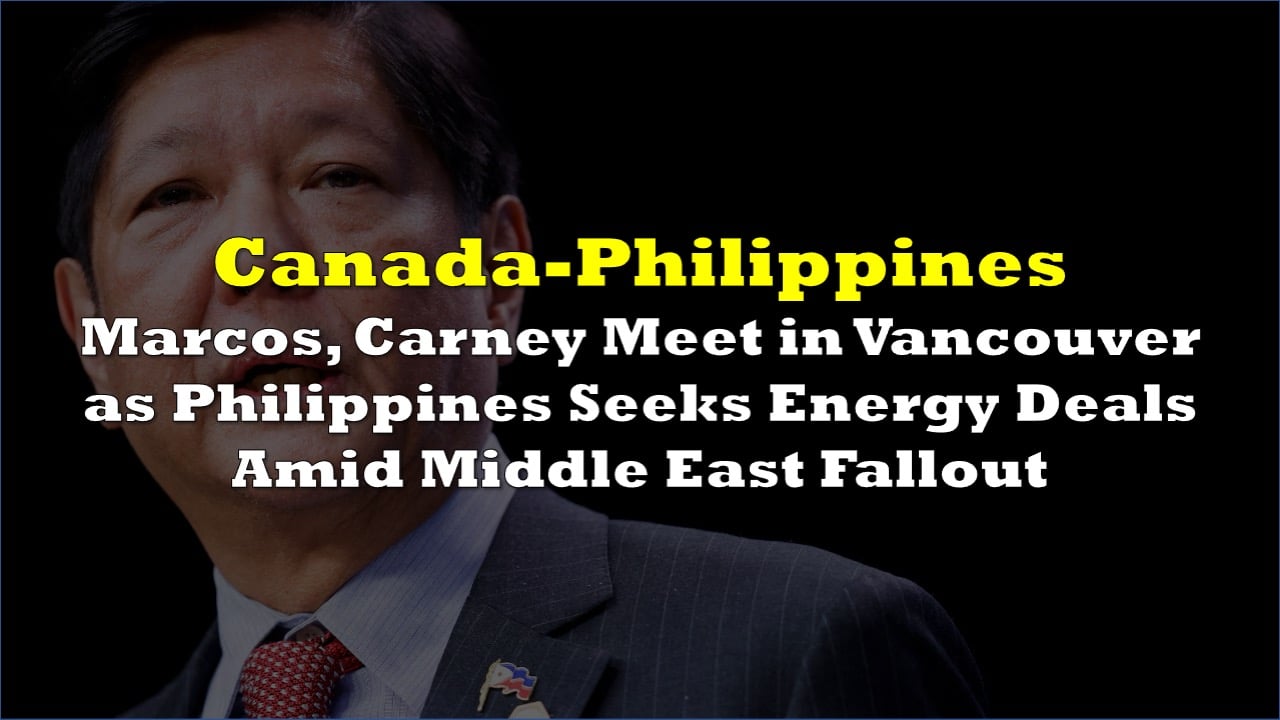

Philippine President Ferdinand Marcos Jr. met with Prime Minister Mark Carney in Vancouver Thursday, part of a four-day visit aimed at deepening trade, energy and defense ties. Marcos’s predecessor, Benigno Aquino III, was the last Philippine president to visit Canada in 2015.
Energy is expected to feature prominently. Jose Victor Chan-Gonzaga, the Philippines’ ambassador to Canada, said he anticipates LNG and oil will come up as Manila looks to diversify its energy sources, calling the country “very active in searching for alternative sources” since the Middle East conflict disrupted traditional supply lines.
The push reflects the strain oil-dependent countries like the Philippines have felt since the US and Israeli war on Iran disrupted global energy markets earlier this year. Nuclear energy cooperation has also reportedly come up in early discussions, as the Philippines explores the sector as part of its broader energy diversification.
 Sponsored · McLaren Resources Inc.
Marcos’s delegation includes Foreign Affairs Secretary Maria Theresa Lazaro, Finance Secretary Frederick Go, Trade Secretary Cristina Roque, and three other cabinet ministers, along with 15 to 20 business executives. Palace officials said the two countries are expected to sign cooperation frameworks covering energy, natural resources, trade, labor and immigration, and tourism.
Philippine Defense Secretary Gilberto Teodoro visited Ottawa in June, becoming the first Philippine defense minister to do so and signing a Mutual Logistics Support Arrangement alongside a defense cooperation agreement. Canadian forces also took part directly in this year’s Balikatan exercise, the Philippines’ largest annual military drill, after years of only observing.
Bilateral merchandise trade hit $3.4 billion in 2025, and Canadian direct investment in the Philippines has grown more than 40% over the past year, according to Carney’s office. The two countries are also targeting a bilateral free trade agreement this year, alongside a separate Canada-ASEAN deal timed to the Philippines’ current ASEAN chairmanship.
Immigration and credential recognition for Filipino professionals are also expected to come up, Chan-Gonzaga said. The Philippines remains one of Canada’s largest sources of new permanent residents, and nearly one million Canadians are of Filipino descent.
Not everyone welcomed the visit. Protesters gathered in Ottawa to denounce Marcos’s trip, citing corruption allegations and human rights concerns tied to his administration’s counterinsurgency policies. Marcos also faced brief uncertainty over whether the trip would proceed, after a surprise protest by the religious group Iglesia ni Cristo snarled traffic in Metro Manila just before his departure.