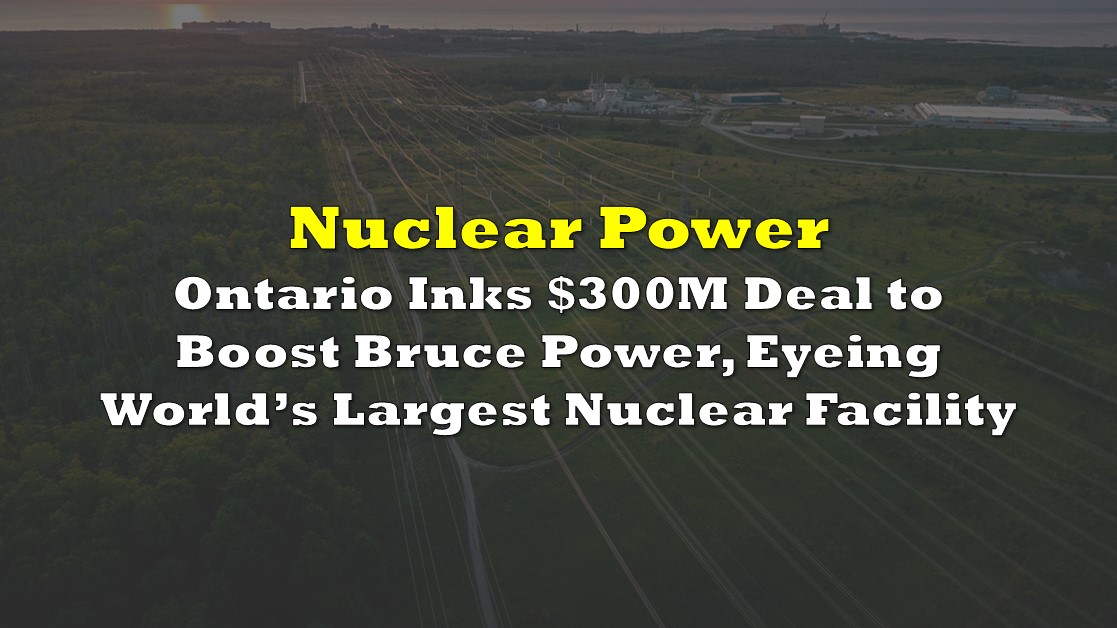

Ontario has struck a $300 million cost sharing agreement with Bruce Power to advance a massive expansion at its nuclear site, a move that could position the province as home to the world’s largest nuclear generating facility. The deal, announced at Queen’s Park, underscores a bold push to meet rising energy demands through clean power.
Under the agreement, the province will cover a portion of pre-development costs for the potential addition of up to 4,800 megawatts of capacity at the Bruce Power site near Kincardine. This follows the company’s ongoing refurbishment of six existing reactors, a project already boosting capacity to over 6,500 megawatts. If completed, the expanded facility could generate a total of 11,300 megawatts, surpassing current global leaders in nuclear output.
The expansion marks Canada’s first large scale nuclear build in over three decades. Bruce Power has moved into the next phase of planning, with impact assessments and community consultations underway. The company aims to finalize a project scope by 2027, targeting a construction start in the early 2030s. Ontario Energy Minister Stephen Lecce hailed the initiative as a cornerstone of the province’s energy security, with nuclear power already supplying over half of its electricity needs.
 Sponsored · Selkirk Copper Mines
Financing remains a critical hurdle. While the $300 million injection covers early stage expenses, total project costs could climb into the tens of billions, requiring further public and private investment. Bruce Power is exploring federal funding and international partnerships to offset the burden on taxpayers.
Local stakeholders have mixed views. Kincardine Mayor Kenneth Craig expressed optimism about job creation, projecting thousands of skilled positions during construction. Yet some residents worry about environmental impacts and the long timeline to completion, given past delays in nuclear projects across Canada.
Ontario’s commitment aligns with broader federal goals to triple nuclear capacity by 2050 as part of a net-zero emissions strategy. Bruce Power’s current output avoids 4.3 million tonnes of carbon dioxide annually, equivalent to removing over a million vehicles from the roads. With electricity demand forecast to surge 75% by 2050, driven by industrial growth and electrification, the province sees nuclear as a linchpin.
The project’s next milestone is a federal environmental assessment decision expected by late 2026. Until then, Bruce Power will refine cost estimates and secure additional funding to keep the ambitious timeline on track.
Information for this story was found via the sources and companies mentioned. The author has no securities or affiliations related to the organizations discussed. Not a recommendation to buy or sell. Always do additional research and consult a professional before purchasing a security. The author holds no licenses.