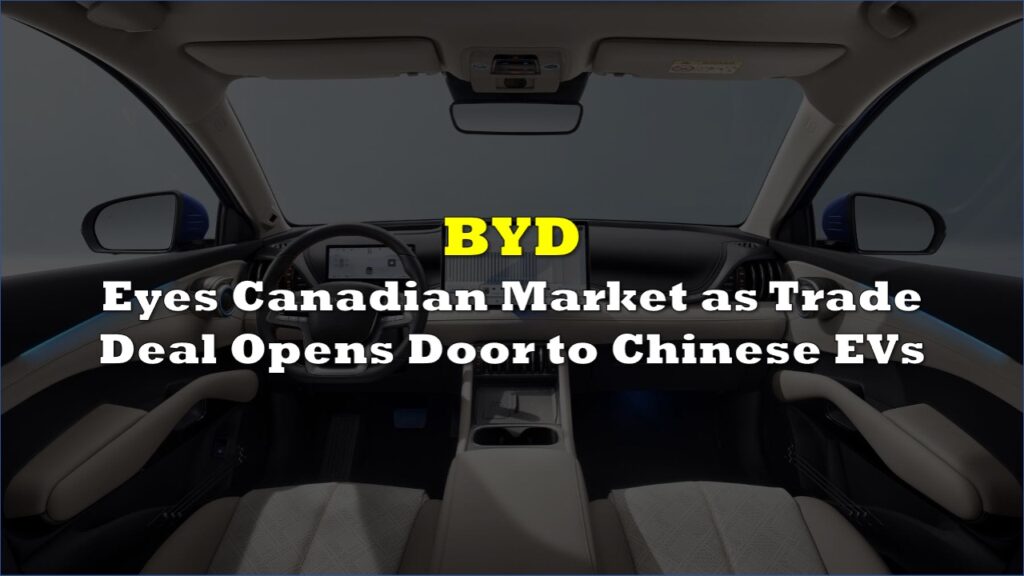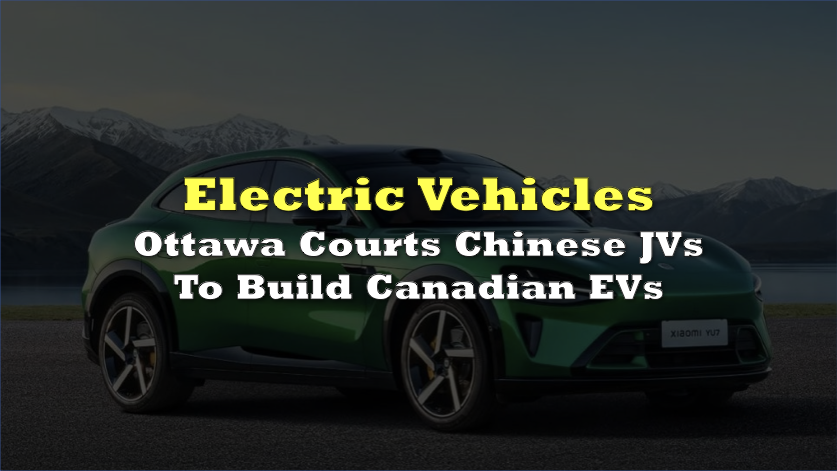

Canada’s EV strategy now turns on a narrow trade-off: Ottawa is lowering the cost of entry for a capped number of Chinese-made EVs while trying to turn that access into future investment in Canadian auto production.
AP reported that Canada agreed to cut its tariff on Chinese EVs from 100% to 6.1%, with initial imports capped at 49,000 vehicles a year and rising to about 70,000 over five years. Ottawa said China is expected to lower combined tariffs on Canadian canola seed from 84% to about 15%.
Prime Minister Carney framed the quota as a small opening rather than a market flood, saying it would equal about 3% of Canada’s roughly 1.8 million-vehicle annual market while helping draw Chinese auto investment over the next three years, according to the same AP report.
 Sponsored · Selkirk Copper Mines
US officials criticized the decision. Reuters reported Transportation Secretary Sean Duffy warning Canada would regret allowing Chinese EVs into its market, while Trade Representative Jamieson Greer said the move was problematic because US tariffs are meant to protect American autoworkers from Chinese vehicles.
On the home front, Ottawa is already pressuring automakers to preserve Canadian commitments. Industry Minister Mélanie Joly said last month that the government plans to serve Stellantis a notice of default after the automaker moved planned Jeep Compass production from Brampton, Ontario, to Illinois.
Chinese EV-linked manufacturing is not hypothetical in Canada. BYD opened a 45,000-square-foot bus assembly facility in Newmarket, Ontario, and that plant assembled battery-electric buses for Canadian transit customers, including units shipped to Quebec.
The core question now is whether Canada can convert a small import window into local production, jobs, and technology transfer before the same policy becomes another trade irritant with Washington and another pressure point for Canada’s already-stressed auto sector.
Information for this story was found via AP, Reuters, NBC, CBC, New Market Today, and The Detroit News, and the sources and companies mentioned. The author has no securities or affiliations related to the organizations discussed. Not a recommendation to buy or sell. Always do additional research and consult a professional before purchasing a security. The author holds no licenses.