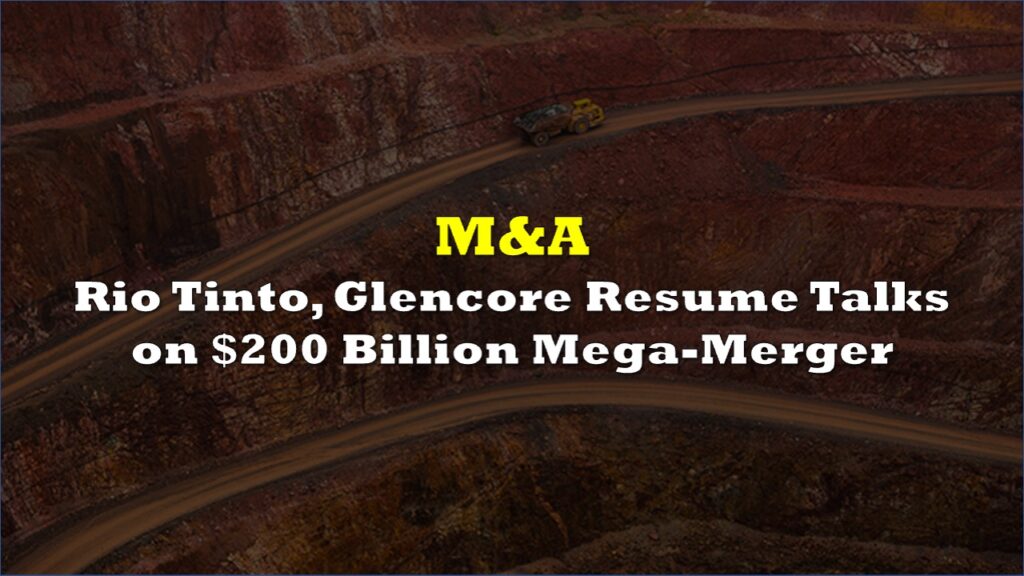

Glencore has confirmed it is in talks with Rio Tinto about a possible combination of some or all of their businesses, a structure that could include an all-share merger between the two mining giants.
The talks point straight at the industry’s core profit pools and strategic bottlenecks, with copper, coal, and iron ore explicitly framed as the key commodities where scale and portfolio design matter most.
BREAKING: Big mining M&A news.
— Javier Blas (@JavierBlas) January 8, 2026
Commodities giant Glencore says it’s in talks with rival miner Rio Tinto about a “possible combination of some or all of their businesses, which could include an all-share merger between Rio Tinto and Glencore.”
Key for copper, coal and iron ore.
A potential merger between the two miners would establish a giant with a combined market value of about $207 billion.
The strategic catalyst in the prior talks was copper, with Glencore’s copper exposure positioned as especially valuable as producers try to expand output of a metal central to renewable energy technologies. That same report said consolidation would also give Rio a path to the Collahuasi mine in Chile, described as one of the richest copper deposits worldwide and a stake Rio has wanted for more than a decade.
The most immediate portfolio fault line is coal: the prior talks highlighted Glencore’s “extensive coal operations,” including being the world’s largest thermal coal shipper, as a likely mismatch for Rio given Rio’s pivot away from fossil fuels.
Beyond assets, there is a culture and operating model friction: Glencore’s aggressive posture and commodity trading business were contrasted with Rio’s more recent push to improve workplace culture and corporate governance.
Rio CEO Jakob Stausholm was has previously been publicly wary of large-scale mergers, pointing to integration complexity and the risk of shareholder backlash.
Regulatory scrutiny has also been flagged as a material obstacle, with the combined size expected to draw antitrust attention, especially around any resulting dominance in copper production and the consolidation of major mining assets.
The talks also revive an older precedent: Glencore proposed a similar merger in 2014, and Rio rejected it.
Information for this briefing was found via the sources mentioned. The author has no securities or affiliations related to this organization. Not a recommendation to buy or sell. Always do additional research and consult a professional before purchasing a security. The author holds no licenses.