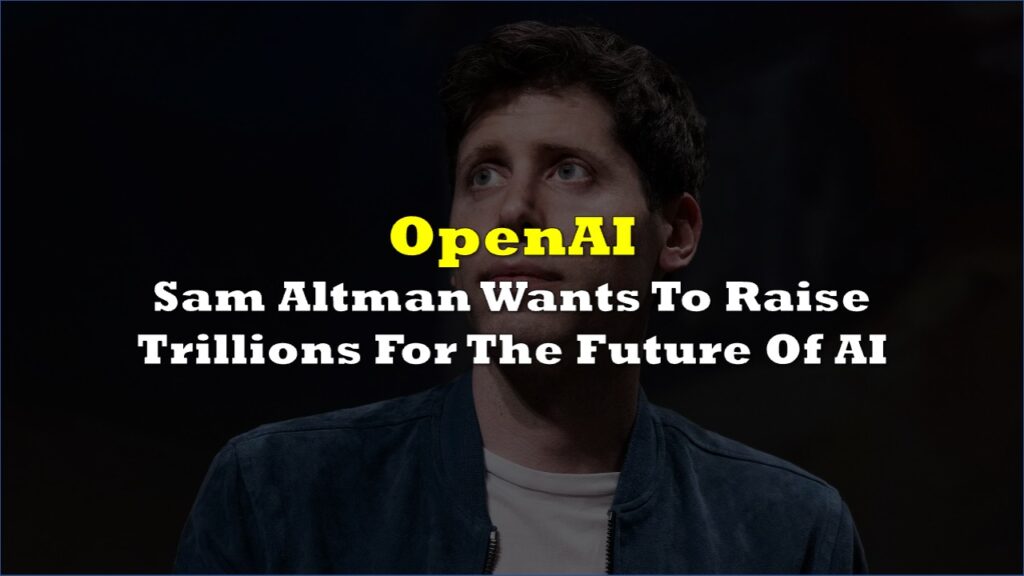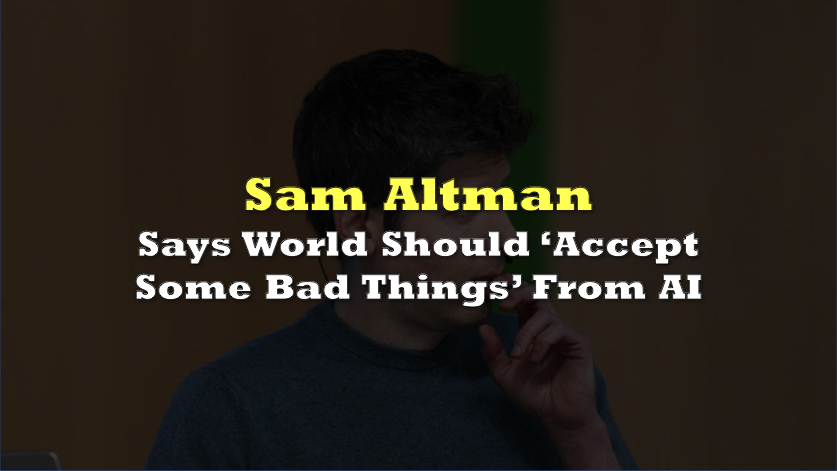

OpenAI CEO Sam Altman has drawn a line between AI harms he believes society may need to tolerate and risks he considers unacceptable, sharpening a policy divide with Anthropic over how much everyday misuse should justify restricting access to increasingly capable systems.
In an interview with POLITICO’s Decoded, Altman said OpenAI remains committed to putting AI broadly in users’ hands even if that means accepting some harmful outcomes.
“We believe that the world should accept some bad things happening for the benefits of this technology and people having the agency,” Altman said.
 Sponsored · Silver47 Exploration Inc.
Altman used hacks, scams, and other misuse as examples of harms that could occur under that approach. He argued that preventing every such incident would require restrictions he views as too costly to the broader benefits of AI. Fortune reported that Altman expects beneficial uses to exceed harmful ones by “orders of magnitude.”
The stance puts OpenAI at odds with the more restrictive end of the AI-safety debate, but the split with Anthropic is not absolute.
Altman told POLITICO there is “a lot of daylight” between OpenAI and Anthropic on regulation and rejected concentrating access to powerful AI inside a single laboratory as an acceptable way to eliminate risk.
Anthropic CEO Dario Amodei has pushed for stronger safeguards around frontier systems and in September called for the industry to “pace the frontier.” Reuters reported that Altman publicly supported that proposal, showing overlap between the two companies on preventing the most severe risks even as they differ on how much regulation should apply to broader deployment.
The dispute therefore centers less on whether AI can cause harm than on which harms should trigger restrictions.
OpenAI’s position, as Altman described it, allows for ordinary misuse and failures while drawing a harder boundary around catastrophic loss of control.