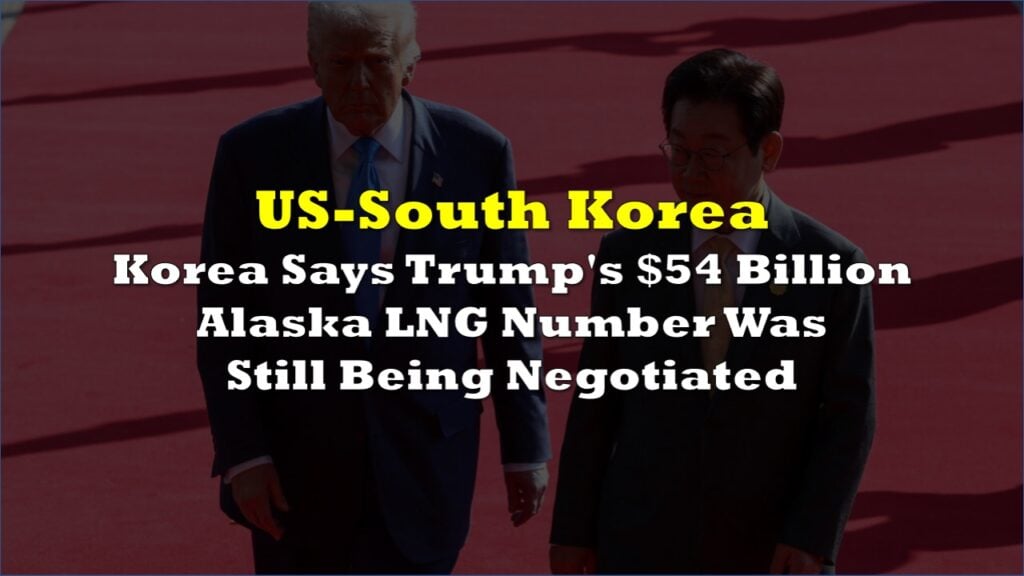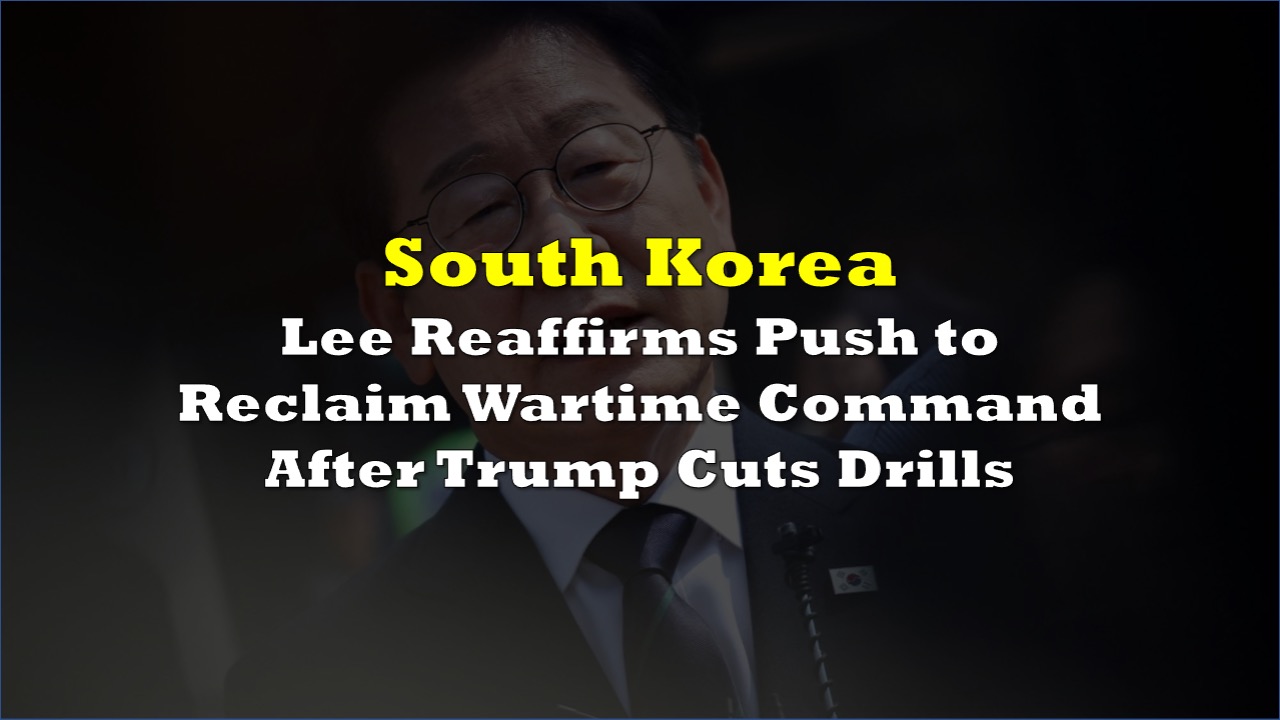

South Korean President Lee Jae Myung told his Cabinet Tuesday that the country already has “more than enough capability” to defend itself, using the meeting to reaffirm his push to reclaim wartime operational control of South Korean forces from the United States, according to the Korea Herald.
Trump had ordered the Pentagon to pare back the exercises. He pointed to Seoul’s refusal to join the US campaign against Iran, and separately touted warm ties with the North Korean leader. Trump wrote that it was “too late to cancel” the drills outright, so he’d told Defense Secretary Pete Hegseth to reduce them instead.
Read: Trump Touts ‘Very Good Relationship’ With Kim Jong Un After South Korea Balks on Iran
 Sponsored · PTX Metals Inc.
Trump had separately complained that the US keeps 39,000 troops in South Korea “guarding you from Kim Jong Un, your next door neighbor” while Seoul declined to help on Iran.
Lee told his Cabinet that a strong alliance with Washington and stronger self-reliant defense capabilities were equally necessary to each other, and said wartime command, known as Opcon, should transfer back to Seoul on schedule within his term, which runs through 2030.
He also pressed officials to speed up South Korea’s nuclear-powered submarine program, which Trump approved after their summit in Gyeongju last October, calling it a project that would symbolize a stronger alliance. Any enrichment work for the vessels would still require Washington’s sign-off under the two countries’ existing nuclear cooperation agreement.
Before the Cabinet meeting, Lee presided over a closed-door national security council session tied to a separate four-day civil defense exercise that began the same day. He told officials to treat it as a genuine test of the country’s wartime readiness rather than repeat past drills unchanged, said keeping the peace remains paramount, but South Korea has to plan for the worst case too, and repeated that Seoul isn’t using the exercises to threaten North Korea.
South Korea transferred wartime command to the US-led UN Command during the Korean War, and it passed to the allies’ Combined Forces Command when they created it in 1978. Seoul regained peacetime control in 1994, but wartime authority has remained a live sovereignty question in South Korean politics ever since. The push to reclaim it dates back more than two decades to the Roh Moo-hyun administration, and Lee Myung-bak and Park Geun-hye each pushed the target date back before Moon Jae-in tried and failed to close it out by 2022.