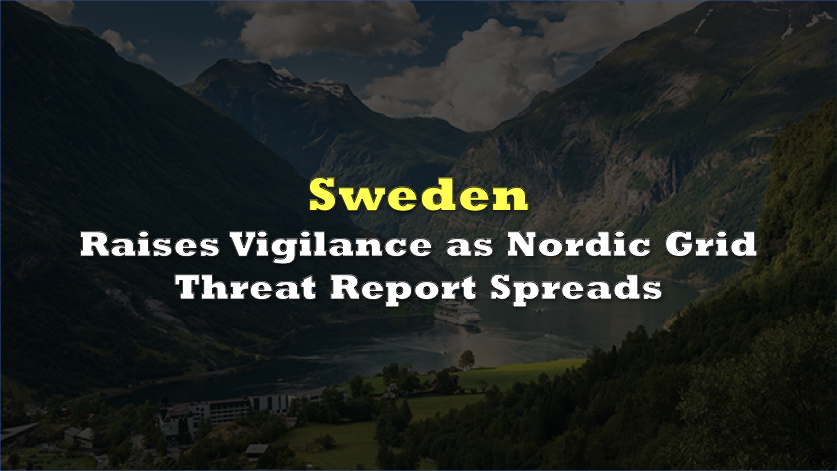

A reported near-term threat to Nordic energy infrastructure triggered a fast security response on Thursday, but by the same day the core claim had narrowed from an alleged imminent attack across all Nordic countries to a broader, precautionary tightening of vigilance tied to Poland’s late-December cyberattack on its power sector.
The initial report, carried by Sweden’s TV4, said an actor linked to a foreign power had targeted the Nordic energy network and indicated an attack could come “in the near future.” That version said authorities and police units across the region had raised preparedness, with Swedish police told to guard facilities linked to energy supply.
Swedish TV4 is reporting on "an imminent serious threat to the power grid in all Nordic countries", "links to foreign powers are being investigated", and "there is an international response".https://t.co/5wPClkvTZN
— Thord Are Iversen (@The_Lookout_N) February 26, 2026
What held up across follow-on reporting was narrower and more concrete. Sweden’s National Defence Radio Establishment, FRA, confirmed it had urged the energy sector to increase vigilance in Sweden at the end of the previous week through the National Cyber Security Centre. FRA tied that move directly to cyberattacks against Poland’s energy sector in late December.
Poland’s power system suffered its largest cyberattack in years in the last week of December, with the energy minister describing it the strongest attack on energy infrastructure in years.
E24, citing security expert Sofie Nystrøm, said 30 facilities were affected simultaneously in the December incident, calling it the first known attack of its kind against that category of infrastructure. Reuters separately said Poland had logged 170,000 cyber incidents in the first three quarters of 2025, with a significant share attributed to Russian actors.
The failed attack targeted communications between renewable installations and power distribution operators rather than the large power units or transmission grid typically targeted in earlier incidents.
The main conflict in the coverage is between the framing of an imminent operational threat and the later official line. FRA rejected the existence of a specific threat to Sweden, while Norwegian police said the information, based on what was known at the time, was assessed as having no significance for Norwegian conditions. Norway’s Justice Ministry also said neither Norway nor Sweden had changed their threat assessments and that no new measures were required.
That leaves the strongest verified fact pattern as a region-wide security posture shift rather than proof of a live countdown to attack. Sweden’s energy sector was told to heighten monitoring, readiness, and recovery capability after the Polish incident. Norwegian grid and security actors said they were tracking the reports, but major operators including Statnett, Statkraft, and Elvia said they had no indication of any abnormal or concrete threat to their systems at that point.
Information for this briefing was found via the sources and the companies mentioned. The author has no securities or affiliations related to this organization. Not a recommendation to buy or sell. Always do additional research and consult a professional before purchasing a security. The author holds no licenses.