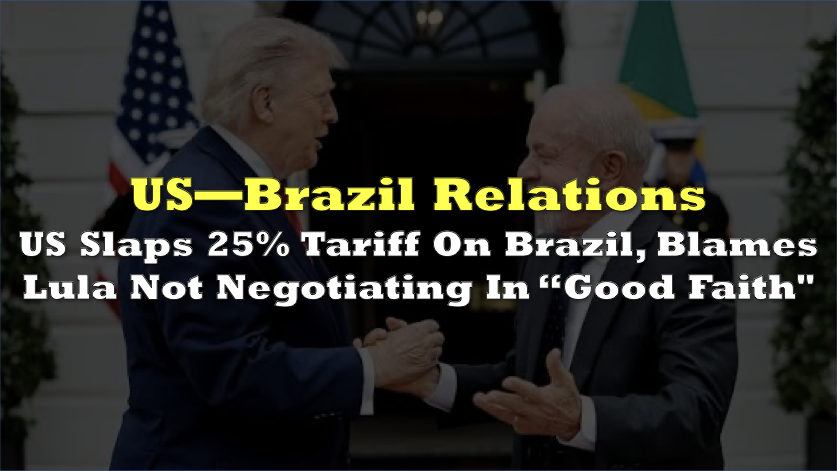

The Trump administration has formally moved ahead with a 25% tariff on most Brazilian imports, converting a yearlong trade investigation into a broad commercial penalty that also sharpens Washington’s political confrontation with President Luiz Inácio Lula da Silva.
Rather than relying on emergency tariff authorities that have faced legal scrutiny, the latest action rests on Section 301 of the Trade Act of 1974, giving the administration a separate legal pathway to impose trade restrictions.
Secretary of State Marco Rubio framed the decision as the consequence of failed negotiations, stating on X that President Donald Trump directed the US Trade Representative to impose the tariffs because Lula’s government “have not negotiated with the US in good faith.”
 Sponsored · Selkirk Copper Mines
Rubio further argued that Lula’s economic policies harmed both American and Brazilian interests and said the tariffs were “the price” of those decisions.
According to the Office of the US Trade Representative, the tariffs conclude an investigation launched in July 2025 examining multiple Brazilian policies. USTR determined that several Brazilian practices related to digital trade, electronic payment services, ethanol market access, intellectual property protection, anti-corruption enforcement, preferential tariffs, and illegal deforestation imposed unreasonable burdens on US commerce. The agency said negotiations with Brazil over the past year failed to resolve those concerns despite consultations, public hearings, and multiple rounds of discussions.
Rubio’s comments place diplomatic negotiations at the center of the administration’s messaging, arguing that the tariffs are the consequence of Brazil’s unwillingness to reach an agreement.
USTR’s own documentation similarly states that the US spent more than a year pursuing negotiations before concluding that Brazil had not agreed to address the practices identified in the investigation. The agency says it remains open to further negotiations if Brazil changes those policies.
Brazilian officials have rejected Washington’s characterization of the dispute. According to the Associated Press, President Lula condemned the tariffs and argued they were unjustified. Brazil has indicated it intends to invoke its economic reciprocity law and pursue remedies through the World Trade Organization. Brasília has also disputed the findings underlying the Section 301 investigation and maintains it cooperated with US authorities during the review process.
Although officials described the measure as applying to most Brazilian imports, the final action contains significant exemptions. Products already covered by separate Section 232 tariffs are excluded, along with informational materials, accompanied baggage, donations, and selected goods considered essential to US supply chains or unavailable in sufficient domestic quantities. News reports also indicate exemptions for products such as coffee, beef, certain energy products, orange juice, and aerospace components.