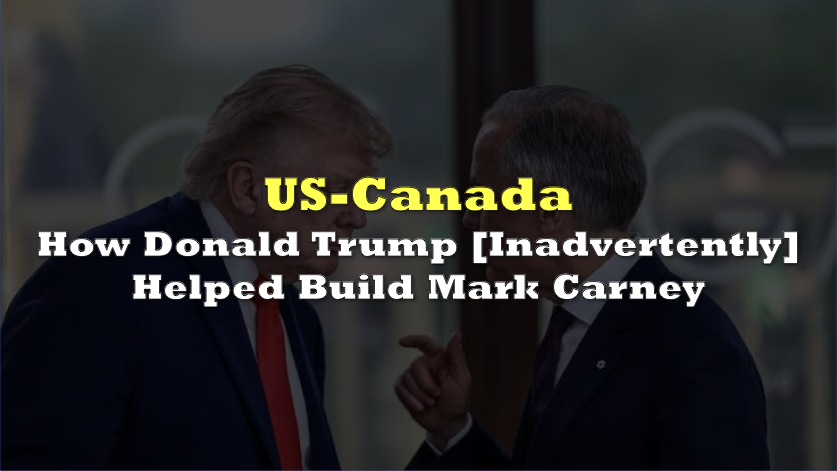

President Donald Trump’s campaign to pressure Canada has produced an unintended political beneficiary. Less than two years after the Liberals looked headed for a historic defeat, Prime Minister Mark Carney controls a majority in the House of Commons, has approval above 60% in recent polling, and is using the rupture with Washington to justify one of the broadest shifts in Canadian economic and security policy in decades.
The transformation did not begin with Carney. At the end of 2024, the Liberals were 29 percentage points behind the Conservatives in an Angus Reid Institute poll, with Liberal support falling as low as 16%. Former Prime Minister Justin Trudeau’s approval had dropped to 22% before he announced his resignation on January 6, 2025. Affordability, housing, immigration, and nearly a decade of Liberal government had left Pierre Poilievre’s Conservatives positioned to take power.
Then the political question changed.
 Sponsored · Selkirk Copper Mines
29-point deficit
Trump had already threatened 25% tariffs on Canadian imports. On January 7, 2025, he publicly discussed using “economic force” while promoting the idea of Canada becoming the 51st US state. On February 1, he ordered 25% tariffs on most Canadian goods and 10% on Canadian energy, escalating a dispute that increasingly moved sovereignty and the US relationship to the centre of Canadian politics.
That shift coincided with one of the fastest polling reversals in modern Canadian politics. Carney, the former governor of both the Bank of Canada and Bank of England, won 85.9% of the points in the Liberal leadership contest on March 9 and was sworn in five days later.
By March 17, Angus Reid had the Liberals at 42% and the Conservatives at 37%, a five-point Liberal lead after the 29-point deficit recorded in late December.
The polling showed why Trump mattered. Carney held a 25-point advantage over Poilievre when Canadians were asked who was best equipped to handle the tariff war and a 22-point advantage on Trump’s annexation threats. Ipsos separately found Carney ahead on representing Canada internationally, managing difficult economic conditions, and standing up to Trump.
 Sponsored · Silver47 Exploration Inc.
By early April, 38% of Canadians in a Leger survey described Trump’s tariffs as the country’s most important issue, compared with 20% who named inflation and 10% who cited housing affordability.
The election that had once appeared likely to punish the Liberals instead returned them to government.
Official results from Elections Canada show Carney’s Liberals won 169 of 343 seats on April 28, with 43.8% of the vote. The Conservatives won 144 seats with 41.3%.
Carney was three seats short of a majority, but the political reversal was already extraordinary. Four months earlier, the Liberal brand had been polling in the teens.
Strongest political contrast
Winning the election did not end the dynamic. When Carney visited the White House on May 6, Trump again raised the possibility of Canada joining the US.
Carney told him Canada was not for sale. Trump responded, “Never say never.”
The confrontation gradually became the organizing principle of Carney’s premiership.
His government passed the One Canadian Economy Act in June 2025, removing federal barriers to internal trade and labour mobility while creating a process to accelerate projects deemed to be in the national interest. The legislation effectively linked faster infrastructure development to Canadian economic resilience and autonomy.
Defence policy shifted as well. By March 2026, Ottawa said Canada had reached NATO’s 2% of GDP defence-spending benchmark, with more than $63 billion in defence spending across government. Budget 2025 had also put the country on a path toward NATO’s newer 5% defence and security investment commitment by 2035.
Carney increasingly framed these policies as parts of the same problem: a country heavily integrated with a much larger neighbour needed more domestic capacity and more alternatives abroad.
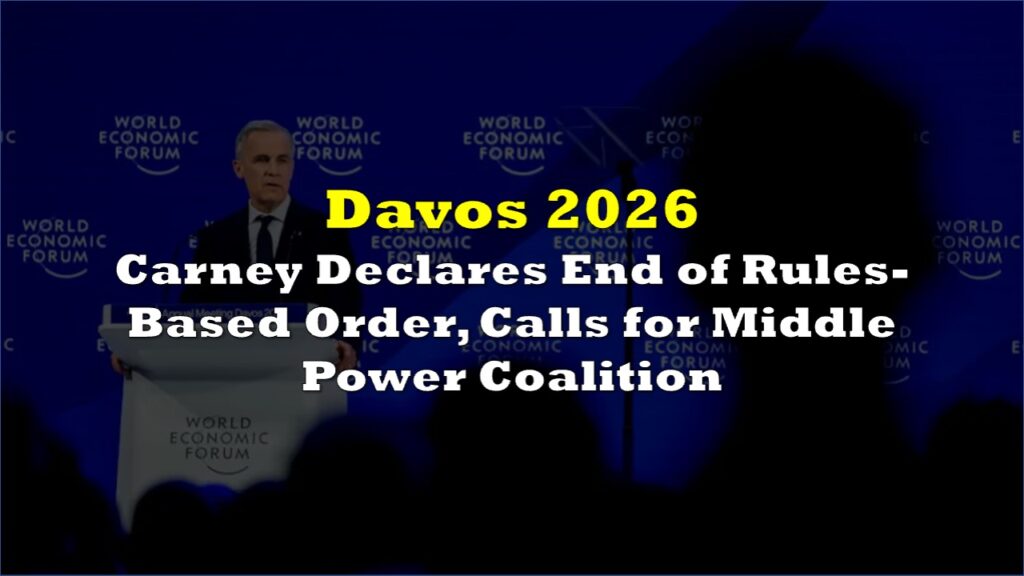
At Davos in January 2026, he described a world in which major powers were turning economic integration into leverage.
“When the rules no longer protect you, you must protect yourself,” Carney said.
Trump attacked Carney after the speech. The political effect in Canada again moved in Carney’s direction. Reuters reported Conservative politicians publicly praising parts of the speech, while subsequent polling put Carney near his highest approval levels since taking office.
Minority to majority government
The most important change came in April 2026. After several opposition MPs crossed the floor to the Liberals, victories in federal by-elections pushed Carney’s government over the majority threshold.
Current House of Commons records show 174 Liberal MPs in the 343-seat chamber, compared with 140 Conservatives.
That changed Carney’s governing position fundamentally. He no longer needed opposition support to survive confidence votes or pass ordinary legislation.
Trump had helped reshape the election around the issue on which Carney held his strongest advantage. Continued confrontations then helped preserve that advantage long enough for a minority government to accumulate a majority.
The pattern resurfaced after Canada-US trade negotiations collapsed in August 2026. Angus Reid found 76% of Canadians supported Carney’s decision to walk away rather than accept the US terms.
By September, Carney’s approval had risen 11 points to 62%. Another Angus Reid survey put Liberal voting intention at 46% against 32% for the Conservatives.
Economic vulnerability
The irony is that the same conflict strengthening Carney politically continues to impose costs on the economy he was elected to protect.
Canada remains heavily dependent on the US. Statistics Canada reported that the US still received 71.7% of Canadian merchandise exports in 2025, although that was down from 75.9% in 2024 while exports to non-US destinations increased 17.2% during the year.
The Bank of Canada has warned that US tariffs have caused a lasting reduction in demand for Canadian goods, weakening investment, productivity, and living standards as companies search for new markets. Economic activity was flat in July 2026, before the latest round of US measures took full effect.
Trump therefore did not make Carney powerful by removing Canada’s problems. He helped change which political skills Canadians valued while making the country’s biggest external economic risk impossible to ignore.
Carney entered politics as a technocrat promising crisis management. Trump supplied the crisis. Continued confrontation eventually helped supply the majority.
What began as pressure intended to extract concessions from Canada instead helped revive the Liberals, strengthen Carney’s mandate, and give him the political room for Ottawa to itself recast back Canada’s relationship with the US—and maybe its global geopolitical standing.