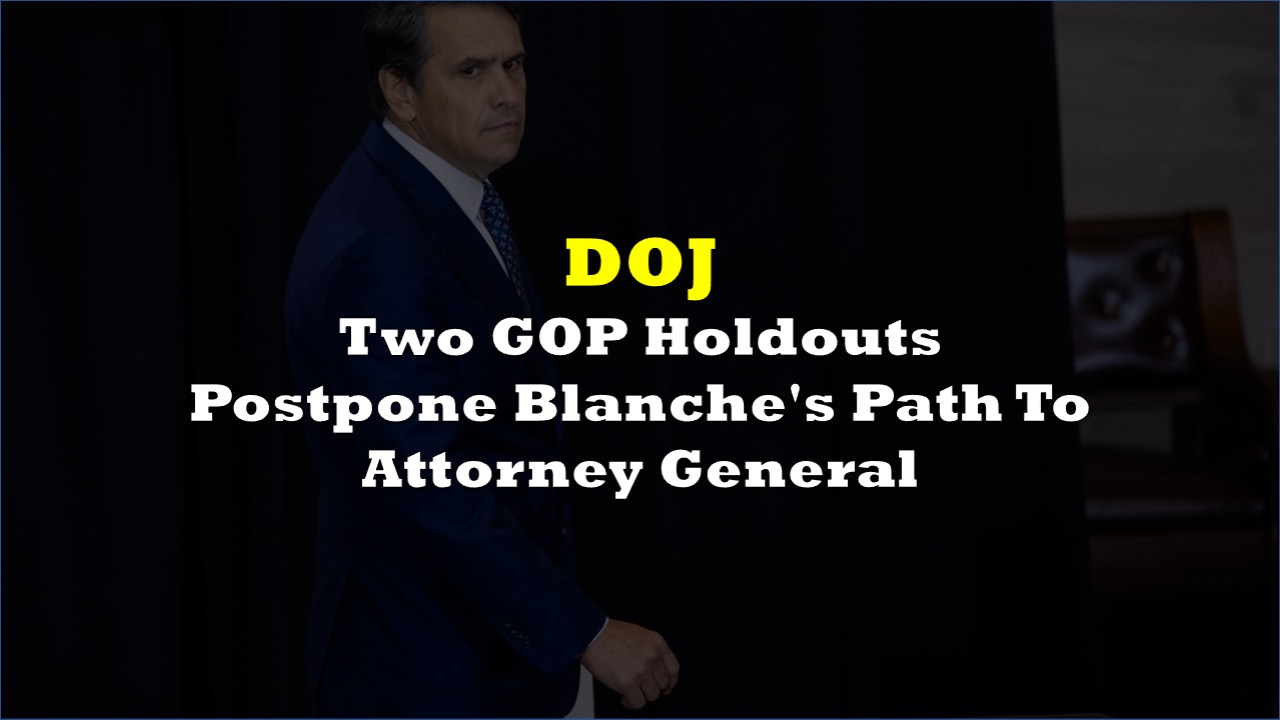

The Senate Judiciary Committee postponed Thursday’s vote on Todd Blanche’s nomination for attorney general, Chairman Chuck Grassley’s office confirmed Wednesday evening, after two Republicans on the panel refused to commit their votes.
John Cornyn of Texas and Thom Tillis of North Carolina want the Justice Department to put in writing that Trump’s $1.776 billion “Anti-Weaponization Fund” is dead. Blanche has said as much verbally, but DOJ has spent more than a week negotiating with Cornyn’s staff without putting anything in writing. A committee spokesperson said Grassley “works to set President Trump’s nominees up for success in committee, not failure.” The spokesperson added that work continues to secure enough Republican support to advance the nomination.
The Senate is set to break for its lengthy August recess by the end of next week. If Trump’s team can’t strike a deal with Cornyn, CNN reported, a vote could stall indefinitely, or slip to the fall. A Justice Department spokesperson pushed back, saying the department has “been in regular communication with Committee members for weeks.”
 Sponsored · Selkirk Copper Mines
Cornyn, whose vote is essential for Blanche to clear the committee, told reporters he doesn’t know why DOJ hasn’t met his demands. “Maybe they think I’m just going to give up,” he said. He added that he won’t budge, and that he believes Tillis is on the same page.
Trump created the fund in May as part of a settlement that ended his own $10 billion lawsuit against the IRS over his leaked tax returns, a case that made him both plaintiff and, functionally, defendant. The arrangement drew fire from both parties, since some January 6 defendants could qualify as “victims” of government “weaponization.”
Read: Judge Voids Trump’s $1.776B IRS Settlement
A federal judge threw out the settlement entirely in mid-July, ruling DOJ had abdicated its duty to defend the government’s interests in a suit against itself. Blanche has said DOJ isn’t reviving the fund “period.” Cornyn and Tillis still want it in writing.
 Sponsored · Cambria Gold Mines
Blanche, Trump’s former personal defense lawyer, has run the Justice Department in an acting capacity since April, when Trump ousted Pam Bondi as attorney general amid frustration over her handling of the Epstein files.
Related: DOJ Joins Trump in Asking Supreme Court to Toss $83 Million Carroll Verdict
The committee currently splits 12 Republicans to 10 Democrats; Darline Graham restored that margin earlier this month when she took her late brother’s seat, following Sen. Lindsey Graham’s death in July. A single Republican defection would produce an 11-11 tie, which wouldn’t let the nomination advance without an extraordinary move on the Senate floor. Losing both Cornyn and Tillis would sink it outright, with no such workaround. Tillis has said he won’t vote no directly if talks fail; instead, he’d deny the committee a quorum.
Neither senator has much left to lose. Cornyn lost his Texas primary in May to Trump-backed Ken Paxton, and Tillis announced last year he wouldn’t seek reelection after Trump threatened to back a primary opponent against him.
“We’re not prepared to vote yes yet,” Tillis told reporters Wednesday. Reporters asked Trump about it in the Oval Office, and he claimed ignorance of any trouble with the nomination. He floated a simpler explanation instead, suggesting Cornyn was still stinging over the Paxton endorsement.
After meeting with Cornyn on Wednesday, Grassley told reporters he was “working on getting a solution.” Tillis floated Tuesday as the earliest realistic date for a new markup. That timeline depends on DOJ finally putting something in writing that Cornyn and Tillis will accept.
But ultimately, none of this may matter as much as it looks. Blanche was already the Senate-confirmed deputy attorney general before Bondi’s ouster, and DOJ’s own succession law lets a sitting deputy exercise all the duties of the attorney general during a vacancy.
Legal experts say that authority lets him keep running the department “as long as Trump is happy with him in the acting role,” confirmation vote or not. Trump’s June nomination paused the separate 210-day cap under the Federal Vacancies Reform Act, and that clock only resumes if the nomination collapses without a replacement.