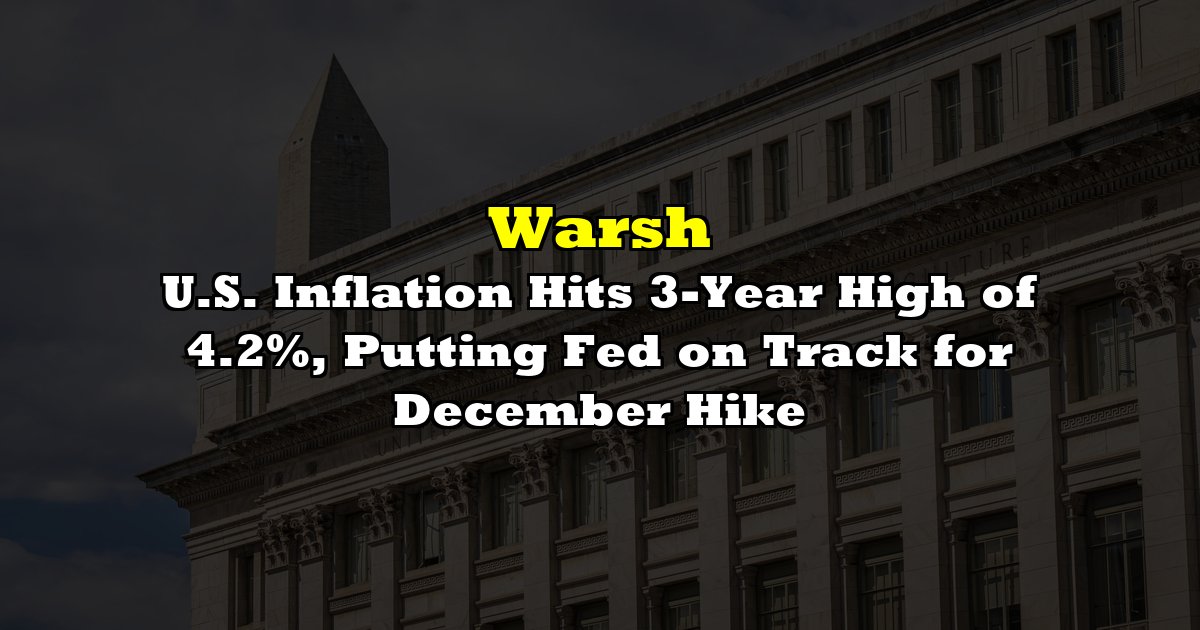

Kevin Warsh was brought in to cut rates. May’s inflation numbers are pointing the other way.
U.S. consumer prices climbed 4.2% year-over-year in May, the Labor Department reported Wednesday, the highest reading in three years and the third consecutive monthly acceleration. The figure came in line with economist forecasts, which, at this point, is itself a measure of how far the policy mood has shifted.
Warsh, installed by President Donald Trump to replace Jerome Powell, had championed rate cuts before taking the chair. Now more Fed policymakers expect the central bank’s next move will be a hike rather than a cut. Futures prices tracked by CME FedWatch show Wall Street has already priced in that increase by December. Two-year and 10-year Treasury yields have risen since a Friday jobs report showed hiring accelerated in May, a further sign that markets are repositioning for tighter policy.
 Sponsored · Selkirk Copper Mines
At the start of the year, policymakers had signalled they were inclined to cut rates twice in 2026. That conversation has effectively reversed.
The engine behind the surge is energy. Iran’s closure of the Strait of Hormuz has cut off roughly one-fifth of global oil supply, and energy prices reflect it, up 23.5% year-over-year in May. Gas climbed from about $4.04 per gallon in mid-April to $4.49 by mid-May.
The fuel shock has spread well beyond the pump. Airline fares jumped 2.7% in May alone and sit nearly 27% above year-ago levels, squeezed by costlier jet fuel. Electricity prices are up 5.9% over the past year. UPS and FedEx have added fuel surcharges in recent months as pricier diesel lifted their operating costs, pushing shipping expenses higher across the supply chain.
Food is feeling it too. Grocery prices are up 2.9% from a year ago. Food overall rose 3.1% year-over-year in May.
Core prices, stripping out food and energy, rose 2.9% year-over-year in May, up slightly from 2.8% in April. The monthly core gain was just 0.2%, softer than April’s 0.4%, suggesting some demand-side pressure may be moderating even as headline inflation climbs.
Trump and White House officials are currently arguing that rates do not need to rise, a position that puts the administration at odds with where futures markets are pointing. With midterm elections approaching and household budgets strained, affordability has become a direct political liability for the administration.
Information for this story was found via the sources and companies mentioned. The author has no securities or affiliations related to the organizations discussed. Not a recommendation to buy or sell. Always do additional research and consult a professional before purchasing a security. The author holds no licenses.