
The United Arab Emirates has announced its withdrawal from OPEC and OPEC+, effective May 1, 2026, delivering a significant setback to the oil-exporting groups and their de facto leader, Saudi Arabia, at a time when the ongoing Iran war has triggered a historic energy shock.
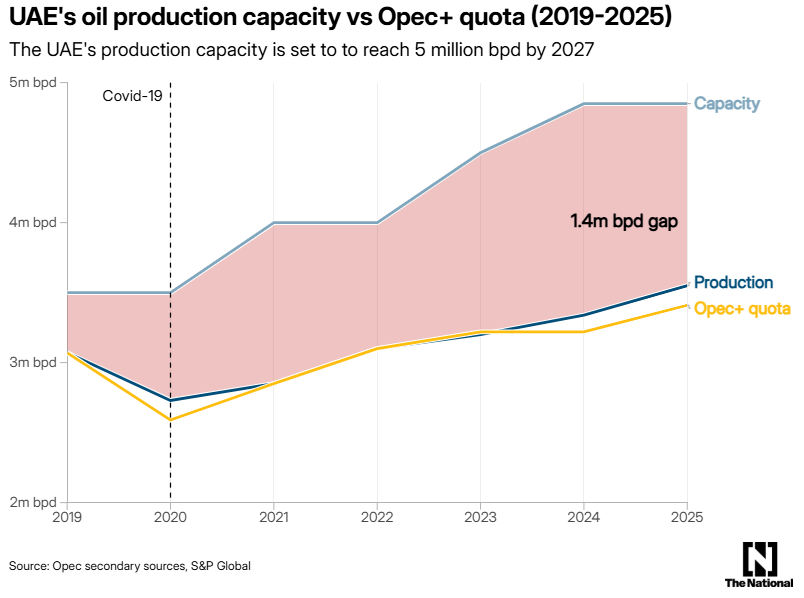
The UAE, a founding member of OPEC since 1967 and its third-largest producer in February behind Saudi Arabia and Iraq, cited national interest and the need for flexibility in responding to market dynamics as key drivers of the decision. The move follows a comprehensive review of its production policy and future capacity, with the country aiming to ramp up output from 3.4 million barrels per day to 5 million by 2027. This exit also aligns with the UAE’s broader economic diversification, where non-oil sectors now account for roughly 75% of GDP.
Geopolitical tensions played a pivotal role in the decision. The UAE has faced numerous Iranian attacks during the war, with disruptions in the Strait of Hormuz—a critical chokepoint for a fifth of global crude oil and liquefied natural gas—compounding supply challenges for Gulf producers. Anwar Gargash, diplomatic adviser to the UAE president, expressed frustration over the lack of political and military support from Gulf Cooperation Council countries during a recent forum, calling their stance historically weak.
The departure marks a win for U.S. President Donald Trump, who has long criticized OPEC for inflating oil prices and linked U.S. military support in the Gulf to demands for lower costs. The UAE’s exit could further weaken OPEC, already reeling from a 27% production drop to 20.79 million barrels per day in March due to the Iran conflict—a loss of 7.88 million barrels daily, surpassing even the supply shocks of the 1970s oil crisis and the 1991 Gulf War.
 Sponsored · Selkirk Copper Mines
As the UAE shifts focus to its investors, customers, and global energy markets, it has pledged to balance responsibility with market stability. The country plans to continue investing across the energy value chain, from oil and gas to renewables and low-carbon solutions.
The timing of the announcement, just ahead of an OPEC meeting in Vienna on Wednesday, underscores the urgency of the split. With Qatar’s exit in 2019 as a precedent, the UAE’s departure raises questions about the cartel’s cohesion, especially as other Gulf nations like Bahrain and Oman remain outside but aligned with supply management efforts.
Global energy demand is expected to grow over the medium to long term, despite near-term volatility in the Arabian Gulf. The UAE’s independent path forward will test its ability to navigate these dynamics while contributing to a transforming energy landscape with a production target firmly set at 5 million barrels per day by 2027.
Information for this story was found via the sources and companies mentioned. The author has no securities or affiliations related to the organizations discussed. Not a recommendation to buy or sell. Always do additional research and consult a professional before purchasing a security. The author holds no licenses.