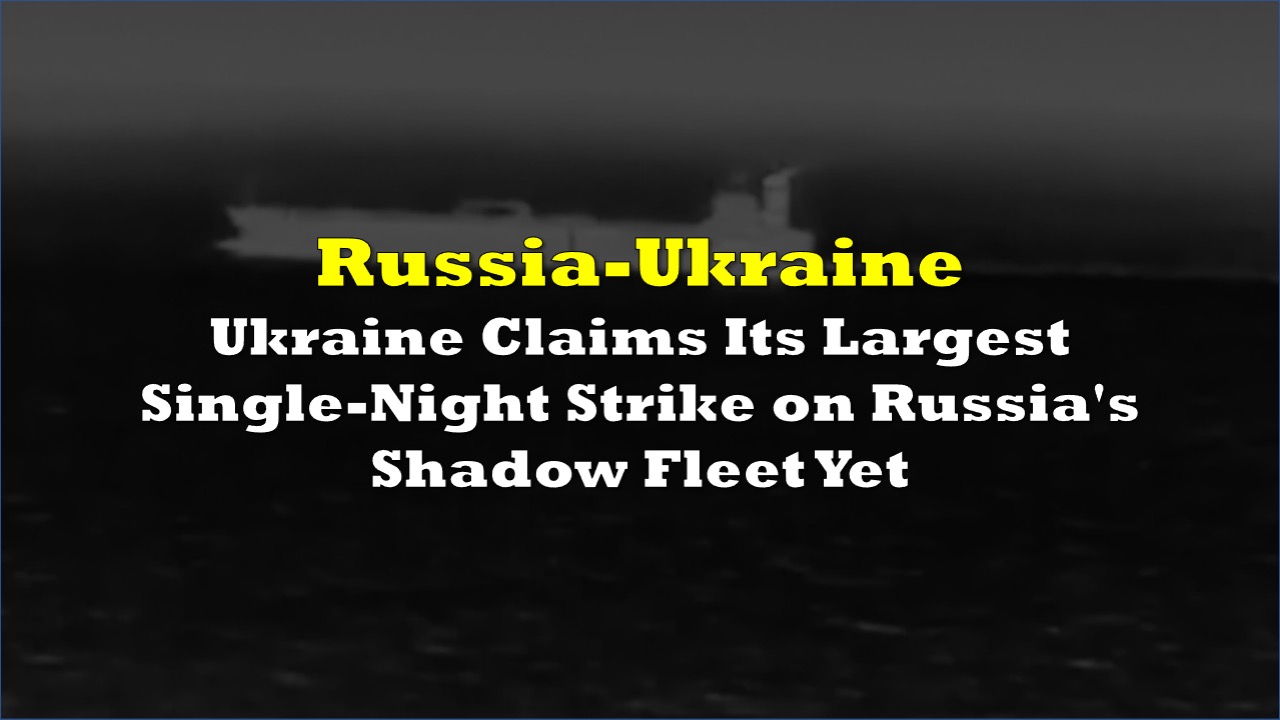

Ukraine’s Unmanned Systems Forces say they struck 10 vessels involved in Russian maritime logistics overnight, one of the largest such operations of the war so far.
According to USF’s official account, pilots from the Kairos unit of the 414th Magyar’s Birds Brigade hit eight tankers of Russia’s shadow fleet in the Sea of Azov, vessels the unit says form part of the Azov-Crimea fuel route and could together carry 40,000 to 50,000 tonnes of fuel when fully loaded.
Separate USF units struck a cargo vessel and a ferry in the same operation, with the Raid unit hitting the cargo ship and the 1st Ukrainian Shock Corps’ unmanned systems unit striking the ferry near occupied Crimea. As of this writing, the claims have not been independently verified by satellite imagery or a neutral maritime tracker.
 Sponsored · Cambria Gold Mines
The vessels were targeting the same supply route Ukraine has spent months trying to choke off. Russia has relied heavily on Sea of Azov shipping to move fuel from the Taganrog area into occupied Crimea, the Kyiv Independent reported, after Ukrainian strikes degraded the peninsula’s land-based supply routes so severely that occupation authorities suspended fuel sales entirely on June 21.
Related: Russia Hits Kyiv With Second Mass Attack in Four Days, Hours After Trump-Putin Call
This strike came after a separate but related overnight operation on July 6, when USF’s own account detailed hitting two Project 15781 tankers in the Sea of Azov, the Kerch oil depot, an S-400 system and Nebo-U radar in Crimea, and a separate S-400 destroyed in Bryansk Oblast by the allied Raid unit.
Commander Brovdi said the two S-400 launchers were “hunted down and destroyed” during a missile attack on Ukraine, since such systems are used to launch ballistic missiles at ground targets. The same 48-hour window also saw Ukraine strike Russia’s Omsk oil refinery, the country’s largest by capacity and the last of Russia’s 11 biggest gasoline producers to be hit in Ukraine’s monthslong refinery campaign.
The tanker strikes are part of Ukraine’s broader “middle strike campaign” against Russian logistics into Crimea, which has been running since early 2026. By June, Commander Brovdi said the campaign had cut Russian military cargo traffic along the peninsula’s main supply highway by 71% over two weeks, triggering fuel and goods shortages severe enough that Russian-appointed authorities in Crimea and Sevastopol declared a state of emergency on June 26.
Russia’s shadow fleet remains large despite the mounting losses. The fleet’s core consists of at least 400 tankers that have made three or more trips from Russian ports since 2024, with a Ukrainian presidential sanctions official telling LIGA that the broader fleet may total between 800 and 1,200 vessels.
Rather than shrinking the fleet, Ukrainian officials say the main effect of the strikes has been pushing more vessels to reflag under the Russian flag, with 33 tankers making that switch so far this year and roughly 80 more in process.
Ukraine had also laid the legal groundwork for strikes like these in advance. Deputy Prime Minister Oleksiy Kuleba wrote to the International Maritime Organization on June 26, arguing that shadow fleet tankers are “critical to the generation of budget revenues for the Russian Federation” and therefore legitimate military targets, a rebuttal to earlier Russian accusations that such strikes constitute terrorism against civilian shipping.