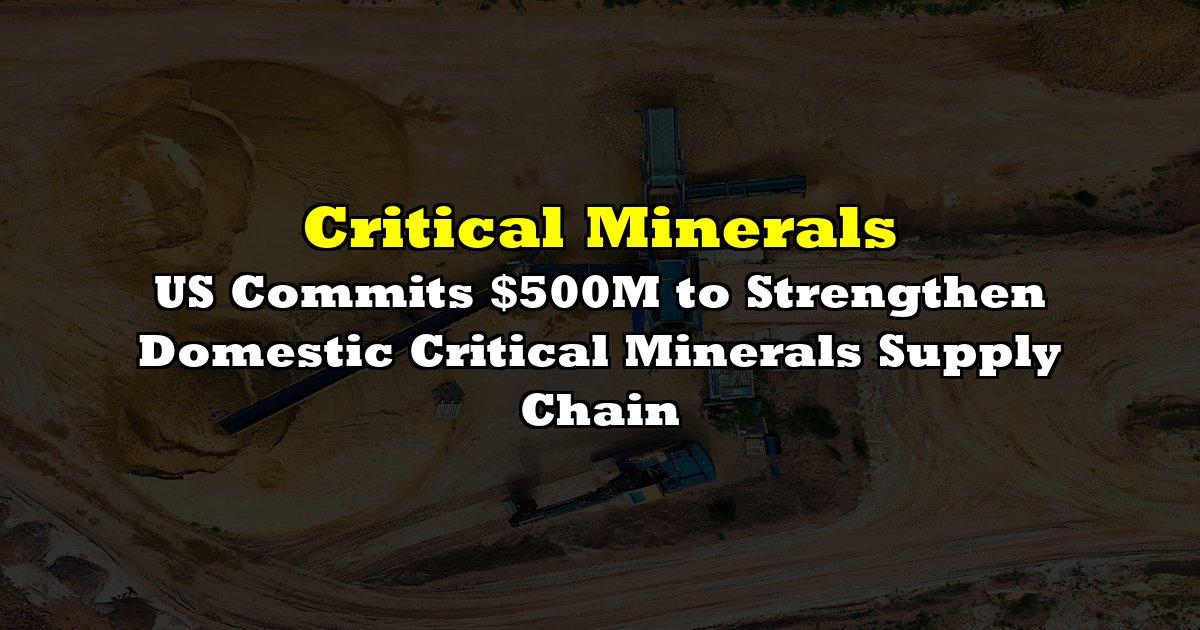

The US Department of Energy is rolling out a $500 million funding initiative to enhance domestic processing of critical minerals and battery materials, aiming to cut reliance on foreign supply chains. This move targets key materials like lithium, graphite, nickel, copper, and aluminum essential for energy technologies.
The funding, managed by the DOE’s Office of Critical Minerals and Energy Innovation, will support demonstration and commercial-scale facilities focused on processing raw feedstocks, recycling critical materials, and manufacturing battery components. Energy Secretary Chris Wright emphasized the urgency of reducing dependence on hostile foreign actors for these vital resources. The initiative is part of a broader strategy to meet escalating energy and AI-driven electricity demand while bolstering national energy security.
This marks the third round of financial support under DOE programs dedicated to battery materials and manufacturing. Projects will span upstream and midstream segments of the battery supply chain, directly addressing the dominance of overseas processing hubs, particularly in China. The effort aims to secure raw materials for electric vehicles, grid storage, and other cutting-edge energy solutions.
The DOE is allocating up to $500M to boost domestic critical minerals processing, battery materials manufacturing, and recycling to reduce U.S. dependence on foreign supply chains.
— The Dive Feed (@TheDeepDiveFeed) March 15, 2026
International collaboration remains a priority alongside domestic expansion. Assistant Secretary of Energy for Energy Efficiency and Renewable Energy Audrey Robertson, speaking from the Indo-Pacific Energy Security Ministerial and Business Forum in Japan, highlighted the importance of partnerships with regional allies to build supply chain resilience. She noted that boosting domestic production through recycling and processing is a cornerstone of national security.
The push aligns with Washington’s ongoing efforts to rebuild a robust critical minerals ecosystem at home. By investing in new capacity, the DOE seeks to position the US as a leader in the global transition to sustainable energy technologies. The focus on recycling also signals a commitment to circular supply chains, reducing waste while securing scarce resources.
Funding applications will prioritize projects that can deliver measurable impact across the targeted areas. With $500 million on the table, the DOE expects to catalyze significant private-sector investment to complement this federal push, potentially reshaping the landscape of critical minerals production by the end of the decade.
Information for this story was found via the sources and companies mentioned. The author has no securities or affiliations related to the organizations discussed. Not a recommendation to buy or sell. Always do additional research and consult a professional before purchasing a security. The author holds no licenses.