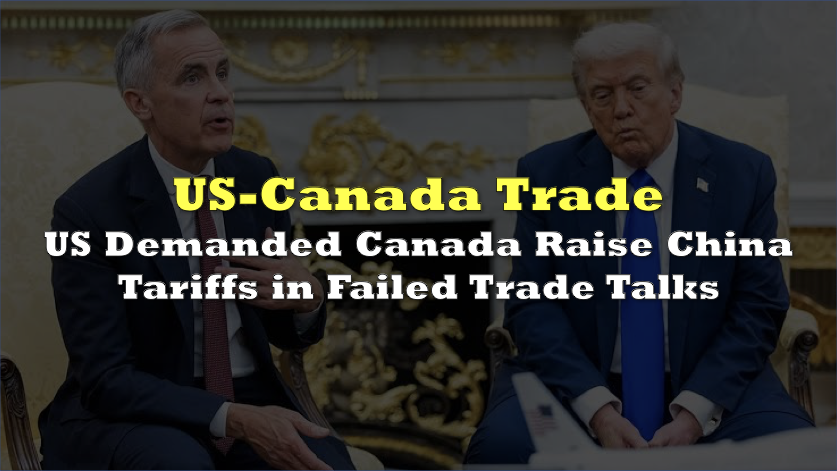

The US trade package that Canada walked away from last week included a demand that Ottawa raise tariffs on Chinese goods, according to US Ambassador to the UN Mike Waltz, revealing that Washington sought concessions extending beyond the bilateral US-Canada relationship.
Speaking on Fox News, Waltz said US negotiators linked preferential tariff treatment for Canada to measures preventing Chinese products from entering the American market through Canada.
Waltz said Washington’s position was that “if we give you most-favored-nation treatment on tariffs,” then “you, Canada, must raise tariffs on China.”
 Sponsored · Cambria Gold Mines
The disclosure adds another dimension to Prime Minister Mark Carney’s explanation for suspending negotiations on August 21. Carney said last-minute US changes were “unfair, uneconomic,” and raised questions about the reliability of a deal.
His government had also listed maintaining Canada’s “flexibility, independence, and sovereignty” among its negotiating objectives.
The China demand comes months after Ottawa moved in the opposite direction on parts of its relationship with Beijing.
Under a January agreement, Canada created an annual quota allowing up to 49,000 Chinese electric vehicles to enter at the 6.1% most-favoured-nation tariff rate. China, in return, agreed to sharply reduce barriers affecting Canadian agricultural exports, including lowering combined tariffs on canola seed to roughly 15%.
Canada also expanded tariff relief for certain Chinese steel and aluminum products in short domestic supply.
Waltz said Washington presented Mexico with a similar demand and that Mexico agreed. Mexico had already raised tariffs on imports from countries without free trade agreements, including China, with many rates reaching as high as 35%. Reuters reported that analysts viewed the measures partly through the lens of US pressure, while Mexico said they were intended to strengthen domestic production.
After the Canada talks collapsed, the US imposed 50% tariffs on $27.6 billion of Canadian goods. Ottawa plans matching counter-tariffs beginning September 8.
Canada has not publicly confirmed that Washington’s China demand was among the specific terms it rejected.