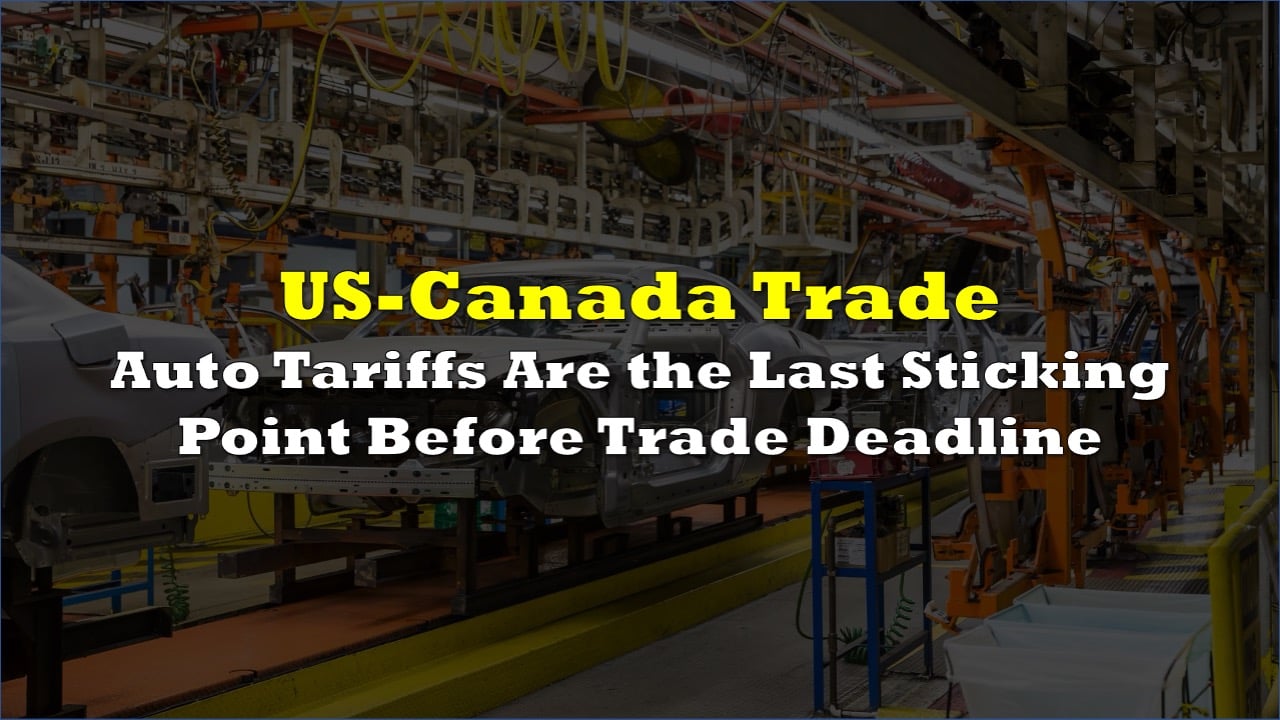

Canada and the United States are one day from a tariff deadline, and the sharpest disagreement left on the table is over cars. Bloomberg reported Monday that the Trump administration won’t go below a 15% tariff on Canadian-made vehicles, even as Canadian negotiators keep pushing for 10% or a wider exemption for parts made in the US.
Canadian negotiators have reportedly floated a trade where Ottawa swallows the lower US rate and scraps its own counter-tariffs on American vehicles, in return for Washington continuing to exempt the American-made share of a Canadian car’s parts. That US-sourced content typically accounts for roughly half a Canadian-built vehicle’s value, so the tariff would only bite on what’s left.
Auto industry figures say even that math doesn’t work. Flavio Volpe, president of the Automotive Parts Manufacturers’ Association and a member of the government’s advisory group on the talks, said a long-term 15% rate would mean “those companies will give up,” comparing the likely outcome to Stellantis (NYSE: STLA) idling its Brampton, Ontario, assembly plant rather than an outright shutdown.
 Sponsored · Altamira Gold Corp.
Greig Mordue, an associate professor of engineering at McMaster University and a former Toyota Canada general manager, calculated that a 15% tariff on non-US content works out to an effective rate of roughly 7% to 8%, equal to what it costs in labor alone to build a car. “The assembly plants will suffer and eventually disappear,” he said.
Canada’s auto sector runs almost entirely on American demand. Federal data puts vehicle exports to the US above 90%, with parts exports closer to 60%. Ottawa credits the industry with more than half a million jobs nationwide, roughly 125,000 of them on factory floors, and over $16 billion added to GDP each year.
Autos aren’t the only thing riding on Wednesday. Trump has threatened 50% tariffs on roughly $20 billion of other Canadian goods, including dairy, alcohol, and electronics, if the two sides don’t reach a broader agreement by the deadline.
Trade Minister Dominic LeBlanc and Canada’s chief negotiator spent the weekend in Washington, then sat through a marathon Monday round that stretched nearly two hours and pulled in US Commerce Secretary Howard Lutnick alongside Trade Representative Jamieson Greer. LeBlanc told reporters afterward the job wasn’t finished yet.