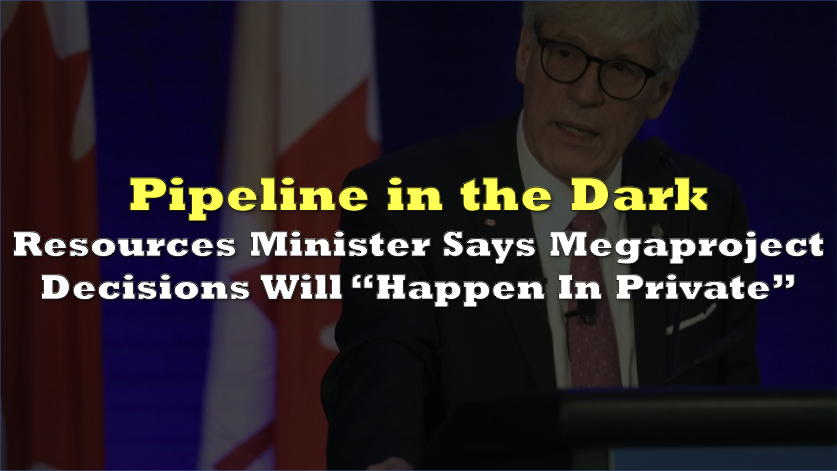

Canada is positioning its energy sector as a critical bargaining chip in upcoming trade negotiations with the United States under the Canada-U.S.-Mexico Free Trade Agreement, with Energy and Natural Resources Minister Tim Hodgson calling it the country’s “strongest card.” Speaking at an event in Toronto, Hodgson emphasized that energy exports, valued at nearly $170 billion to the U.S. in 2024, are pivotal as the agreement’s review looms.
“I want our energy and natural resources sectors to play the strategically important role it should be playing – as Canada’s strongest cards in the CUSMA renegotiation,” Hodgson said.
Hodgson, entering his second year in office, stressed the strategic importance of energy, electricity, forest products, and minerals in securing favorable terms. TD Bank analysis underscores this leverage, noting that Canadian energy exports are vital to U.S. energy security. Without them, the U.S. trade surplus with Canada flips to a $45 billion deficit, while tariffs on Canadian crude could spike U.S. gasoline prices by $0.30 to $0.70 per gallon.
 Sponsored · Cambria Gold Mines
Electricity exports also play a key role. In 2023, Ontario supplied power to 1.5 million U.S. homes across Michigan, Minnesota, and New York, reinforcing cross-border dependence.
Looking ahead, Hodgson outlined plans for a coherent strategy on electricity and nuclear energy, essential for ambitions in AI, advanced manufacturing, and mineral processing. By spring 2027, Ottawa aims to have five to ten major projects reach final investment decisions or begin construction.
“I spent my whole life doing deals. Ultimately, it is about knowing which cards are your best and playing them effectively. Energy, electricity, forest products, minerals — these are our best cards,” continued Hodgson.
A flagship initiative is the Canada-Alberta pipeline deal, formalized in a November 2025 memorandum of understanding between Prime Minister Mark Carney and Alberta Premier Danielle Smith. The proposed bitumen pipeline to Canada’s West Coast could transport 300,000 to 400,000 barrels per day to Asian markets, potentially adding $31.4 billion annually to Canada’s GDP over the next decade—a 1.1% yearly boost. The agreement also covers nuclear and AI data centers in Alberta, alongside new export infrastructure in western Canada.
Information for this story was found via the sources and companies mentioned. The author has no securities or affiliations related to the organizations discussed. Not a recommendation to buy or sell. Always do additional research and consult a professional before purchasing a security. The author holds no licenses.