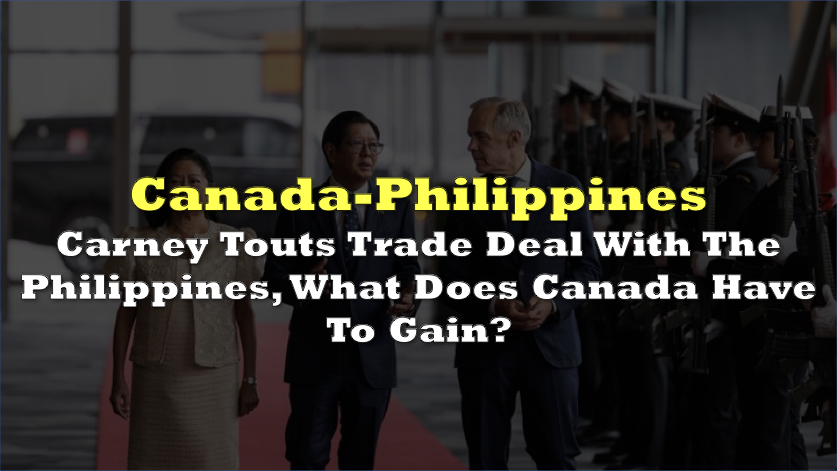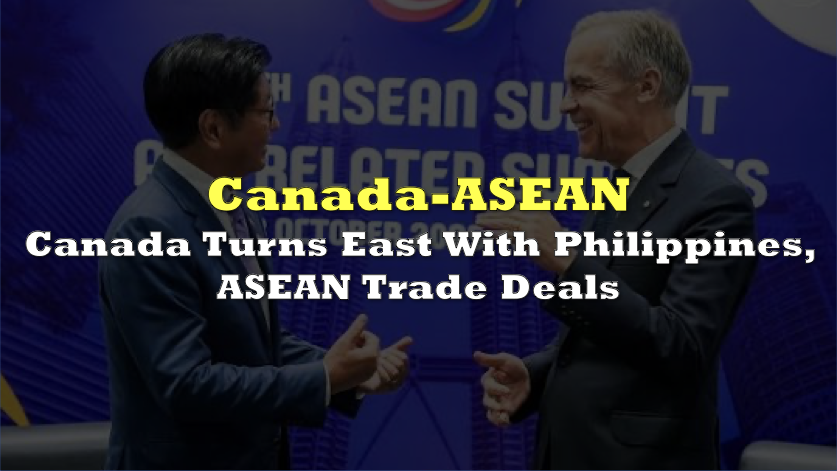

Canada is trying to turn two nearly finished Southeast Asian trade agreements into a broader commercial platform for energy, infrastructure, and digital investment, with Trade Minister Maninder Sidhu saying negotiations with both the Philippines and ASEAN are now more than 90% complete.
Sidhu told Reuters that Ottawa wants both agreements ready by November, when Prime Minister Mark Carney is expected to visit Manila.
The two agreements cover very different scales. Canada-ASEAN merchandise trade reached $52.5 billion in 2025, up 23.7% from $42.4 billion a year earlier, according to Global Affairs Canada. Bilateral merchandise trade with the Philippines totaled $3.4 billion, including $1.1 billion of Canadian exports and $2.3 billion of imports.
 Sponsored · Selkirk Copper Mines
The Philippines agreement could provide a more tailored layer of market access alongside the broader ASEAN pact. Bilateral negotiations were formally launched in October 2025 after exploratory discussions that began in 2024.
Energy is becoming central to Canada’s pitch. Sidhu told Reuters that Canada has more than five LNG projects in various stages of development on its Pacific coast, with Asian markets a target as regional economies seek more diversified fuel supplies.
Ottawa is also tying the trade push to physical infrastructure. Canada joined the Luzon Economic Corridor partnership in May and committed $2 million for technical assistance to a corridor project connecting Subic Bay, Clark, Manila, and Batangas. The Canadian government has identified infrastructure, clean energy, digital innovation, advanced manufacturing, and agri-food among the corridor’s investment areas.
Sidhu also told Reuters that Canada sees opportunities in the Philippines’ growing data-centre sector as demand for artificial intelligence and digital services expands. He provided no estimate for investment that could result from a bilateral FTA.