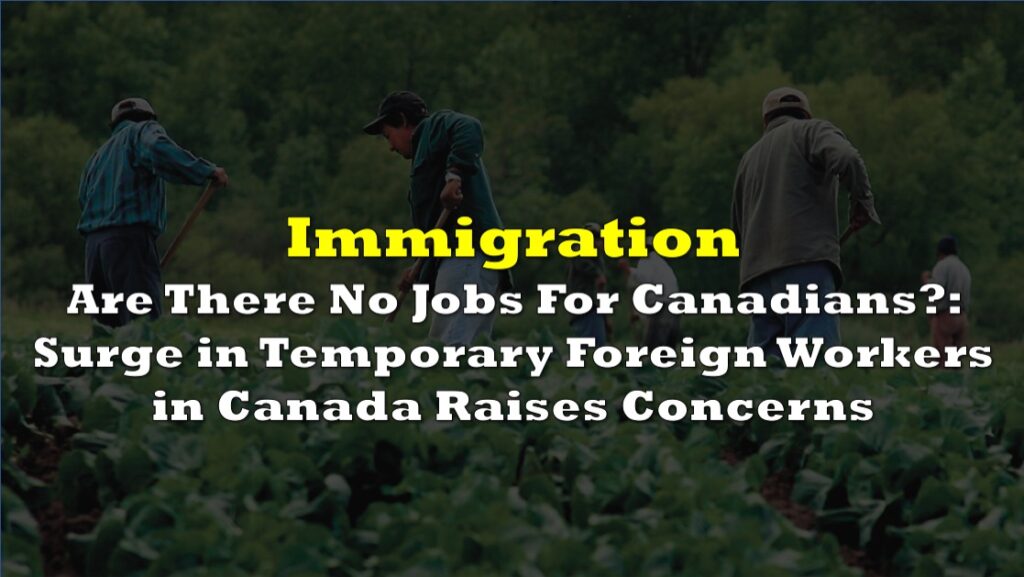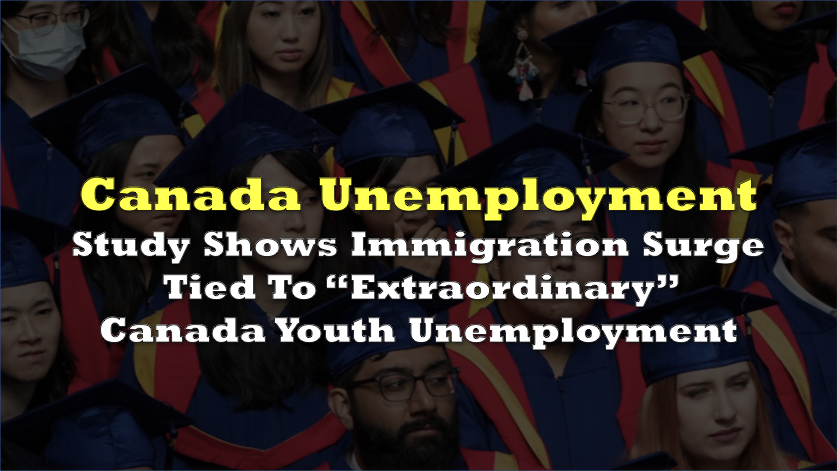

Canada’s youth unemployment crisis has become a policy fight over whether Ottawa’s post-2020 immigration expansion flooded entry-level labour markets faster than employers could absorb young workers.
A new Fraser Institute study by Philip Cross argues that youth unemployment in Canada has risen to an “extraordinary” level for an economy that was not in recession, with the unemployment rate for Canadians aged 15 to 24 climbing from 10.0% in 2022 to 13.8% in 2025.
In comparison, the number of unemployed youths rose 57.0%, from 290,000 in 2022 to 437,000 in 2025.
 Sponsored · Cambria Gold Mines
The study says the gap between youth unemployment and adult unemployment reached 8.1 percentage points in 2025, with youth unemployment at 13.8% and adult unemployment at 5.7%. It also found Canada’s youth rate exceeded the US youth rate by 3.8 percentage points, with the U.S. at 10.0% in 2025.
The severity is more striking because the headline unemployment rate understates the deterioration. Fraser says the youth labour force participation rate fell, especially among teenagers, which kept some discouraged or unavailable young people out of the official unemployment count. The youth employment rate fell from 58.7% in 2022 to 54.3% in 2025, its lowest level since the mid-1990s outside the pandemic.
Cross attributes the surge mainly to government policy, arguing Ottawa expanded labour supply through higher immigration targets, especially non-permanent residents, while provincial minimum wage increases limited employers’ ability to adjust labour costs. The report points to retail trade and accommodation and food services as the pressure zone, saying 70% of youth jobs were in those sectors in 2025.
The study connects the timing to Ottawa’s immigration ramp-up. Canada raised permanent resident targets toward 500,000 by 2024, while non-permanent residents, including international students and temporary foreign workers, grew sharply. Reuters reported Canada’s new plan later lowered permanent resident targets to 395,000 in 2025, 380,000 in 2026, and 365,000 in 2027, down from 485,000 in 2024.
 Sponsored · Selkirk Copper Mines
Statistics Canada’s own national dashboard shows the broader labour market was softer but not in collapse, with the national unemployment rate at 6.7% in March 2026.
The immigration link is plausible but not proven as the sole or definitive cause. The confirmed facts are that youth unemployment rose sharply, Canada’s population and temporary resident base expanded rapidly after 2020, and the federal government has since reversed course on immigration levels. Reuters reported Canada’s population growth slowed to 0.2% in the fourth quarter of 2024, primarily because of fewer non-permanent residents, after growth rates of 2.5% in 2022 and 3.1% in 2023.
The Fraser study makes a coherent supply-and-demand case, but its strongest claim remains interpretive. Youth unemployment can rise from multiple overlapping forces, including weaker hiring, falling job vacancies, higher minimum wages, sector-specific slowdowns, enrollment choices, and employer preference for older applicants over teenagers.
The minimum wage argument is central to Cross’s explanation. The study says young workers account for more than half of minimum-wage earners, while retail and food services are more exposed to wage floors.
Information for this briefing was found via the sources and the companies mentioned. The author has no securities or affiliations related to this organization. Not a recommendation to buy or sell. Always do additional research and consult a professional before purchasing a security. The author holds no licenses.