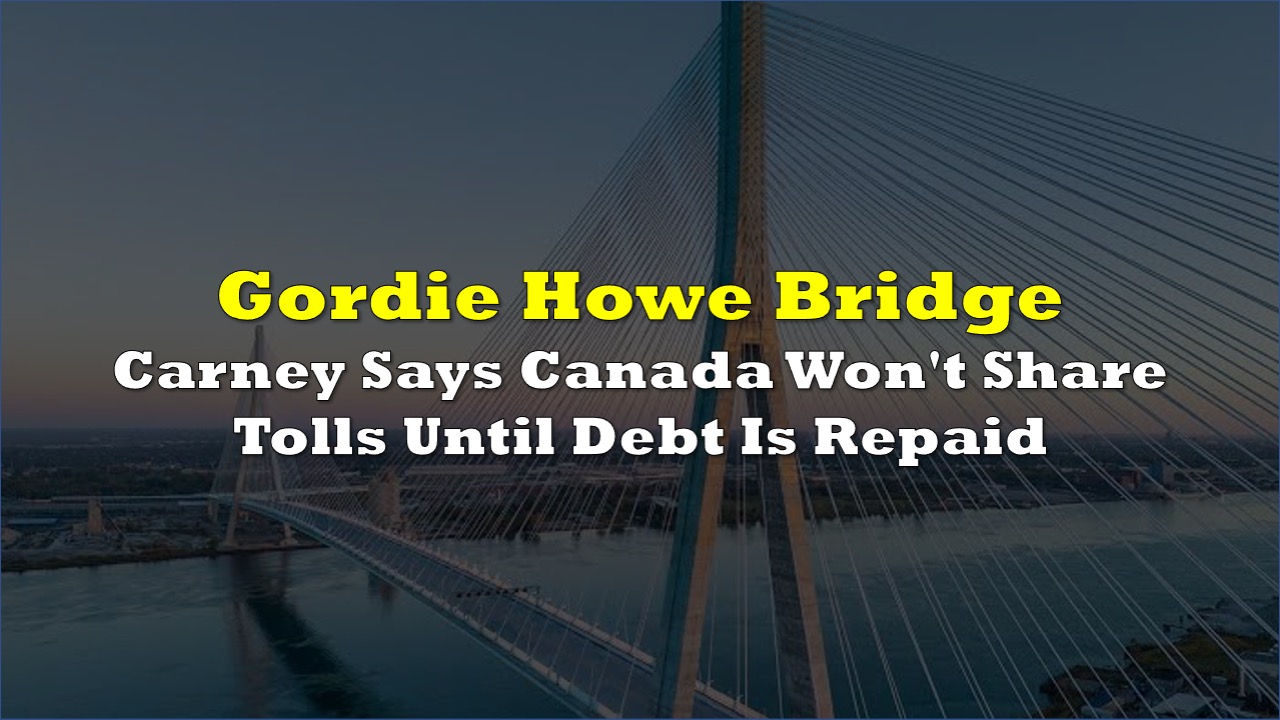

Canada will not share toll revenue from the new Gordie Howe International Bridge with the United States until it recoups the cost of building it, Prime Minister Mark Carney said Thursday, clarifying the terms of a deal reached with President Trump earlier this month.
The bridge, connecting Windsor, Ontario, and Detroit, cost Canada roughly CA$6.4 billion to build and is set to open on July 27, years behind its original 2024 target. Under the original 2012 agreement between Canada and Michigan, Canada collects all toll revenue until that debt is paid off.
“Any sharing of the toll revenue won’t happen until all of the debt is repaid,” Carney told reporters.
Separately, Canada agreed to split net revenue, what’s left after operating costs like maintenance and snow removal, with the US for 15 years, funneling that share into an economic development fund on the Michigan side of the border.
 Sponsored · Silver47 Exploration Inc.
Carney cautioned that net revenue could be negative or modest in the bridge’s early years, meaning little money may flow to the US side of the deal for some time. “It’s not splitting the tolls of the bridge,” Carney said. “It is an agreement for 15 years to split net revenues.”
The clarification follows weeks of uncertainty over the bridge’s opening after Trump said in June the US should own “at least half” of it, threatening to delay its debut. Carney and Trump reached a deal July 10 to resolve the standoff, though Windsor officials have said questions about how net profits would be calculated should be directed to the federal government rather than the bridge authority itself.
Also read: Why Canada rewrote the Gordie Howe Bridge agreement
Canadian Conservative leader Pierre Poilievre has criticized Carney for conceding too much to secure the bridge’s opening, while US officials have described the shift as going from collecting no revenue from the bridge to a meaningful share.