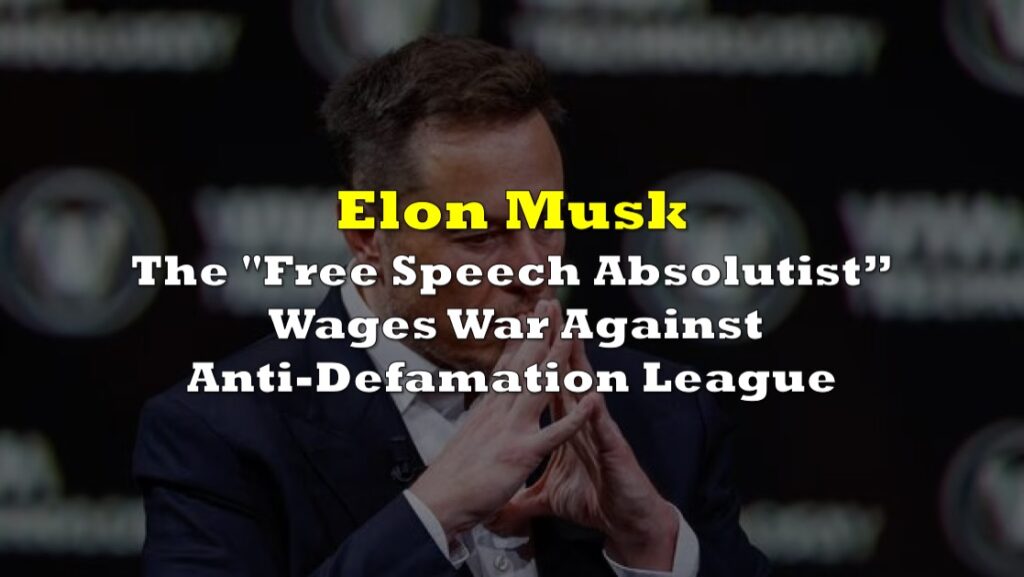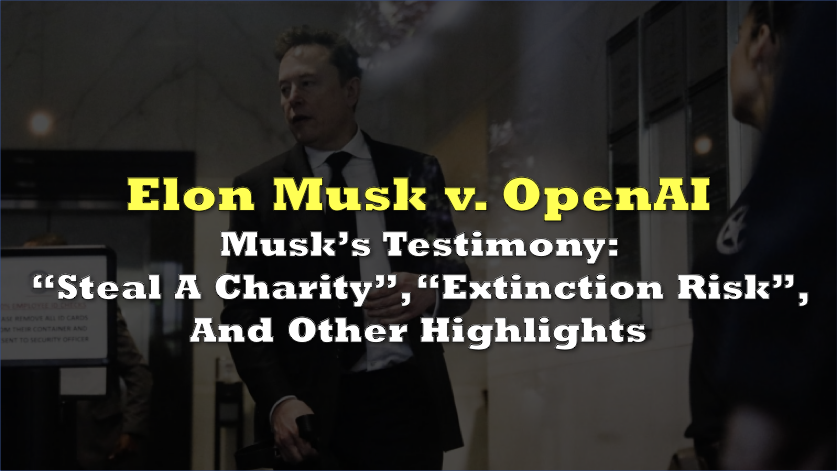

Elon Musk used three days of testimony in Oakland to argue that OpenAI abandoned its founding bargain, framing the case as a test of whether a nonprofit AI lab can raise money under a public-good mission and later convert that trust into private financial upside.
Musk is suing OpenAI, CEO Sam Altman, president Greg Brockman, and Microsoft, accusing them of breach of charitable trust and unjust enrichment. He is seeking roughly $150 billion in damages from OpenAI and Microsoft, with proceeds directed to OpenAI’s charitable arm, and wants OpenAI returned to nonprofit control, with Altman and Brockman removed as officers and Altman removed from the board.
The central line from Musk was blunt: OpenAI was “meant to be a charity,” not a vehicle for insiders or investors to capture the value created by a nonprofit mission. He testified that OpenAI’s nonprofit status gave it moral credibility, or a “halo effect,” as it recruited talent, donors, and public trust around the goal of building artificial intelligence for humanity’s benefit.
 Sponsored · Granada Gold Mine Inc.
“If we make it OK to loot a charity, the entire foundation of charitable giving in America will be destroyed,” he testified, adding that he was concerned about the precedent if OpenAI’s path were allowed to stand.
Musk also connected OpenAI’s origin story to AI safety, pointing to fears that advanced artificial intelligence could threaten humanity. Reuters reported that Musk cited a conversation with Google co-founder Larry Page, whom he said dismissed AI extinction risk, as part of the catalyst for creating OpenAI.
Judge Yvonne Gonzalez Rogers curtailed testimony about AI doomsday scenarios, signaling that the case was about legal duties, charitable trust, and corporate structure, not a referendum on whether artificial intelligence could end humanity. Musk’s side still pushed the existential-risk frame, with one lawyer arguing that “Extinction risk is a real problem,” while the judge noted the irony that Musk runs xAI, a for-profit company in the same sector.
OpenAI’s defense is that Musk knew the company needed a for-profit structure to raise the capital required for frontier AI development. OpenAI has argued that Musk previously supported a structure involving both nonprofit and for-profit entities, and that his current lawsuit omits context showing he once accepted the need for a model resembling the one he now challenges.
 Sponsored · Selkirk Copper Mines
The company has also argued that it created a for-profit entity to fund computing power and attract top researchers, two costs that became central as the AI arms race shifted from research lab economics to infrastructure-scale spending. Musk’s testimony pressed the opposite point: raising capital may be allowed, but converting a nonprofit mission into private benefit is not.
Cross-examination focused on weakening Musk’s certainty. OpenAI’s lawyer William Savitt pressed him on whether there was a formal contract governing his donations and whether he had fully read founding documents. Reports from the courtroom said Musk acknowledged there was no formal contract and that he had not fully read the term sheet, undercutting the cleanest version of his “founding agreement” theory.
Musk’s own business interests also became part of the defense strategy. Savitt pointed to Musk’s for-profit companies, including Tesla, Neuralink, X, and xAI, while Musk responded that there is nothing wrong with a for-profit enterprise itself. His distinction was that “you just can’t steal a charity,” keeping the dispute centered on conversion rather than profit as such.
Microsoft’s role is critical because Musk alleges the company aided and abetted the breach of charitable trust. Musk described Microsoft’s investment as part of a broader shift that turned OpenAI into a profit-seeking AI giant, while OpenAI and Microsoft are expected to argue the partnership funded the infrastructure needed to compete in advanced AI. Reuters reported that Musk characterized Microsoft’s $10 billion investment as a “bait and switch” and said a later offer to buy stock “felt like a bribe.”
The trial now turns less on Musk’s rhetoric than on whether jurors accept his claim that OpenAI’s nonprofit mission created enforceable obligations that were breached. A jury will decide liability, while the judge is expected to rule on remedies.
Information for this briefing was found via the sources and the companies mentioned. The author has no securities or affiliations related to this organization. Not a recommendation to buy or sell. Always do additional research and consult a professional before purchasing a security. The author holds no licenses.