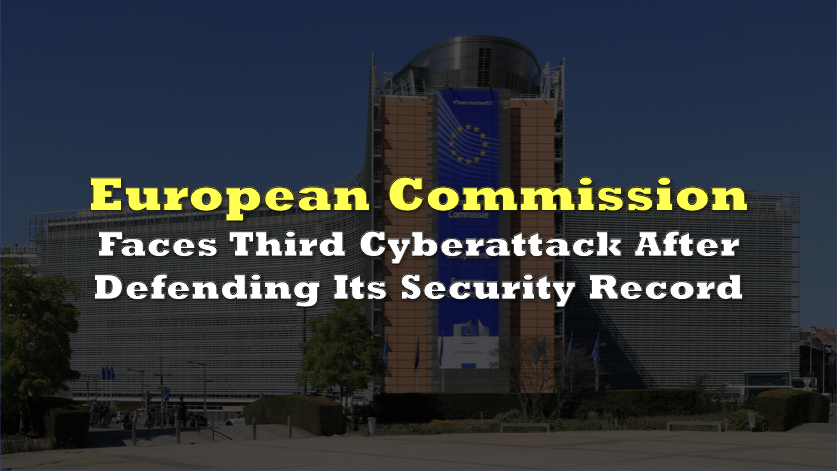

The European Commission has suffered its third disclosed cyber incident of 2026, just four months after telling lawmakers that its handling of two earlier attacks demonstrated the effectiveness of its defenses. The latest intrusion disrupted staff services for more than 10 days, according to POLITICO, raising a new question about how the EU’s executive protects its own operations.
In a July 3 written response to European Parliament member Barbara Bonte, Executive Vice-President Henna Virkkunen said the January and March incidents had caused no major disruption. She cited the Commission’s ability to detect and contain the attacks quickly as evidence that its cybersecurity measures were working.
The latest incident presents a different operational picture. Commission spokesperson Thomas Regnier confirmed Thursday that suspicious activity was detected on October 22 and identified as an attack following an initial investigation on October 26.
 Sponsored · Cambria Gold Mines
Several applications were temporarily disabled as a precaution but most have since been restored.
POLITICO reported that the disruption affected Sysper, used by staff for payslips, leave requests, and timesheets, alongside a system for medical reimbursements. The outlet also reported that senior officials convened to discuss the crisis.
The first attack the Commission sustained was detected January 30 in infrastructure used to manage mobile devices. It said it contained the incident and cleaned the system within nine hours. Employee names and telephone numbers may have been exposed, but no compromised mobile devices were identified.
In March, attackers gained access to cloud infrastructure supporting the Europa.eu website platform. CERT-EU later confirmed the theft of approximately 91.7 GB of compressed data, including personal information and email content.
 Sponsored · Silver47 Exploration Inc.
The agency traced the intrusion to compromised credentials obtained through a software supply-chain attack. No service interruption was reported.
Those earlier incidents involved different systems, and authorities have not established a connection between them and the October campaign.
The Commission confirmed that AI-assisted tools were used in the latest campaign but has not identified the attackers. CERT-EU had warned on November 5 that malicious actors were using ARTEX, an AI-driven penetration-testing framework, in campaigns against European institutions.
POLITICO linked ARTEX to the Commission attack, although the institution has not publicly confirmed the specific tool.
Regnier said investigators had found no evidence of a breach affecting Commission staff as a whole.
The Commission first acknowledged the October incident publicly on Thursday, 28 days after detection. Regnier said relevant internal services and the European Data Protection Supervisor had been informed, rejecting suggestions that the attack was concealed.