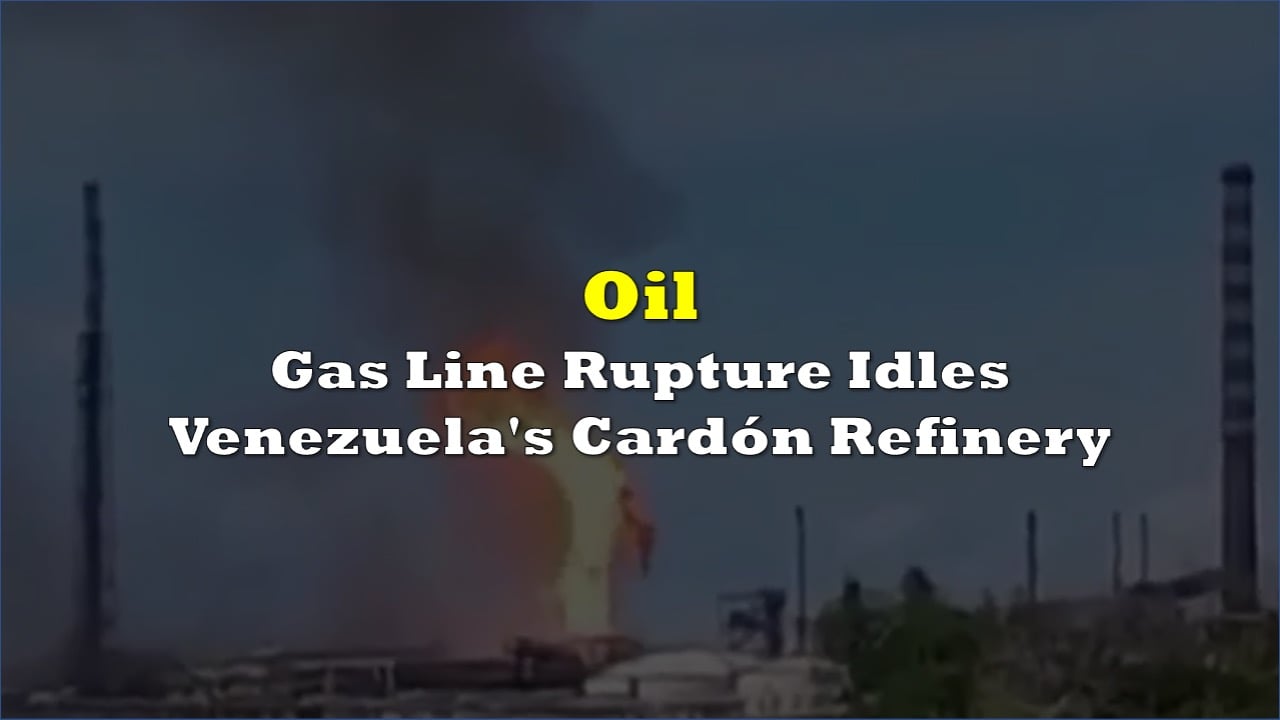

A natural gas line fire shut down Venezuela’s Cardón refinery on Tuesday. State oil company PDVSA says the pipe supplying the plant’s boilers split open around 3:25 p.m. local time. Responders had the fire under control quickly, and PDVSA reports no injuries or major damage.
PDVSA halted the plants that were running as an emergency measure and says it’s investigating the cause. It also says it has enough fuel stocked across the refining system to avoid supply gaps. Nothing had restarted by Tuesday night, and no restart date has been reported.
Local outlets placed the fire at the diesel hydrotreating unit, and staff evacuated as a precaution, but the company points to the boilers.
 Sponsored · Selkirk Copper Mines
Cardón, which is the country’s second-largest refinery, can process 310,000 barrels per day, about a third of the Paraguaná Refining Center’s 955,000 bpd, but it has run far below that all year. It was handling around 76,000 bpd before a cracker fire on April 30, and an industry report says a crude unit and the cracker shut in September after running short of feedstock, weeks after PDVSA restarted the cracker on September 11. At that restart, the units running across Cardón and neighboring Amuay together had 287,000 bpd of processing capacity, about 30% of the complex’s installed total.
Across all of Venezuela’s refineries, April throughput of roughly 399,000 bpd equaled 31% of the 1.29 million bpd of installed capacity, and PDVSA has turned to imported naphtha this year to make up for weak domestic output. The April 30 fire came as the cracker restarted after a blackout, and such outages and fires recur across PDVSA’s aging refineries.
Read: Venezuela’s Oil Terminals Go Dark as Blockade Drives Production Toward Catastrophic Collapse
Fuel demand at home runs near 250,000 bpd across gasoline, diesel, jet fuel and cooking gas, and PDVSA has missed that mark for about a decade. Workers and contractors at the Paraguaná complex report no significant repair work in 2026, and analyst Oswaldo Felizzola puts the cost of restoring full capacity at $20 billion or more.
Earlier shortages stranded drivers in multi-day queues. One industry analysis argues the pain would stay mostly at home, with a longer shutdown forcing Venezuela to buy more naphtha or gasoline abroad while US supply barely registers it, since American purchases from Venezuela this year have been mainly heavy crude that ships out of export terminals rather than Cardón.